THE ADVENTURE COLLECTIVE® · Independent discovery and booking for outdoor travel

Ascend stair-thin trails and enter marble caves to find centuries-old pagodas and active stone-carving workshops at the base of Da Nang’s Marble Mountains. This short private tour combines geology, Buddhist culture and craft demonstrations in about three hours.
Ascend stair-thin trails and enter marble caves to find centuries-old pagodas and active stone-carving workshops at the base of Da Nang’s Marble Mountains. This short private tour combines geology, Buddhist culture and craft demonstrations in about three hours.
The limestone rises out of low coastal plain like an old story told in stone — five distinct peaks rubbing shoulders with the South China Sea, stair trails winding up between carved grottoes and small shrines. A morning here means cool shadows in cave sanctuaries, incense-smudged wooden beams at Tam Thai Pagoda, and the steady clack of chisels in the village at the mountain’s base.
Verified experiences and guided adventures in the surrounding area.
Operated by Vietnam Sightseeing · Da Nang, Da Nang
The limestone rises out of low coastal plain like an old story told in stone — five distinct peaks rubbing shoulders with the South China Sea, stair trails winding up between carved grottoes and small shrines. A morning here means cool shadows in cave sanctuaries, incense-smudged wooden beams at Tam Thai Pagoda, and the steady clack of chisels in the village at the mountain’s base.
Marble Mountains (Ngũ Hành Sơn) are a cluster of marble and limestone hills named for the five elements: Kim (metal), Mộc (wood), Thủy (water), Hỏa (fire) and Thổ (earth). Geologically they’re karst outcrops that preserve caves, natural filters and small aquifers; culturally the site has been a Buddhist pilgrimage destination for centuries and the nearby Non Nuoc stone-carving village has worked local marble since at least the 17th century.
Visitors should expect a mix of short stair climbs, uneven stone floors inside caves, and shaded temple steps with views toward Non Nuoc Beach. Guides point out carved reliefs, hidden grotto sanctuaries and local workshops where artisans turn quarried stone into sculptures. The tour moves at an easy pace with private transport and bottled water provided, but plan for humidity, modest temple dress (shoulders and knees covered) and slow climbs to viewpoints.
Practical tips: start early to avoid mid-day heat, carry a light rain layer in the rainy season, wear sturdy walking shoes for wet steps, and leave room in your bag for small purchases — many workshops accept bargaining but inspect craftsmanship before buying.
easy.
3 hours.
Suitable for most fitness levels; involves short stair climbs and uneven steps but no sustained hiking.
This tour itinerary lists admissions as included for the Marble Mountains and village stops.
The experience is approximately three hours and designed for an easy-paced, private visit with short climbs and stops.
Yes — most areas are accessible by stairs and short paths; those with mobility issues should check specific access points as some caves have steep steps.
Many workshops expect bargaining for smaller items; inspect workmanship and compare pieces before buying.
Marble Mountains have been both a spiritual center and a source of craft material for centuries; the Non Nuoc carving tradition dates back to at least the 17th century.
Visitor traffic can accelerate erosion and wear in caves and steps—stay on paths, avoid touching ancient carvings, and choose local workshops that source stone responsibly.
Vietnam Sightseeing operates guided outdoor trips and adventures with an emphasis on safety, stewardship, and memorable experiences.
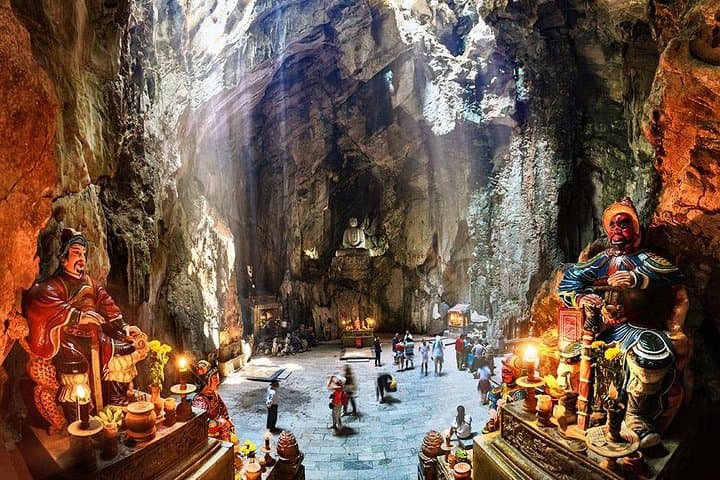
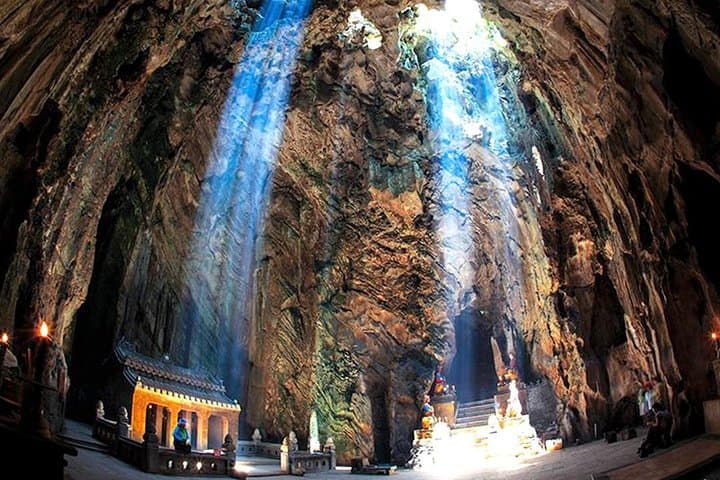
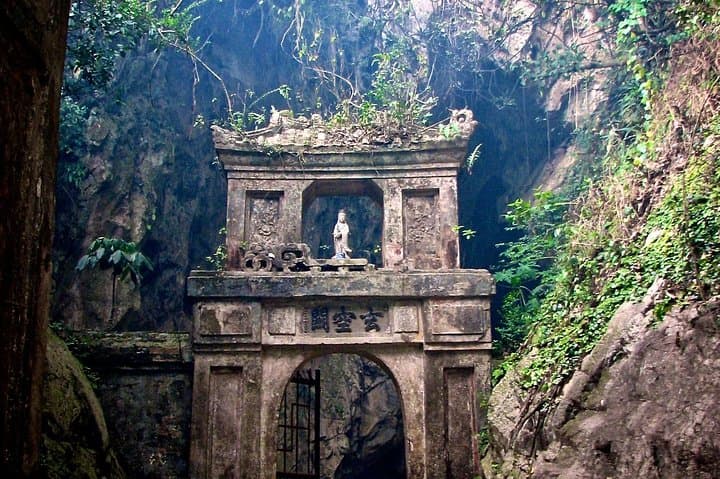
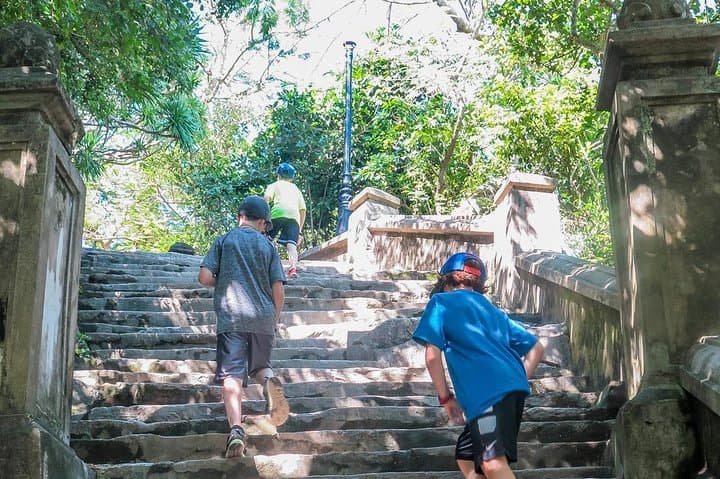
The limestone rises out of low coastal plain like an old story told in stone — five distinct peaks rubbing shoulders with the South China Sea, stair trails winding up between carved grottoes and small shrines. A morning here means cool shadows in cave sanctuaries, incense-smudged wooden beams at Tam Thai Pagoda, and the steady clack of chisels in the village at the mountain’s base.
The limestone rises out of low coastal plain like an old story told in stone — five distinct peaks rubbing shoulders with the South China Sea, stair trails winding up between carved grottoes and small shrines. A morning here means cool shadows in cave sanctuaries, incense-smudged wooden beams at Tam Thai Pagoda, and the steady clack of chisels in the village at the mountain’s base.
Marble Mountains (Ngũ Hành Sơn) are a cluster of marble and limestone hills named for the five elements: Kim (metal), Mộc (wood), Thủy (water), Hỏa (fire) and Thổ (earth). Geologically they’re karst outcrops that preserve caves, natural filters and small aquifers; culturally the site has been a Buddhist pilgrimage destination for centuries and the nearby Non Nuoc stone-carving village has worked local marble since at least the 17th century.
Visitors should expect a mix of short stair climbs, uneven stone floors inside caves, and shaded temple steps with views toward Non Nuoc Beach. Guides point out carved reliefs, hidden grotto sanctuaries and local workshops where artisans turn quarried stone into sculptures. The tour moves at an easy pace with private transport and bottled water provided, but plan for humidity, modest temple dress (shoulders and knees covered) and slow climbs to viewpoints.
Practical tips: start early to avoid mid-day heat, carry a light rain layer in the rainy season, wear sturdy walking shoes for wet steps, and leave room in your bag for small purchases — many workshops accept bargaining but inspect craftsmanship before buying.