THE ADVENTURE COLLECTIVE® · Independent discovery and booking for outdoor travel

See Lucerne’s historic heart on a focused three-hour walking tour with a local guide. Small groups, lake views, medieval walls and the Lion Monument combine to give a compact, memorable introduction to the city.
See Lucerne’s historic heart on a focused three-hour walking tour with a local guide. Small groups, lake views, medieval walls and the Lion Monument combine to give a compact, memorable introduction to the city.
The tour begins where train arrivals spill onto the lakefront: cross the Torbogen, and the city opens in a sequence of stone bridges, bell towers and the steady blue of Lake Lucerne. Your guide threads stories through lanes of cobbles, pausing where sunlight skims painted facades and where the Reuss narrows into channels that dare you to slow down and watch the water work.
Verified experiences and guided adventures in the surrounding area.
Operated by Swiss City Tours · Lucerne, Canton of Lucerne
The tour begins where train arrivals spill onto the lakefront: cross the Torbogen, and the city opens in a sequence of stone bridges, bell towers and the steady blue of Lake Lucerne. Your guide threads stories through lanes of cobbles, pausing where sunlight skims painted facades and where the Reuss narrows into channels that dare you to slow down and watch the water work.
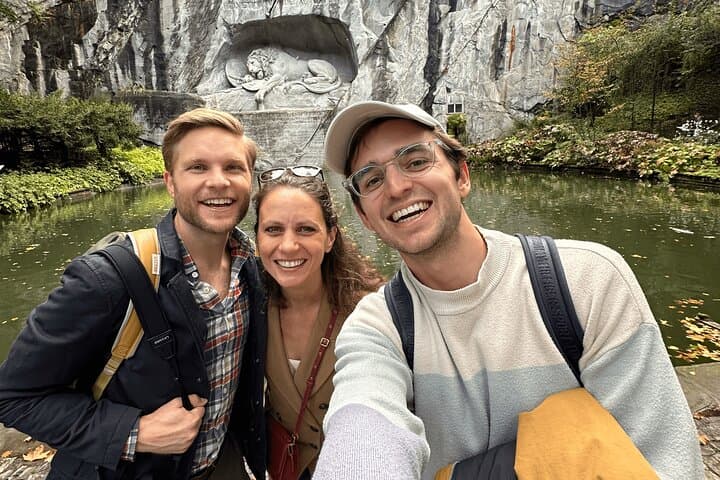
Lucerne’s core grew around medieval trade and the natural harbor formed by glacially carved Lake Lucerne. On this three-hour route you’ll see the wooden Chapel Bridge and its covered paintings, the arched Spreuerbrücke, and the Baroque churches that speak to the city’s Catholic heritage. The Musegg Walls—fortified towers dating to the 14th century—offer defensive geometry and panoramic views when accessible; note that seasonal closures may change that stop. The Lion Monument, a rock relief honoring Swiss Guards of the Revolution, ties local memory to international history.
Practically: expect roughly 2–3 miles of mostly flat, cobbled walking with short stair sections at viewpoints; group size is small (max ~12) so the pace is moderate and conversational. Wear supportive shoes for stone surfaces, bring a light waterproof layer for Alpine weather swings, and carry a refillable water bottle—public fountains are common. Photography is encouraged but be mindful at churches and during quieter moments. Meeting point is Torbogen outside Lucerne station; allow time in case of train delays. This tour balances curiosity and context—ideal for first-time visitors who want an efficient, grounded introduction to Lucerne’s streets, sights and stories.
easy.
3 hours.
Suitable for most fitness levels; requires continuous walking for three hours with short stair sections.
Most of the route is accessible, but the Musegg Walls and certain towers involve stairs; guests using wheelchairs should notify the operator—an alternate viewpoint is provided if ascent is not possible.
Meet at the Torbogen outside Lucerne train station; arrive 10–15 minutes early to allow for check-in and to avoid delaying the group.
The tour price typically includes guide services and taxes; any entrance fees (if applicable) or gratuities for guides are usually separate—confirm at booking.
Guides commonly speak English and German; language options are listed at booking—ask ahead if you need another language.
Lucerne developed as a medieval market town at a strategic lake crossing; its fortifications and bridges reflect centuries of trade and defense.
Visitors help protect historic structures by staying on marked paths, respecting signage at monuments, and supporting local businesses to fund preservation efforts.
Swiss City Tours operates guided outdoor trips and adventures with an emphasis on safety, stewardship, and memorable experiences.
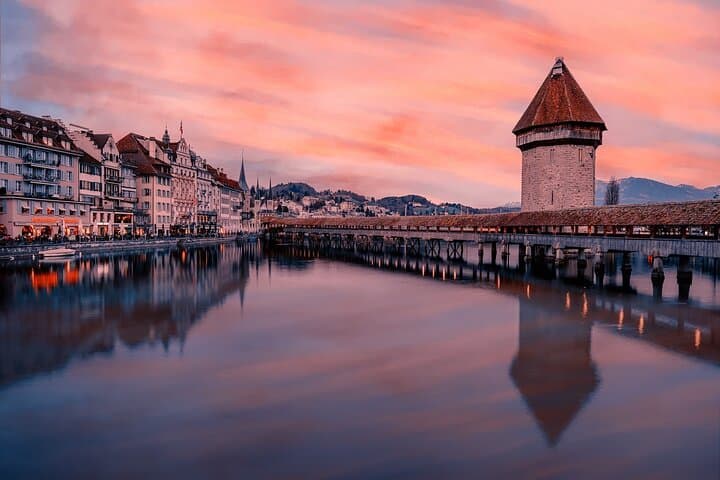
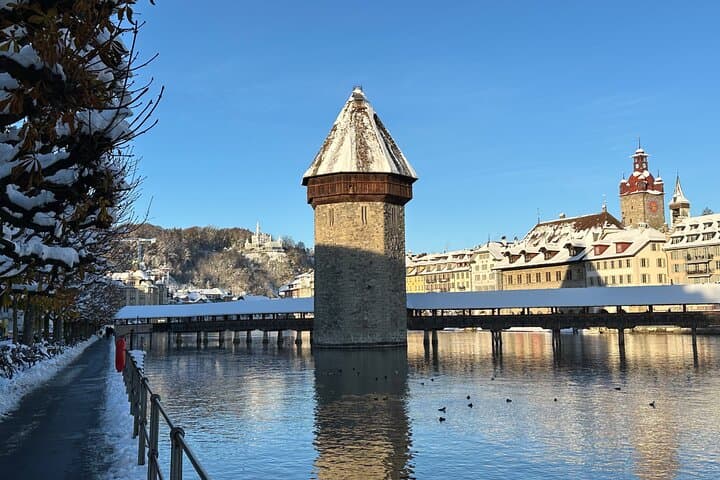
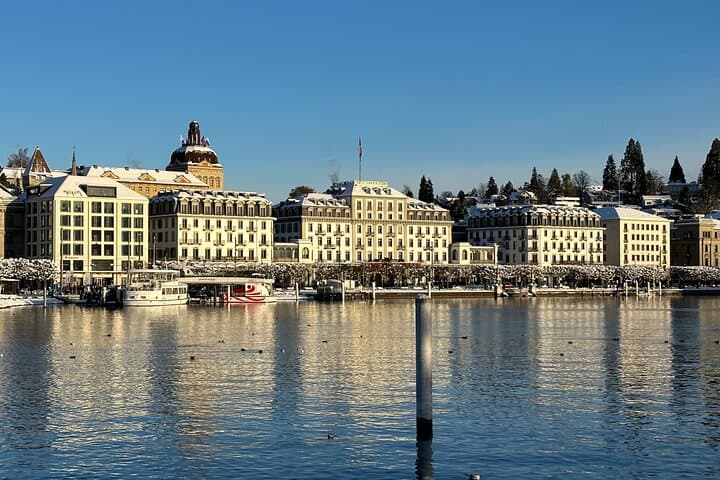
The tour begins where train arrivals spill onto the lakefront: cross the Torbogen, and the city opens in a sequence of stone bridges, bell towers and the steady blue of Lake Lucerne. Your guide threads stories through lanes of cobbles, pausing where sunlight skims painted facades and where the Reuss narrows into channels that dare you to slow down and watch the water work.
The tour begins where train arrivals spill onto the lakefront: cross the Torbogen, and the city opens in a sequence of stone bridges, bell towers and the steady blue of Lake Lucerne. Your guide threads stories through lanes of cobbles, pausing where sunlight skims painted facades and where the Reuss narrows into channels that dare you to slow down and watch the water work.
Lucerne’s core grew around medieval trade and the natural harbor formed by glacially carved Lake Lucerne. On this three-hour route you’ll see the wooden Chapel Bridge and its covered paintings, the arched Spreuerbrücke, and the Baroque churches that speak to the city’s Catholic heritage. The Musegg Walls—fortified towers dating to the 14th century—offer defensive geometry and panoramic views when accessible; note that seasonal closures may change that stop. The Lion Monument, a rock relief honoring Swiss Guards of the Revolution, ties local memory to international history.
Practically: expect roughly 2–3 miles of mostly flat, cobbled walking with short stair sections at viewpoints; group size is small (max ~12) so the pace is moderate and conversational. Wear supportive shoes for stone surfaces, bring a light waterproof layer for Alpine weather swings, and carry a refillable water bottle—public fountains are common. Photography is encouraged but be mindful at churches and during quieter moments. Meeting point is Torbogen outside Lucerne station; allow time in case of train delays. This tour balances curiosity and context—ideal for first-time visitors who want an efficient, grounded introduction to Lucerne’s streets, sights and stories.