THE ADVENTURE COLLECTIVE® · Independent discovery and booking for outdoor travel

Walk Lucca’s 4 km ring of Renaissance-era walls, visit Piazza Anfiteatro and Guinigi Tower, and meet Luigi—the horse who’s become a city mascot. This private 105-minute tour blends Roman and medieval history with practical sightseeing.
Walk Lucca’s 4 km ring of Renaissance-era walls, visit Piazza Anfiteatro and Guinigi Tower, and meet Luigi—the horse who’s become a city mascot. This private 105-minute tour blends Roman and medieval history with practical sightseeing.
You step onto a broad, tree-lined promenade that crowns Lucca’s famous Renaissance walls, the city falling away into a patchwork of terracotta roofs and narrow alleys. A calm companion—a local horse named Luigi—often appears at the edge of the circuit, a living emblem greeting visitors as the guide sketches the city’s long arc of history.
Verified experiences and guided adventures in the surrounding area.
Operated by Lucca Horse Carriage · Lucca, Tuscany
You step onto a broad, tree-lined promenade that crowns Lucca’s famous Renaissance walls, the city falling away into a patchwork of terracotta roofs and narrow alleys. A calm companion—a local horse named Luigi—often appears at the edge of the circuit, a living emblem greeting visitors as the guide sketches the city’s long arc of history.
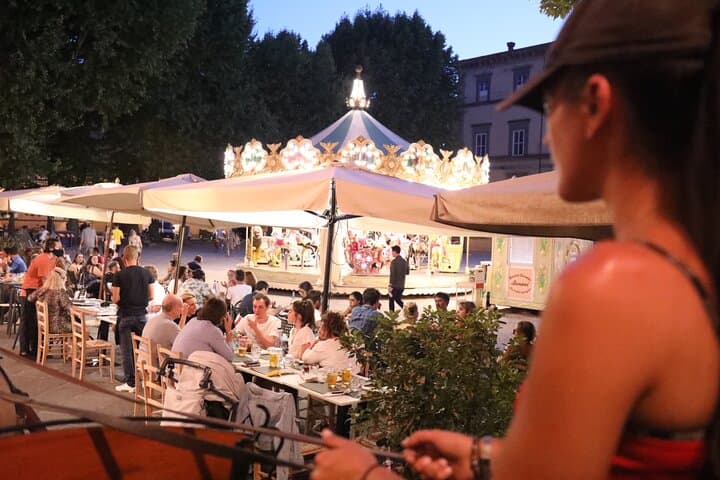
Lucca began as a Roman settlement; the oval Piazza Anfiteatro still rests on the amphitheater’s footprint, its stones rearranged into cafés and boutiques. The walls you walk are 16th–17th century engineering—earthen ramparts capped with masonry—designed for artillery defense and now planted with plane trees and pedestrian paths. The skyline is punctuated by Guinigi Tower’s rooftop holm oaks and the white façade of San Michele in Foro, reminders of Lucca’s medieval civic pride.
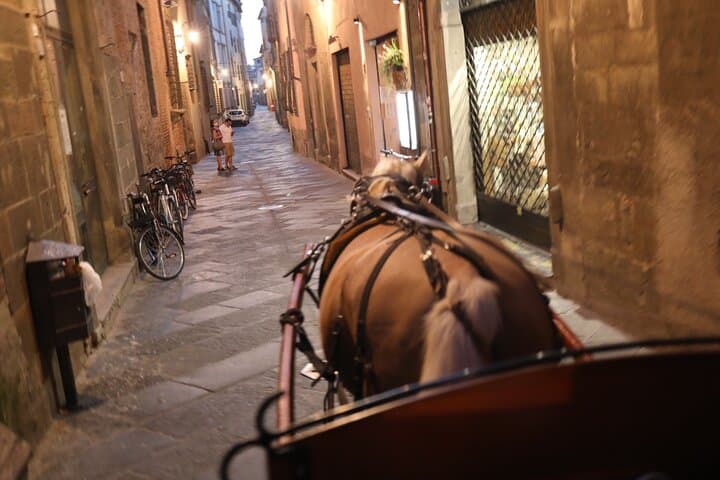
The route threads Via Fillungo’s medieval shopping street, pauses by Palazzo Pfanner’s formal garden, and circles the botanical garden seen from above. Expect a steady, accessible walk—the full circuit is roughly 4 km; this private tour covers the walls and key piazzas in about 105 minutes with narration in English, Spanish, or Italian.
Practical edge: wear supportive shoes for cobbles, bring water and sun protection in summer, and plan mornings or late afternoons to avoid heat and crowds. Strollers are usable; the itinerary is labeled physically easy but not recommended for spinal injuries. Luigi is a local mascot—great for photos—but tours are walking experiences. Book with at least 24‑hour cancellation flexibility and arrive ready to trade history for panoramic city views.
easy.
1.5–2 hours.
Suitable for most fitness levels; requires steady walking on cobbles and short steps.
Yes—this is a physically easy, private walking tour and the walls’ wide paths accommodate strollers; infants must sit on laps per booking notes.
No—Luigi is an iconic local presence and photo opportunity for many tours, but the experience is a guided walking tour, not a riding activity.
Guides are available in English, Spanish, and Italian according to the tour listing.
Full refund available if you cancel at least 24 hours before the scheduled departure; check your booking for specifics.
Lucca’s core began as a Roman colony; its oval Piazza Anfiteatro sits where the amphitheatre once stood and the Renaissance walls date to the 16th–17th centuries.
The city maintains the walls as a public green promenade—stay on designated routes, avoid littering, and respect private gardens to help preserve the historic fabric.
Lucca Horse Carriage operates guided outdoor trips and adventures with an emphasis on safety, stewardship, and memorable experiences.
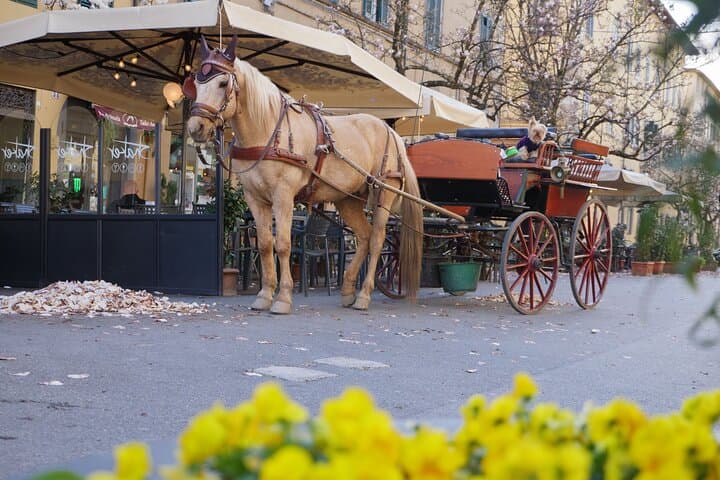
You step onto a broad, tree-lined promenade that crowns Lucca’s famous Renaissance walls, the city falling away into a patchwork of terracotta roofs and narrow alleys. A calm companion—a local horse named Luigi—often appears at the edge of the circuit, a living emblem greeting visitors as the guide sketches the city’s long arc of history.
You step onto a broad, tree-lined promenade that crowns Lucca’s famous Renaissance walls, the city falling away into a patchwork of terracotta roofs and narrow alleys. A calm companion—a local horse named Luigi—often appears at the edge of the circuit, a living emblem greeting visitors as the guide sketches the city’s long arc of history.
Lucca began as a Roman settlement; the oval Piazza Anfiteatro still rests on the amphitheater’s footprint, its stones rearranged into cafés and boutiques. The walls you walk are 16th–17th century engineering—earthen ramparts capped with masonry—designed for artillery defense and now planted with plane trees and pedestrian paths. The skyline is punctuated by Guinigi Tower’s rooftop holm oaks and the white façade of San Michele in Foro, reminders of Lucca’s medieval civic pride.
The route threads Via Fillungo’s medieval shopping street, pauses by Palazzo Pfanner’s formal garden, and circles the botanical garden seen from above. Expect a steady, accessible walk—the full circuit is roughly 4 km; this private tour covers the walls and key piazzas in about 105 minutes with narration in English, Spanish, or Italian.
Practical edge: wear supportive shoes for cobbles, bring water and sun protection in summer, and plan mornings or late afternoons to avoid heat and crowds. Strollers are usable; the itinerary is labeled physically easy but not recommended for spinal injuries. Luigi is a local mascot—great for photos—but tours are walking experiences. Book with at least 24‑hour cancellation flexibility and arrive ready to trade history for panoramic city views.