THE ADVENTURE COLLECTIVE® · Independent discovery and booking for outdoor travel

Spend two hours with a licensed guide exploring the British Museum’s headline artifacts — from the Rosetta Stone to Assyrian reliefs — and learn the stories and controversies behind them. Practical tips cover timing, accessibility and what to bring.
Spend two hours with a licensed guide exploring the British Museum’s headline artifacts — from the Rosetta Stone to Assyrian reliefs — and learn the stories and controversies behind them. Practical tips cover timing, accessibility and what to bring.
The guide waits outside the museum's classical façade while the Great Court's glass roof throws a pool of light across the marble floor — a fitting opening to two hours that move from world capitals to ancient river valleys without leaving Bloomsbury.
Verified experiences and guided adventures in the surrounding area.
Operated by FLORENCE HERITAGE TOURS · London, England
The guide waits outside the museum's classical façade while the Great Court's glass roof throws a pool of light across the marble floor — a fitting opening to two hours that move from world capitals to ancient river valleys without leaving Bloomsbury.
Founded on Sir Hans Sloane's 18th-century collection, the British Museum maps human history: the Rosetta Stone stands like a key on a stone pedestal, Assyrian winged bulls loom with carved menace, and Sutton Hoo artifacts whisper early medieval power. The building itself is part exhibit — Georgian reading rooms and 19th-century galleries reflect changing museum culture and the debates over colonial-era acquisitions.
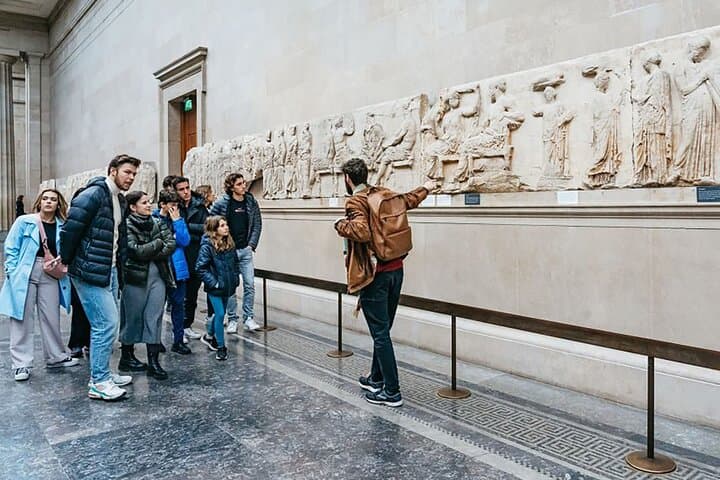
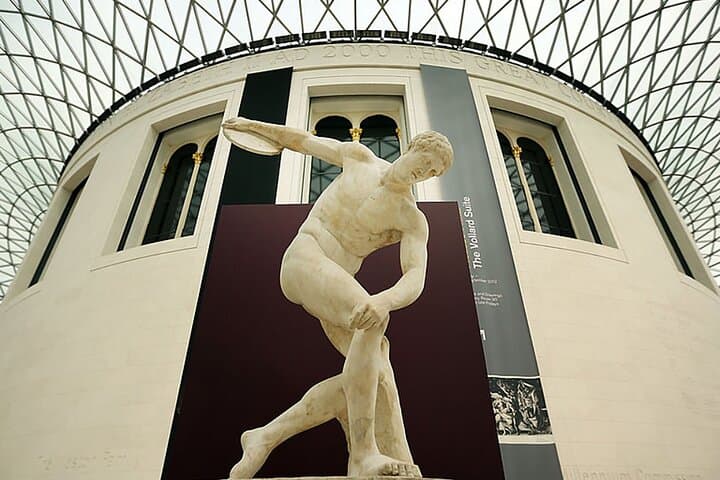
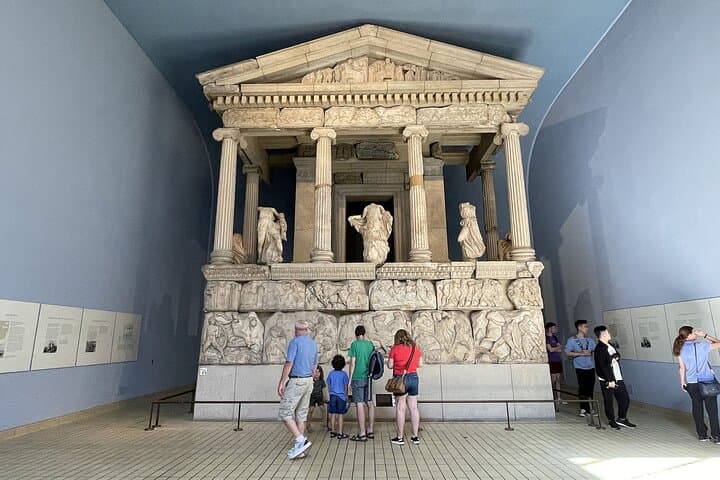
Visitors will encounter objects that reveal technology, trade and belief: Egyptian mummies speak to ancient funerary science; Greek marbles show sculptural technique and later controversies over removal and repatriation. The museum's conservation labs and climate-controlled cases are as much a part of preservation as the labels that explain provenance.
Practically, the tour is on foot and moves at a steady pace designed to cover highlights in about two hours. Comfortable shoes, a light rain layer and a charged phone for the mobile ticket keep the day painless. Peak summer brings larger crowds; mornings and late afternoons are quieter. Photography rules vary by gallery and temporary exhibitions, so follow the guide's instructions. Arrive 15 minutes early for meeting point logistics. For travelers who want context after the tour, the nearby Bloomsbury streets offer cafés and quieter spots to digest what they've seen.
easy.
2 hours.
Suitable for most fitness levels; expect steady walking and standing for two hours
Entry to the British Museum is free; the tour fee covers the licensed guide and the guided experience, not a museum surcharge.
Priority entry is not guaranteed; arrival 15 minutes early is recommended and tours may be reassigned if capacity changes.
The tour is suitable for children, but infants must sit on an adult's lap; the pace and content are family-friendly though galleries can be crowded.
The British Museum provides step-free access, elevators and accessible routes, but notify the tour operator in advance for specific assistance.
Founded in 1753 from Sir Hans Sloane’s collection, the museum grew through donations and imperial acquisitions into one of the world’s largest public repositories of human history.
The British Museum uses climate-controlled cases and on-site conservation labs to protect sensitive artifacts; visitors are encouraged to respect barriers and no-flash rules to minimize light and handling damage.
FLORENCE HERITAGE TOURS operates guided outdoor trips and adventures with an emphasis on safety, stewardship, and memorable experiences.
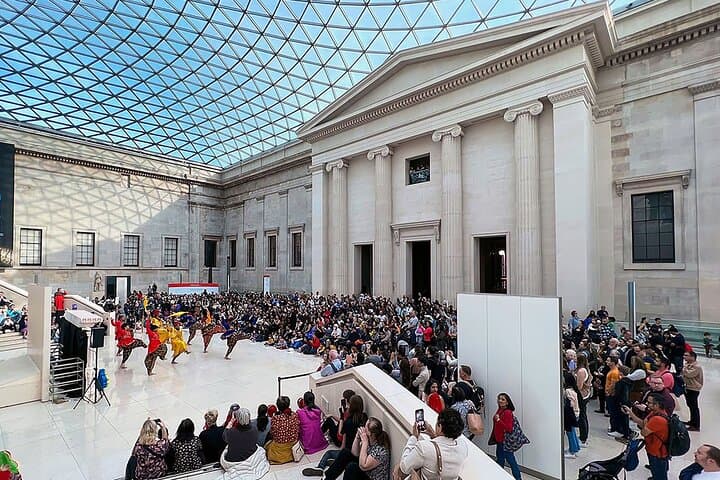
The guide waits outside the museum's classical façade while the Great Court's glass roof throws a pool of light across the marble floor — a fitting opening to two hours that move from world capitals to ancient river valleys without leaving Bloomsbury.
The guide waits outside the museum's classical façade while the Great Court's glass roof throws a pool of light across the marble floor — a fitting opening to two hours that move from world capitals to ancient river valleys without leaving Bloomsbury.
Founded on Sir Hans Sloane's 18th-century collection, the British Museum maps human history: the Rosetta Stone stands like a key on a stone pedestal, Assyrian winged bulls loom with carved menace, and Sutton Hoo artifacts whisper early medieval power. The building itself is part exhibit — Georgian reading rooms and 19th-century galleries reflect changing museum culture and the debates over colonial-era acquisitions.
Visitors will encounter objects that reveal technology, trade and belief: Egyptian mummies speak to ancient funerary science; Greek marbles show sculptural technique and later controversies over removal and repatriation. The museum's conservation labs and climate-controlled cases are as much a part of preservation as the labels that explain provenance.
Practically, the tour is on foot and moves at a steady pace designed to cover highlights in about two hours. Comfortable shoes, a light rain layer and a charged phone for the mobile ticket keep the day painless. Peak summer brings larger crowds; mornings and late afternoons are quieter. Photography rules vary by gallery and temporary exhibitions, so follow the guide's instructions. Arrive 15 minutes early for meeting point logistics. For travelers who want context after the tour, the nearby Bloomsbury streets offer cafés and quieter spots to digest what they've seen.