THE ADVENTURE COLLECTIVE® · Independent discovery and booking for outdoor travel

Walk under a 25-meter blue whale and trace Earth’s violent past in the Volcanoes and Earthquakes gallery. This guided hour-long visit highlights the museum’s top exhibits and gives a practical route for first-time visitors.
Walk under a 25-meter blue whale and trace Earth’s violent past in the Volcanoes and Earthquakes gallery. This guided hour-long visit highlights the museum’s top exhibits and gives a practical route for first-time visitors.
You step into a vaulted hall and the room tilts toward something enormous — the pale curve of a blue whale suspended overhead, ribs like a cathedral roof. Light from high windows washes the stone, and the hush of the crowd gives way to the soft clank of strollers and the murmur of guides placing specimens into story.
Verified experiences and guided adventures in the surrounding area.
Operated by FLORENCE HERITAGE TOURS · London, England
You step into a vaulted hall and the room tilts toward something enormous — the pale curve of a blue whale suspended overhead, ribs like a cathedral roof. Light from high windows washes the stone, and the hush of the crowd gives way to the soft clank of strollers and the murmur of guides placing specimens into story.
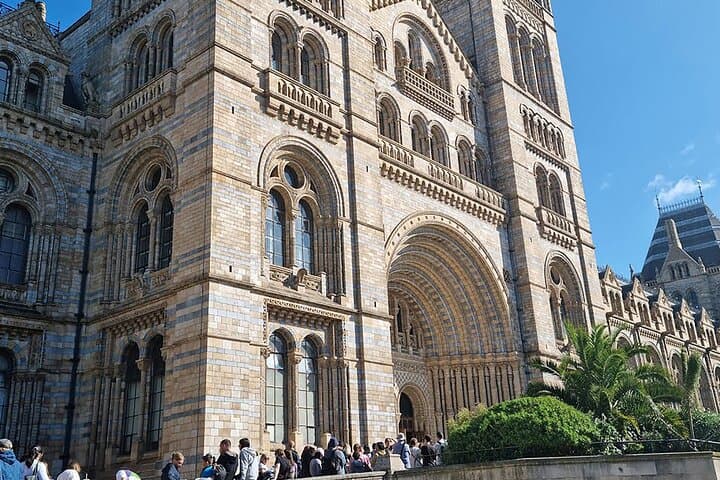
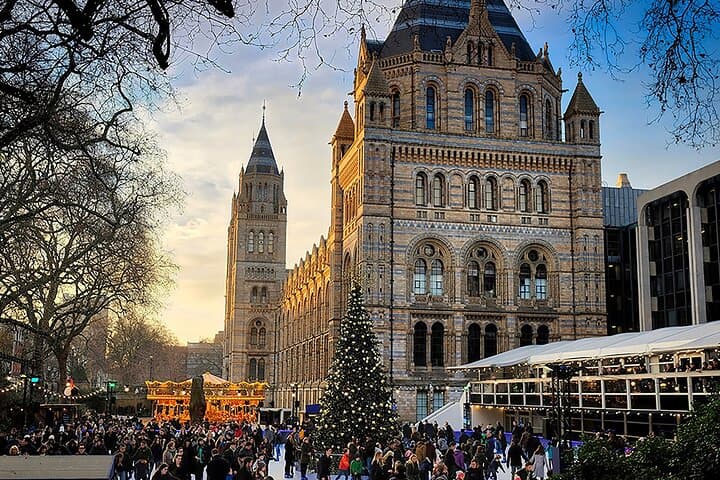
Opened in 1881 and designed by Alfred Waterhouse, the Natural History Museum grew from Victorian collections into one of the world’s leading natural science institutions. Its galleries chart deep time: the fossilized bones of dinosaurs, volcanic rocks that record Earth’s heat and upheaval, and mineral displays that flash with concentrated geologic history. The Darwin Centre and the Cocoon offer a peek at contemporary research and specimen care, where scientists preserve and catalogue samples collected around the globe.
Culturally, the museum sits at the heart of South Kensington’s “Albertopolis” of museums and reflects Britain’s role in global collecting and scientific exchange — complex history folded into cabinets and labels.
Practically: plan 60–90 minutes for a highlights tour (the guided option runs about one hour), or longer if you linger in the Volcanoes and Earthquakes gallery. Wear comfortable shoes for standing and moving between halls; the building has ramps and lifts but expect crowds during school holidays. Use the museum café for a quick break; bring a reusable bottle (water fountains are available). Book tickets in advance to secure your timeslot and arrive 10–15 minutes early for entry and orientation.
easy.
1 hour.
Suitable for all fitness levels; requires ability to walk and stand for short periods
Permanent collection entry is free, but guided or timed tours and special exhibitions may require paid tickets—this booking includes a reservation ticket and guide.
Yes. The museum has step-free entrances, lifts between floors, accessible toilets, and wheelchairs available on a first-come basis; contact the museum for specific needs.
Photography for personal use is generally allowed in permanent galleries but avoid flash and follow any exhibition-specific restrictions.
The guided tour runs about 60 minutes; budget 2–3 hours to see highlights at a relaxed pace and visit a temporary exhibition or the café.
The museum opened in 1881, designed by Alfred Waterhouse to house growing scientific collections; it reflects Victorian-era collecting and the evolution of natural history as a public discipline.
Staff conserve and digitize specimens for research and public education; visitors can support conservation through donations, responsible behavior in galleries, and avoiding flash photography that can degrade displays.
FLORENCE HERITAGE TOURS operates guided outdoor trips and adventures with an emphasis on safety, stewardship, and memorable experiences.
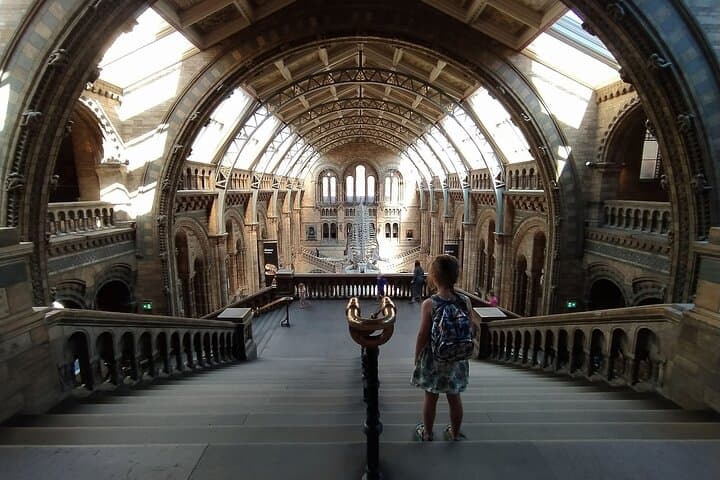
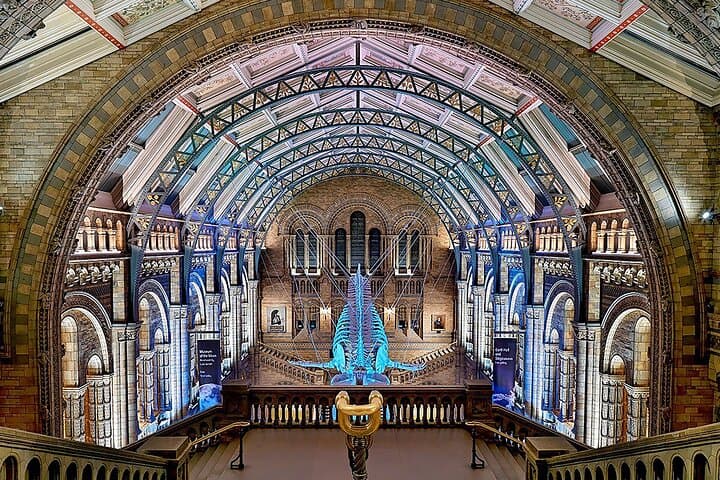
You step into a vaulted hall and the room tilts toward something enormous — the pale curve of a blue whale suspended overhead, ribs like a cathedral roof. Light from high windows washes the stone, and the hush of the crowd gives way to the soft clank of strollers and the murmur of guides placing specimens into story.
You step into a vaulted hall and the room tilts toward something enormous — the pale curve of a blue whale suspended overhead, ribs like a cathedral roof. Light from high windows washes the stone, and the hush of the crowd gives way to the soft clank of strollers and the murmur of guides placing specimens into story.
Opened in 1881 and designed by Alfred Waterhouse, the Natural History Museum grew from Victorian collections into one of the world’s leading natural science institutions. Its galleries chart deep time: the fossilized bones of dinosaurs, volcanic rocks that record Earth’s heat and upheaval, and mineral displays that flash with concentrated geologic history. The Darwin Centre and the Cocoon offer a peek at contemporary research and specimen care, where scientists preserve and catalogue samples collected around the globe.
Culturally, the museum sits at the heart of South Kensington’s “Albertopolis” of museums and reflects Britain’s role in global collecting and scientific exchange — complex history folded into cabinets and labels.
Practically: plan 60–90 minutes for a highlights tour (the guided option runs about one hour), or longer if you linger in the Volcanoes and Earthquakes gallery. Wear comfortable shoes for standing and moving between halls; the building has ramps and lifts but expect crowds during school holidays. Use the museum café for a quick break; bring a reusable bottle (water fountains are available). Book tickets in advance to secure your timeslot and arrive 10–15 minutes early for entry and orientation.