THE ADVENTURE COLLECTIVE® · Independent discovery and booking for outdoor travel

Walk Lomé’s coastal avenues from beach to museum on a 5–6 hour guided tour that mixes colonial architecture, markets and museums. Ideal for travelers who want cultural context, short urban walks and direct encounters with local artisans.
Walk Lomé’s coastal avenues from beach to museum on a 5–6 hour guided tour that mixes colonial architecture, markets and museums. Ideal for travelers who want cultural context, short urban walks and direct encounters with local artisans.
Morning light pours off the Gulf of Guinea as you step from a shaded street into Lomé’s coastal hum — fishing boats rocking, vendors arranging bright cloth, and the city’s low colonial facades warming in the sun. The guided circuit moves at a city-pace rhythm: a stretch of beach, a compact museum, a busy fetish market, a cathedral with German-era lines and an artisan village where craftsmen work in view.
Verified experiences and guided adventures in the surrounding area.
Operated by visite touriste de lome et TOGOVILLE · Lomé, Maritime
Morning light pours off the Gulf of Guinea as you step from a shaded street into Lomé’s coastal hum — fishing boats rocking, vendors arranging bright cloth, and the city’s low colonial facades warming in the sun. The guided circuit moves at a city-pace rhythm: a stretch of beach, a compact museum, a busy fetish market, a cathedral with German-era lines and an artisan village where craftsmen work in view.
Lomé sits on a narrow coastal plain carved from coastal sands and shallow lagoons rather than dramatic geology; its history is maritime and colonial, with layers from indigenous Ewe culture, German mission-era architecture, French administration and the legacy of regional trade, including sites tied to the Atlantic slave trade. That history is visible in the streets, monuments and in museums that catalogue objects and stories.
Culturally, expect direct interaction: market bargaining, demonstrations of local crafts and chances to sample street foods. Physically the day is urban — mostly flat, with short walks between stops (hundreds of meters to a couple kilometers) and minimal elevation gain.
Practical guidance: plan for a 5–6 hour outing, start in the morning to avoid midday heat and maximize museum visits. Bring local currency (CFA franc), sunscreen, a hat and comfortable walking shoes. Bottled water is typically provided, but carry extras if you’re sensitive to heat. The tour mixes indoor exhibits and open-air markets, so a light layer for air-conditioned interiors is useful. Expect a thoughtful, grounded exploration rather than strenuous trekking — an immersive primer on Lomé’s people, places and past.
easy.
5–6 hours.
Suitable for most fitness levels; involves repeated short walks and some standing during visits
The itinerary runs about 5–6 hours (approximately 320 minutes) with multiple stops including the National Museum, markets and beaches.
Yes — the day is classified as physically easy with mostly flat walking; infants may ride in strollers but expect crowded market areas.
Entrance fees and bottled water are listed as included in the tour details; confirm any extras with your guide at booking.
Bring small CFA notes, a reusable bag for purchases, and be prepared to bargain politely — sellers expect negotiation.
Lomé’s position on the Gulf of Guinea made it an administrative and commercial hub during German and later French colonial periods; the National Museum and monuments reflect those layered histories.
Coastal erosion and litter are local concerns; choose guides and vendors who practice waste reduction and avoid single-use plastics when possible.
visite touriste de lome et TOGOVILLE operates guided outdoor trips and adventures with an emphasis on safety, stewardship, and memorable experiences.


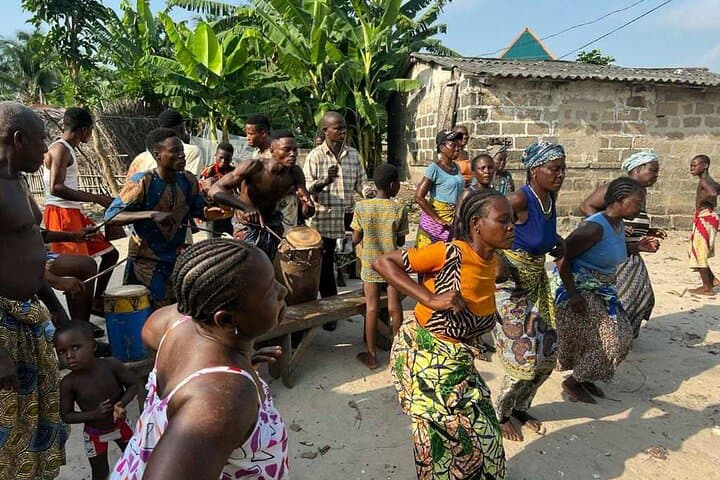
Morning light pours off the Gulf of Guinea as you step from a shaded street into Lomé’s coastal hum — fishing boats rocking, vendors arranging bright cloth, and the city’s low colonial facades warming in the sun. The guided circuit moves at a city-pace rhythm: a stretch of beach, a compact museum, a busy fetish market, a cathedral with German-era lines and an artisan village where craftsmen work in view.
Morning light pours off the Gulf of Guinea as you step from a shaded street into Lomé’s coastal hum — fishing boats rocking, vendors arranging bright cloth, and the city’s low colonial facades warming in the sun. The guided circuit moves at a city-pace rhythm: a stretch of beach, a compact museum, a busy fetish market, a cathedral with German-era lines and an artisan village where craftsmen work in view.
Lomé sits on a narrow coastal plain carved from coastal sands and shallow lagoons rather than dramatic geology; its history is maritime and colonial, with layers from indigenous Ewe culture, German mission-era architecture, French administration and the legacy of regional trade, including sites tied to the Atlantic slave trade. That history is visible in the streets, monuments and in museums that catalogue objects and stories.
Culturally, expect direct interaction: market bargaining, demonstrations of local crafts and chances to sample street foods. Physically the day is urban — mostly flat, with short walks between stops (hundreds of meters to a couple kilometers) and minimal elevation gain.
Practical guidance: plan for a 5–6 hour outing, start in the morning to avoid midday heat and maximize museum visits. Bring local currency (CFA franc), sunscreen, a hat and comfortable walking shoes. Bottled water is typically provided, but carry extras if you’re sensitive to heat. The tour mixes indoor exhibits and open-air markets, so a light layer for air-conditioned interiors is useful. Expect a thoughtful, grounded exploration rather than strenuous trekking — an immersive primer on Lomé’s people, places and past.