THE ADVENTURE COLLECTIVE® · Independent discovery and booking for outdoor travel

A short guided trail into Siq al‑Barid (Little Petra) distills Petra’s carved architecture into cooler, quieter passages. Expect painted interiors, compact triclinia, and easy scrambling with cultural context from an English‑speaking guide.
A short guided trail into Siq al‑Barid (Little Petra) distills Petra’s carved architecture into cooler, quieter passages. Expect painted interiors, compact triclinia, and easy scrambling with cultural context from an English‑speaking guide.
You step from a narrow road into a pocket of cool shade—Siq al-Barid’s 350‑metre gorge closes in, the sandstone walls leaning like pages of a book. Light slices into open courts where carved façades and rock‑cut stairs cluster together, and the air carries the low hum of village life beyond the cliffs.
Verified experiences and guided adventures in the surrounding area.
Operated by Jordan Horizon Tours · Wadi Musa, Ma'an Governorate
You step from a narrow road into a pocket of cool shade—Siq al-Barid’s 350‑metre gorge closes in, the sandstone walls leaning like pages of a book. Light slices into open courts where carved façades and rock‑cut stairs cluster together, and the air carries the low hum of village life beyond the cliffs.
Little Petra sits nine kilometres north of Wadi Musa and was once a Nabatean caravan stop that mirrors its grander neighbor in miniature. Geologically it’s classic Petra: soft, layered sandstone carved by wind and seasonal flash floods into tight siqs, triclinia, and small temples. Cultural traces are visible in the Painted House, a rare surviving Nabatean interior with faded pigments and iconography that hint at ritual and trade. Today, nearby Bedouin and Ammareen families maintain livelihoods on the surrounding uplands and at small campsites.
On a guided trail you’ll move deliberately—through a chilly, narrow passage that gives the place its name, into open courts with wine‑dining triclinia, and up rock steps to views over the main Petra valley. The route is short (about 1–2 hours including transfers), mostly even underfoot but with short scrambles and uneven stone steps.
Practical guide: travel early or late in the day to avoid heat and busier groups, bring 1–2 liters of water, sun protection and sturdy shoes with grip. Respect local vendors and guides, stick to carved paths to limit erosion, and allow your guide time to point out painted panels and hidden viewpoints. Little Petra rewards a measured pace—this is archaeology and landscape that asks you to look close.
easy.
1–2 hours (including transfer).
Suitable for most fitness levels; requires short stair climbs and brief scrambling.
The guided portion is about 1 hour on site with transfers from Petra/Wadi Musa included, making the total outing approximately 1–2 hours depending on pickup.
Entry policies vary; some visits are included as part of larger Petra tickets while others are free—confirm with your operator before arrival.
Yes; the site is relatively compact and suitable for families, though there are stairs and uneven ground—take a slower pace and assist where needed.
Yes, the standard tour includes commentary at key spots including the Painted House, triclinia, and viewpoints.
Little Petra served as a Nabatean caravan stop and satellite settlement with dense residential and dining spaces carved into the siq.
Foot traffic concentrates erosion on carved stairways—stay on established paths, avoid touching fragile painted surfaces, and support local guides who practice responsible visitation.
Jordan Horizon Tours operates guided outdoor trips and adventures with an emphasis on safety, stewardship, and memorable experiences.
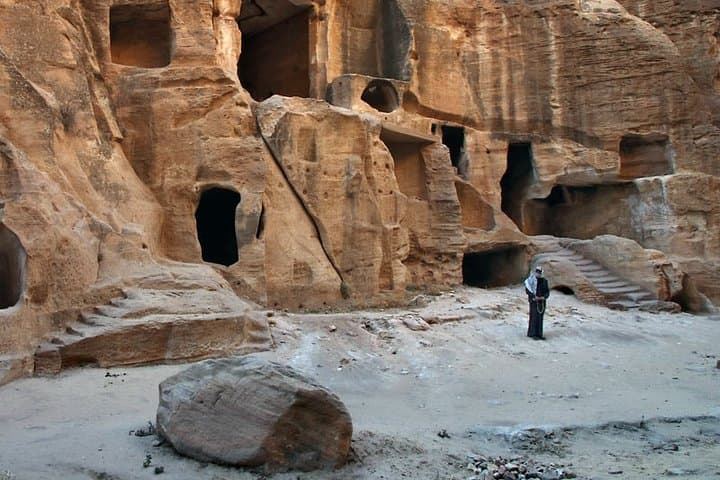
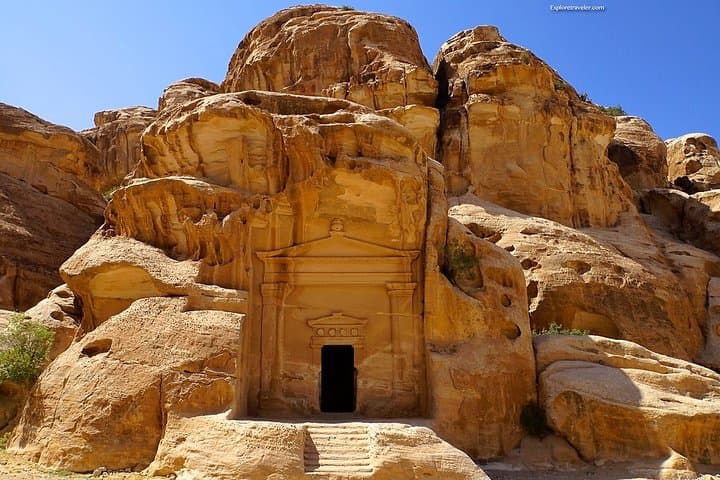
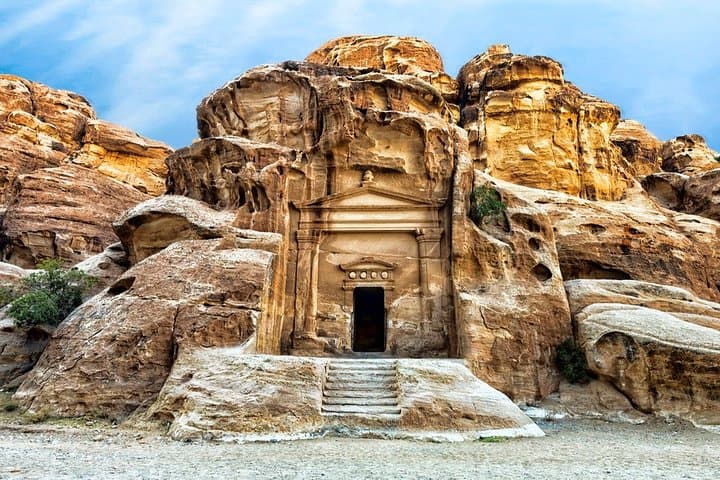
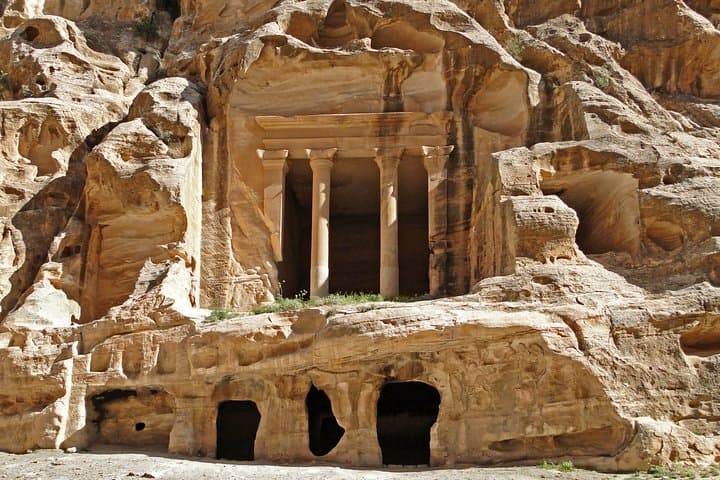
You step from a narrow road into a pocket of cool shade—Siq al-Barid’s 350‑metre gorge closes in, the sandstone walls leaning like pages of a book. Light slices into open courts where carved façades and rock‑cut stairs cluster together, and the air carries the low hum of village life beyond the cliffs.
You step from a narrow road into a pocket of cool shade—Siq al-Barid’s 350‑metre gorge closes in, the sandstone walls leaning like pages of a book. Light slices into open courts where carved façades and rock‑cut stairs cluster together, and the air carries the low hum of village life beyond the cliffs.
Little Petra sits nine kilometres north of Wadi Musa and was once a Nabatean caravan stop that mirrors its grander neighbor in miniature. Geologically it’s classic Petra: soft, layered sandstone carved by wind and seasonal flash floods into tight siqs, triclinia, and small temples. Cultural traces are visible in the Painted House, a rare surviving Nabatean interior with faded pigments and iconography that hint at ritual and trade. Today, nearby Bedouin and Ammareen families maintain livelihoods on the surrounding uplands and at small campsites.
On a guided trail you’ll move deliberately—through a chilly, narrow passage that gives the place its name, into open courts with wine‑dining triclinia, and up rock steps to views over the main Petra valley. The route is short (about 1–2 hours including transfers), mostly even underfoot but with short scrambles and uneven stone steps.
Practical guide: travel early or late in the day to avoid heat and busier groups, bring 1–2 liters of water, sun protection and sturdy shoes with grip. Respect local vendors and guides, stick to carved paths to limit erosion, and allow your guide time to point out painted panels and hidden viewpoints. Little Petra rewards a measured pace—this is archaeology and landscape that asks you to look close.