THE ADVENTURE COLLECTIVE® · Independent discovery and booking for outdoor travel

Climb the hilltop Acropolis and lose yourself in Lindos’ narrow white lanes on this self-guided village walk from Rhodes. Expect steep limestone steps, sea views, and a concentrated taste of island history and culture.
Climb the hilltop Acropolis and lose yourself in Lindos’ narrow white lanes on this self-guided village walk from Rhodes. Expect steep limestone steps, sea views, and a concentrated taste of island history and culture.
You step off the minibus and the Aegean opens: wind-sliced light on white walls, merchant doors yawning onto narrow lanes, and the Acropolis above—a stone crown you can climb at your own pace.
Verified experiences and guided adventures in the surrounding area.
Operated by Rhodian | DMC · Lindos, Rhodes (Dodecanese)
You step off the minibus and the Aegean opens: wind-sliced light on white walls, merchant doors yawning onto narrow lanes, and the Acropolis above—a stone crown you can climb at your own pace.
Lindos began as a Dorian town and its Acropolis holds layers of history from Classical temples to Byzantine and medieval fortifications. Geologically the headland is composed of limestone cliffs molded by marine erosion; underfoot are old cobbles and worn limestone steps that slope toward St. Paul’s Bay, where the sea tests your balance with a persistent, inviting push.
The village keeps a strong island character: cafés pour Greek coffee under shutters, and craftsmen still repair nets and doors. Culture here is tactile—icons in tiny chapels, Greek Orthodox services, and local tavernas serving fresh-caught fish and souvlaki.
Practically, expect a 3-hour window to explore the Acropolis, hilltop ruins, and the maze of alleys. The climb involves uneven, sometimes steep steps and exposed sections above the village; bring sturdy shoes, water, and sunscreen. Early morning or late afternoon visits cut the heat and crowds. Photography is rewarding at golden hour when the sea turns to molten cobalt and the stone warms.
Admission to the archaeological site is separate from the transfer; check opening hours. Respect ropes and signs—this is an active conservation site. For a fuller day, combine the walk with a swim at nearby bays or a slow lunch overlooking the harbor before returning to Rhodes.
moderate.
5 hours (including transfers).
Moderate fitness required—comfortable with 30–45 minutes of uphill walking on uneven steps.
Plan about 2–3 hours on foot to climb the Acropolis, explore the village lanes, and visit viewpoints; total tour time including transfers is roughly 5 hours.
Admission to the archaeological site is not included in the transfer; buy tickets at the site—check current prices and opening hours beforehand.
Narrow lanes and steep steps make strollers impractical; while infants can be carried, expect some sections to be physically challenging for young children.
Yes—St. Paul’s Bay and Lindos Beach are within walking distance and offer good swimming; bring swimwear and plan extra time if you want to swim.
Lindos was a prominent Dorian city; its Acropolis preserves ancient temples, Hellenistic terraces and later Byzantine and medieval fortifications indicating continuous strategic use.
High visitor numbers stress fragile limestone and archaeological fabric—stay on marked paths, avoid touching exposed ruins, and carry out all trash.
Rhodian | DMC operates guided outdoor trips and adventures with an emphasis on safety, stewardship, and memorable experiences.
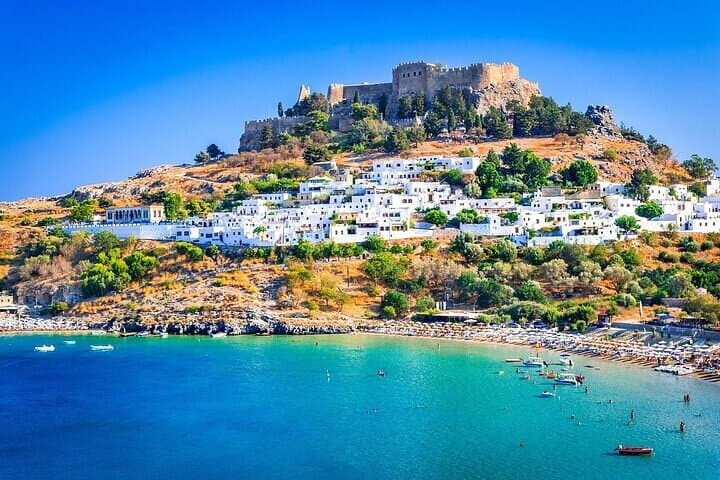
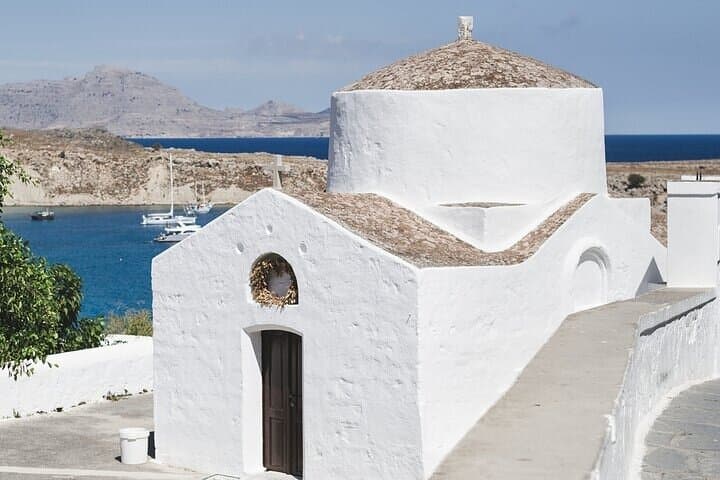

You step off the minibus and the Aegean opens: wind-sliced light on white walls, merchant doors yawning onto narrow lanes, and the Acropolis above—a stone crown you can climb at your own pace.
You step off the minibus and the Aegean opens: wind-sliced light on white walls, merchant doors yawning onto narrow lanes, and the Acropolis above—a stone crown you can climb at your own pace.
Lindos began as a Dorian town and its Acropolis holds layers of history from Classical temples to Byzantine and medieval fortifications. Geologically the headland is composed of limestone cliffs molded by marine erosion; underfoot are old cobbles and worn limestone steps that slope toward St. Paul’s Bay, where the sea tests your balance with a persistent, inviting push.
The village keeps a strong island character: cafés pour Greek coffee under shutters, and craftsmen still repair nets and doors. Culture here is tactile—icons in tiny chapels, Greek Orthodox services, and local tavernas serving fresh-caught fish and souvlaki.
Practically, expect a 3-hour window to explore the Acropolis, hilltop ruins, and the maze of alleys. The climb involves uneven, sometimes steep steps and exposed sections above the village; bring sturdy shoes, water, and sunscreen. Early morning or late afternoon visits cut the heat and crowds. Photography is rewarding at golden hour when the sea turns to molten cobalt and the stone warms.
Admission to the archaeological site is separate from the transfer; check opening hours. Respect ropes and signs—this is an active conservation site. For a fuller day, combine the walk with a swim at nearby bays or a slow lunch overlooking the harbor before returning to Rhodes.