THE ADVENTURE COLLECTIVE® · Independent discovery and booking for outdoor travel

Board reed crafts and motor launches to visit the Uros floating islands, hike Amantani’s terraced slopes, and linger on Llachón’s shoreline. This full-day circuit from Cusco (via Puno) combines cultural exchange with striking high‑altitude scenery.
Board reed crafts and motor launches to visit the Uros floating islands, hike Amantani’s terraced slopes, and linger on Llachón’s shoreline. This full-day circuit from Cusco (via Puno) combines cultural exchange with striking high‑altitude scenery.
Dawn on Lake Titicaca feels sharp and vast: air thin at nearly 3,812 meters, reed boats cutting across glassy water, and islands that seem to float just beyond the horizon. A full-day tour from Cusco (with overnight bus options via Puno) moves through that high-altitude landscape, beginning at the Uros reed islands, then out to Amantani’s terraced slopes and finally to the quiet bays of Llachón.
Verified experiences and guided adventures in the surrounding area.
Operated by Peru Hop · Puno, Puno
Dawn on Lake Titicaca feels sharp and vast: air thin at nearly 3,812 meters, reed boats cutting across glassy water, and islands that seem to float just beyond the horizon. A full-day tour from Cusco (with overnight bus options via Puno) moves through that high-altitude landscape, beginning at the Uros reed islands, then out to Amantani’s terraced slopes and finally to the quiet bays of Llachón.
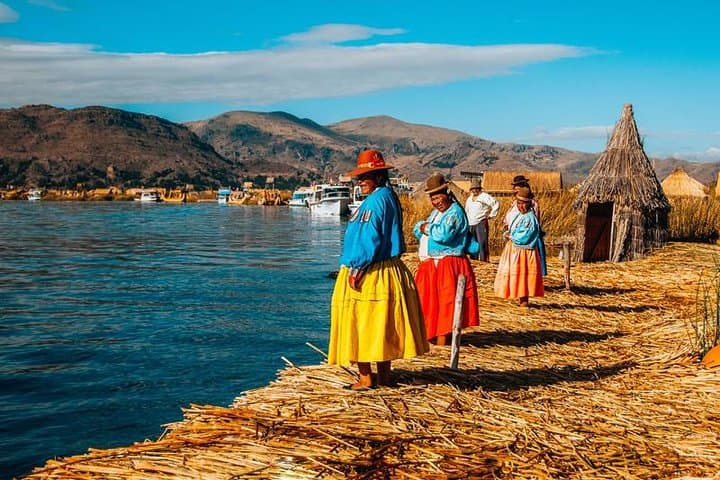
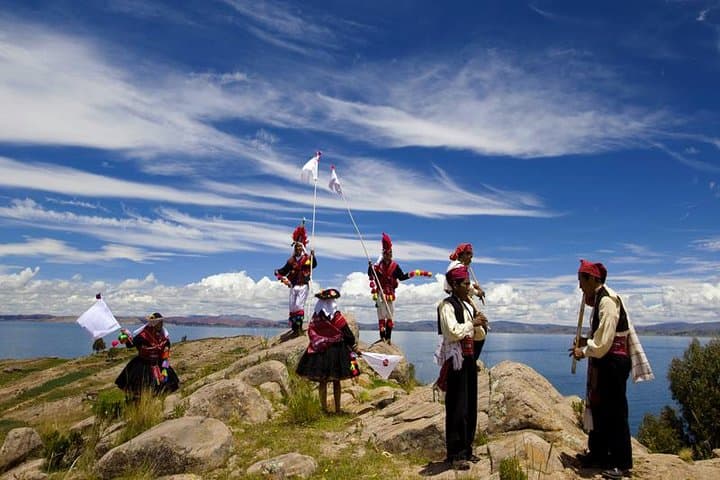
The lake itself is a geologic remnant of an ancient basin carved by Andean uplift and fed by cold mountain runoff. Uros islands are man-made platforms of totora reed, a living craft that has supported Aymara and Quechua communities for centuries. Amantani preserves traditional communal life: stone houses, narrow paths, and terraces used for potato and quinoa cultivation. Llachón’s shoreline offers panoramic views and a glimpse at rural lakefront livelihoods.
Practical guidance: expect multiple short boat transfers and 1–2 hours of guided walking on uneven stone and dirt paths; altitude can make simple exertion feel harder. Carry water, sun protection, and layers for wind and early-morning chill. Lunch is typically a shoreside meal on Llachón; bathrooms are basic on islands. Guides often provide bilingual context on local customs and history, and boats range from motorized launches to smaller passenger craft.
Timing matters: an early start maximizes calm water and clear light. Respect local rules when visiting communities—ask before photographing people and avoid single-use plastic to reduce waste on fragile islands.
moderate.
12–16 hours (including transfers to/from Puno).
Able to walk on uneven ground for 1–3 hours total and tolerate high altitude; light to moderate fitness recommended
Lake Titicaca sits around 3,812 m (12,507 ft); most visitors feel breathless during exertion—plan to acclimatize, hydrate, and move slowly.
Yes; Uros islands are built from layers of totora reed anchored to the lakebed and continuously maintained by local families.
Yes—walking is limited and mostly gentle, but boats and uneven surfaces require mobility; discuss any mobility concerns with the operator beforehand.
Guides are commonly bilingual (Spanish/English); always ask permission before photographing residents and respect any requests to decline.
The lake has been a cultural crossroads for Aymara and Quechua peoples for millennia; Uros reed construction predates modern borders and reflects adaptive engineering.
Visitor pressure and plastic pollution threaten fragile reed systems; favor operators who minimize single-use plastics and practice leave-no-trace principles.
Peru Hop operates guided outdoor trips and adventures with an emphasis on safety, stewardship, and memorable experiences.


Dawn on Lake Titicaca feels sharp and vast: air thin at nearly 3,812 meters, reed boats cutting across glassy water, and islands that seem to float just beyond the horizon. A full-day tour from Cusco (with overnight bus options via Puno) moves through that high-altitude landscape, beginning at the Uros reed islands, then out to Amantani’s terraced slopes and finally to the quiet bays of Llachón.
Dawn on Lake Titicaca feels sharp and vast: air thin at nearly 3,812 meters, reed boats cutting across glassy water, and islands that seem to float just beyond the horizon. A full-day tour from Cusco (with overnight bus options via Puno) moves through that high-altitude landscape, beginning at the Uros reed islands, then out to Amantani’s terraced slopes and finally to the quiet bays of Llachón.
The lake itself is a geologic remnant of an ancient basin carved by Andean uplift and fed by cold mountain runoff. Uros islands are man-made platforms of totora reed, a living craft that has supported Aymara and Quechua communities for centuries. Amantani preserves traditional communal life: stone houses, narrow paths, and terraces used for potato and quinoa cultivation. Llachón’s shoreline offers panoramic views and a glimpse at rural lakefront livelihoods.
Practical guidance: expect multiple short boat transfers and 1–2 hours of guided walking on uneven stone and dirt paths; altitude can make simple exertion feel harder. Carry water, sun protection, and layers for wind and early-morning chill. Lunch is typically a shoreside meal on Llachón; bathrooms are basic on islands. Guides often provide bilingual context on local customs and history, and boats range from motorized launches to smaller passenger craft.
Timing matters: an early start maximizes calm water and clear light. Respect local rules when visiting communities—ask before photographing people and avoid single-use plastic to reduce waste on fragile islands.