THE ADVENTURE COLLECTIVE® · Independent discovery and booking for outdoor travel

A private, customizable walk through La Paz that pairs street markets, political landmarks and a 32 km cable car circuit. Ideal for travelers who want a tailored introduction to the city's history, culture and skyline views.
A private, customizable walk through La Paz that pairs street markets, political landmarks and a 32 km cable car circuit. Ideal for travelers who want a tailored introduction to the city's history, culture and skyline views.
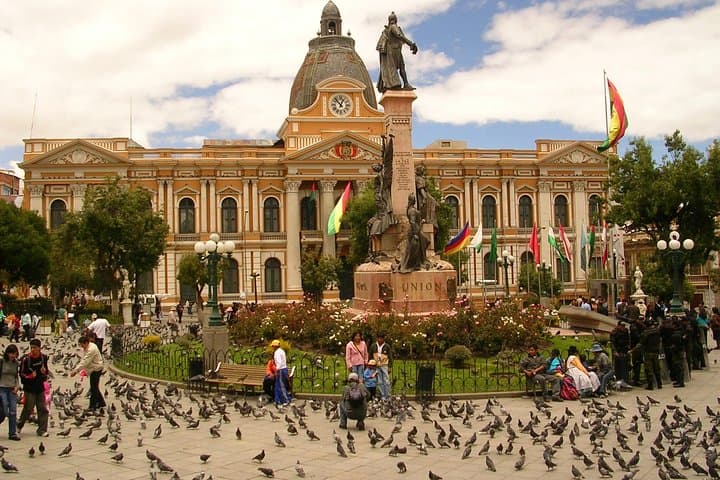
You step out into a thin-air city where the wind off the Andes seems to nudge you forward, and La Paz spreads below like a living map of streets, markets and cable car lines. A private guide will shape the route to your interests—history at Plaza Murillo, the frenetic color of the witches’ market, a sweep along the Mi Teleférico cable car for panoramic city-and-snowline views.
Verified experiences and guided adventures in the surrounding area.
Operated by Sami Tours · La Paz, La Paz
You step out into a thin-air city where the wind off the Andes seems to nudge you forward, and La Paz spreads below like a living map of streets, markets and cable car lines. A private guide will shape the route to your interests—history at Plaza Murillo, the frenetic color of the witches’ market, a sweep along the Mi Teleférico cable car for panoramic city-and-snowline views.
La Paz sits in a deep canyon at roughly 3,650 m (with El Alto plateau rising above 4,000 m), a capital forged by colonial politics, Aymara traditions and modern urban growth. The city’s geology—steep slopes carved by Andean uplift—makes the cable car network both transit and vantage point. Expect encounters with local culture: ritual offerings, street food stalls selling salteñas, and the municipal square where Bolivia’s political story is inscribed in stone.
The tour often includes the cable car circuit (a 32 km network of colored lines), colonial churches with curious façades, and lesser‑seen corners like a working open-air prison viewed from the square. Wildlife appears in small moments—viscachas on rocky ledges or Andean birds wheeling above.
Practical edge: altitude matters—move slowly, hydrate, and schedule the tour in the morning for clearer skies and cooler air. Wear sturdy shoes for cobbled streets and layers against sun and sudden wind. Guides can pick you up from hotels or the airport; public transit fares (cable car) may be included. This is a walkable, customizable urban adventure that rewards curiosity and a bit of acclimatization.
easy.
1–5 hours.
Suitable for most fitness levels; involves walking on uneven cobblestones and short climbs—basic stamina required.
Yes—La Paz is high (≈3,650 m). Move slowly, hydrate, avoid heavy exertion on your first day, and notify your guide if you feel unwell.
Cable car fare is often included according to the tour description, but confirm at booking; guides commonly use the Mi Teleférico network for sights and transit.
Yes—the tour is private and adaptable; the operator notes wheelchair accessibility on the cable car circuit but some historic streets have uneven surfaces.
Bolivianos are standard; many vendors prefer cash. Major establishments accept cards, but carry small bills for markets and transit.
La Paz grew as an administrative and trade center during colonial times; Plaza Murillo marks political power with the presidential palace and cathedral framing centuries of change.
The city faces air quality and waste-management challenges; favor responsible guides, use refillable water bottles, and support local businesses to reduce environmental impact.
Sami Tours operates guided outdoor trips and adventures with an emphasis on safety, stewardship, and memorable experiences.

You step out into a thin-air city where the wind off the Andes seems to nudge you forward, and La Paz spreads below like a living map of streets, markets and cable car lines. A private guide will shape the route to your interests—history at Plaza Murillo, the frenetic color of the witches’ market, a sweep along the Mi Teleférico cable car for panoramic city-and-snowline views.
You step out into a thin-air city where the wind off the Andes seems to nudge you forward, and La Paz spreads below like a living map of streets, markets and cable car lines. A private guide will shape the route to your interests—history at Plaza Murillo, the frenetic color of the witches’ market, a sweep along the Mi Teleférico cable car for panoramic city-and-snowline views.
La Paz sits in a deep canyon at roughly 3,650 m (with El Alto plateau rising above 4,000 m), a capital forged by colonial politics, Aymara traditions and modern urban growth. The city’s geology—steep slopes carved by Andean uplift—makes the cable car network both transit and vantage point. Expect encounters with local culture: ritual offerings, street food stalls selling salteñas, and the municipal square where Bolivia’s political story is inscribed in stone.
The tour often includes the cable car circuit (a 32 km network of colored lines), colonial churches with curious façades, and lesser‑seen corners like a working open-air prison viewed from the square. Wildlife appears in small moments—viscachas on rocky ledges or Andean birds wheeling above.
Practical edge: altitude matters—move slowly, hydrate, and schedule the tour in the morning for clearer skies and cooler air. Wear sturdy shoes for cobbled streets and layers against sun and sudden wind. Guides can pick you up from hotels or the airport; public transit fares (cable car) may be included. This is a walkable, customizable urban adventure that rewards curiosity and a bit of acclimatization.