THE ADVENTURE COLLECTIVE® · Independent discovery and booking for outdoor travel

Step into Kooringa Cave for a one-hour guided tour through a single, ornate chamber of stalactites, stalagmites and rippled draperies. Expect steep steps, short ladders and a constant cool 15°C that keeps the cave’s 430-million-year-old limestone formations well preserved.
Step into Kooringa Cave for a one-hour guided tour through a single, ornate chamber of stalactites, stalagmites and rippled draperies. Expect steep steps, short ladders and a constant cool 15°C that keeps the cave’s 430-million-year-old limestone formations well preserved.
A cool breath of 15°C air meets you at the mouth of Kooringa Cave, and the world outside—gum trees and sun-baked road—seems to hesitate at the threshold. On a guided hour-long circuit visitors step down a steep entrance, climb short ladders and follow a narrow route into a single, high-ceilinged chamber where columns, rippled draperies and delicate stalactites hang like frozen gestures.
Verified experiences and guided adventures in the surrounding area.
Operated by NSW National Parks and Wildlife Service · Goulburn, New South Wales
A cool breath of 15°C air meets you at the mouth of Kooringa Cave, and the world outside—gum trees and sun-baked road—seems to hesitate at the threshold. On a guided hour-long circuit visitors step down a steep entrance, climb short ladders and follow a narrow route into a single, high-ceilinged chamber where columns, rippled draperies and delicate stalactites hang like frozen gestures.
The limestone here dates back roughly 430 million years. Rainwater, patiently acidic, still shapes the cave by threading through fractures and leaving mineral traces that form curtains and pillars. The site sits within Wombeyan Karst Conservation Reserve, an area managed for both public access and the protection of fragile subterranean formations; Indigenous history and settler-era exploration are woven into the reserve’s story, with the cave system long known to local communities.
Practicalities are straightforward: tours run about 60 minutes, are fully guided by National Parks staff and require a moderate fitness level — expect 200 internal steps, narrow passages and some ladders. The floor can be slippery; sturdy closed shoes and a warm midlayer are advisable given the constant cave temperature. Food isn’t permitted and there are no toilets at the cave entrance, so use facilities at the visitor centre before joining the tour. Photography is encouraged but follow the guide’s directions and take care on wet ground.
For travelers, Kooringa delivers an intimate encounter with deep time — geological processes made visible — and a compact, accessible cave experience that rewards curiosity and careful footing.
moderate.
1 hour.
Moderate level of fitness; able to manage 200 steps, short ladders and confined spaces.
Yes—children are permitted but must be accompanied by an adult; the route includes ladders, narrow sections and many steps.
No—public amenities are at the visitor centre; visitors should use those facilities before the tour.
Yes; photography is allowed but follow the guide’s instructions and avoid obstructing the path or touching formations.
No—the entrance is steep, with ladders and narrow passages, so it is not suitable for wheelchairs or prams.
The Wombeyan karst system sits on ancient Silurian limestones and has been shaped over hundreds of millions of years; the reserve also holds cultural significance for local Indigenous communities.
Visitors are asked not to touch formations and to stay on guided routes—splashing, litter and skin oils can halt mineral growth and damage delicate cave features.
NSW National Parks and Wildlife Service operates guided outdoor trips and adventures with an emphasis on safety, stewardship, and memorable experiences.
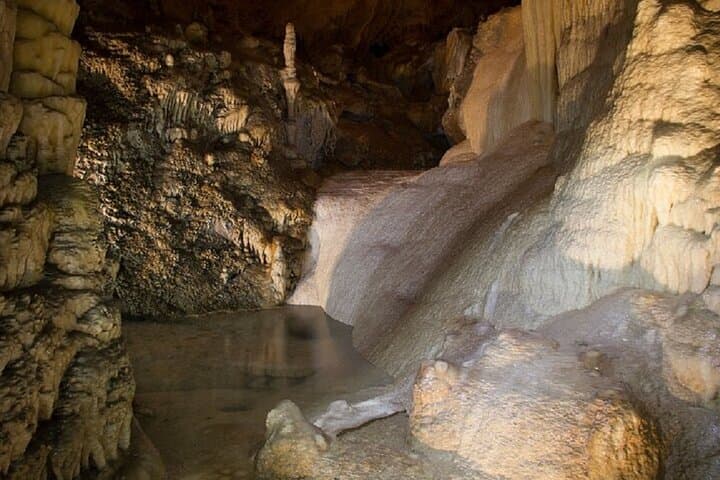
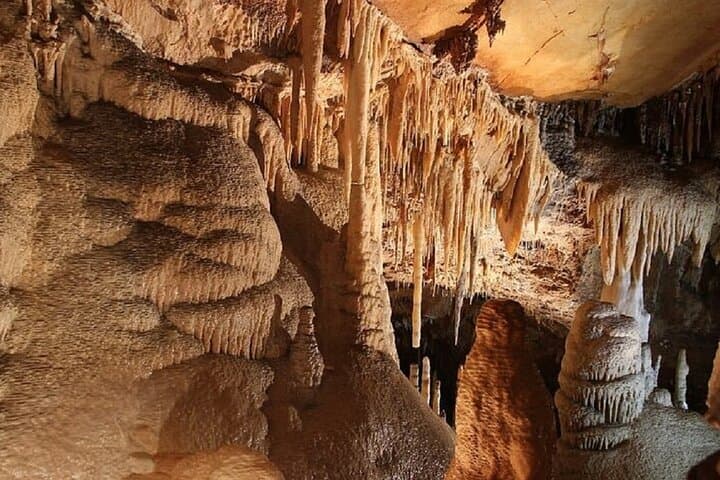
A cool breath of 15°C air meets you at the mouth of Kooringa Cave, and the world outside—gum trees and sun-baked road—seems to hesitate at the threshold. On a guided hour-long circuit visitors step down a steep entrance, climb short ladders and follow a narrow route into a single, high-ceilinged chamber where columns, rippled draperies and delicate stalactites hang like frozen gestures.
A cool breath of 15°C air meets you at the mouth of Kooringa Cave, and the world outside—gum trees and sun-baked road—seems to hesitate at the threshold. On a guided hour-long circuit visitors step down a steep entrance, climb short ladders and follow a narrow route into a single, high-ceilinged chamber where columns, rippled draperies and delicate stalactites hang like frozen gestures.
The limestone here dates back roughly 430 million years. Rainwater, patiently acidic, still shapes the cave by threading through fractures and leaving mineral traces that form curtains and pillars. The site sits within Wombeyan Karst Conservation Reserve, an area managed for both public access and the protection of fragile subterranean formations; Indigenous history and settler-era exploration are woven into the reserve’s story, with the cave system long known to local communities.
Practicalities are straightforward: tours run about 60 minutes, are fully guided by National Parks staff and require a moderate fitness level — expect 200 internal steps, narrow passages and some ladders. The floor can be slippery; sturdy closed shoes and a warm midlayer are advisable given the constant cave temperature. Food isn’t permitted and there are no toilets at the cave entrance, so use facilities at the visitor centre before joining the tour. Photography is encouraged but follow the guide’s directions and take care on wet ground.
For travelers, Kooringa delivers an intimate encounter with deep time — geological processes made visible — and a compact, accessible cave experience that rewards curiosity and careful footing.