THE ADVENTURE COLLECTIVE® · Independent discovery and booking for outdoor travel

Strap on crampons, climb a ladder and step into a living ice cathedral carved from Mýrdalsjökull. This three-hour super-jeep tour from Vík offers close-up views of Katla’s glacier-formed caves—short, supervised, and striking.
Strap on crampons, climb a ladder and step into a living ice cathedral carved from Mýrdalsjökull. This three-hour super-jeep tour from Vík offers close-up views of Katla’s glacier-formed caves—short, supervised, and striking.
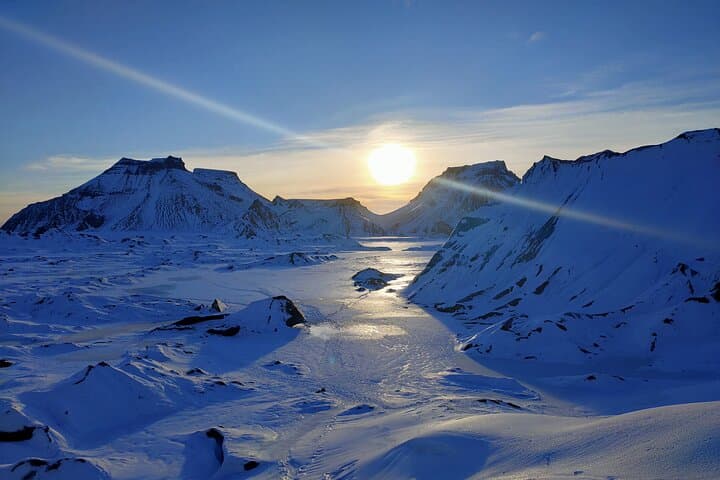
You step out of a super jeep onto a wind-scoured plain and the glacier fills the horizon—an ocean of blue and black ice pressing down from the volcano above.
Verified experiences and guided adventures in the surrounding area.
Operated by Southcoast Adventure · Vík, Southern Region
You step out of a super jeep onto a wind-scoured plain and the glacier fills the horizon—an ocean of blue and black ice pressing down from the volcano above.
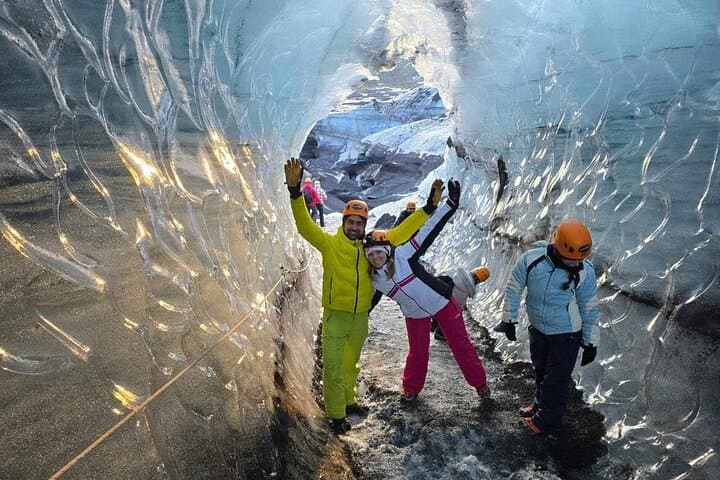
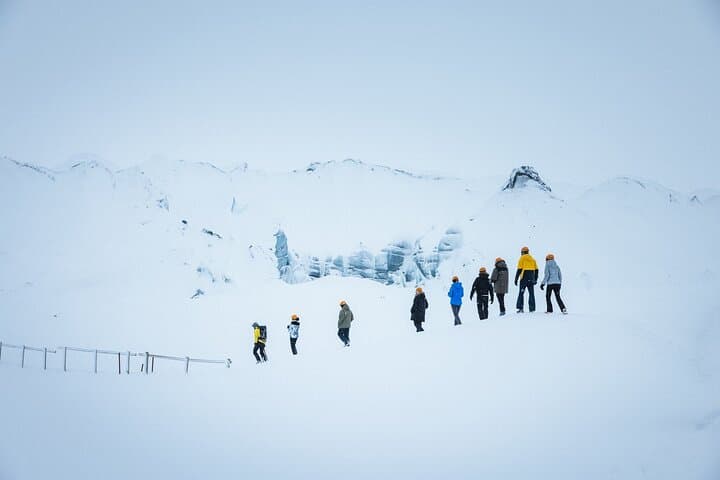
Guides fit helmets and crampons, and the group moves toward a chute in the glacier where ladders and a few careful steps lead into a living ice chamber. The dome breathes light; layers of volcanic ash threaded through the ice paint bands of charcoal and glassy blue. The cave is not static—the roof, walls and openings shift with melt and winter freeze, so every visit reads a different page of the glacier’s story.
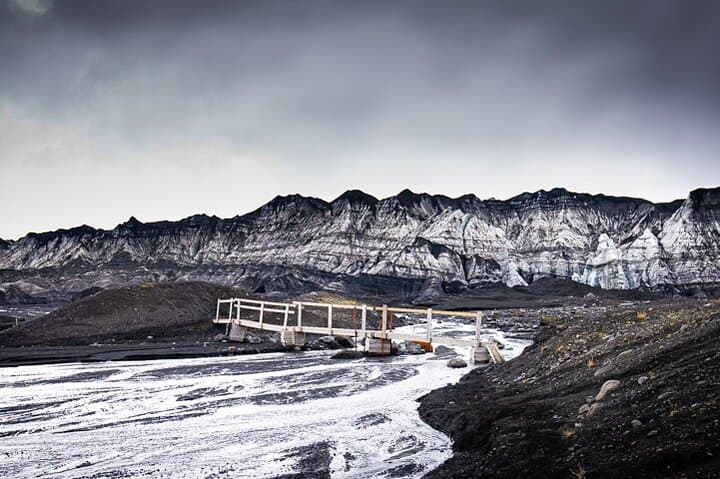
Geology here is direct: Katla, the volcano under Mýrdalsjökull, supplies the ash that streaks the ice, and the outlet glacier Kötlujökull carves tongues that create caverns when meltwater and pressure open voids. Culturally, the southern coast by Vík mixes rural farmsteads with seafaring history, and locals watch the glacier’s moods closely—Katla’s eruptions are part of regional memory.
Practically, the tour is short (about three hours round-trip) and suitable for people in average fitness; guides supply helmets and crampons and will lead ladder climbs into the cave. Weather, daylight and ice conditions govern access—book with flexibility and wear warm, waterproof layers and sturdy boots. Phones and cameras work well but bring a small tripod or grippy case for low-light shots. Expect clear safety briefings, close supervision on the ice, and a profoundly immediate encounter with Iceland’s glacial machinery.
easy.
3 hours.
Average physical condition; able to walk on uneven ice and climb short ladders
Yes—guides provide helmets and crampons as part of the tour kit; you should bring suitable boots to fit the crampons.
The tour is advertised as suitable for average fitness levels and not physically demanding, but very young children or those unable to climb short ladders should check with the operator first.
Meet in Vík; the full experience is about three hours including transfer and time on the glacier.
Yes—ice caves are seasonal and tours can be canceled for safety if weather, daylight or ice conditions are unsafe; operators typically offer refunds or rescheduling policies.
Katla is an active subglacial volcano beneath Mýrdalsjökull; its eruptions have shaped local landscapes and left ash bands visible in the glacier’s ice.
Glacial caves are fragile and change rapidly—sticking to guided routes, avoiding touching delicate ice formations and packing out all waste helps protect the site.
Southcoast Adventure operates guided outdoor trips and adventures with an emphasis on safety, stewardship, and memorable experiences.
You step out of a super jeep onto a wind-scoured plain and the glacier fills the horizon—an ocean of blue and black ice pressing down from the volcano above.
You step out of a super jeep onto a wind-scoured plain and the glacier fills the horizon—an ocean of blue and black ice pressing down from the volcano above.
Guides fit helmets and crampons, and the group moves toward a chute in the glacier where ladders and a few careful steps lead into a living ice chamber. The dome breathes light; layers of volcanic ash threaded through the ice paint bands of charcoal and glassy blue. The cave is not static—the roof, walls and openings shift with melt and winter freeze, so every visit reads a different page of the glacier’s story.
Geology here is direct: Katla, the volcano under Mýrdalsjökull, supplies the ash that streaks the ice, and the outlet glacier Kötlujökull carves tongues that create caverns when meltwater and pressure open voids. Culturally, the southern coast by Vík mixes rural farmsteads with seafaring history, and locals watch the glacier’s moods closely—Katla’s eruptions are part of regional memory.
Practically, the tour is short (about three hours round-trip) and suitable for people in average fitness; guides supply helmets and crampons and will lead ladder climbs into the cave. Weather, daylight and ice conditions govern access—book with flexibility and wear warm, waterproof layers and sturdy boots. Phones and cameras work well but bring a small tripod or grippy case for low-light shots. Expect clear safety briefings, close supervision on the ice, and a profoundly immediate encounter with Iceland’s glacial machinery.