THE ADVENTURE COLLECTIVE® · Independent discovery and booking for outdoor travel

Spend a private day with a guide exploring Kathmandu’s UNESCO heritage: Pashupatinath, hilltop monasteries, Durbar Square palaces, and Bhaktapur’s living plazas. This structured, six- to seven-hour route combines car transfers with short walks and cultural insight.
Spend a private day with a guide exploring Kathmandu’s UNESCO heritage: Pashupatinath, hilltop monasteries, Durbar Square palaces, and Bhaktapur’s living plazas. This structured, six- to seven-hour route combines car transfers with short walks and cultural insight.
You step out of a private car and into a Kathmandu morning where temple bells puncture the air and smoke from ritual fires threads through narrow alleys. The tour moves deliberately—Pashupatinath’s saffron-cloaked priests, the climb of the hilltop Buddhist monastery with its stacked prayer flags, the courtyard hush of a centuries-old palace, and the living squares of Bhaktapur where craftsmen still carve wood by hand.
Verified experiences and guided adventures in the surrounding area.
Operated by Couch Adventure Nepal (CAN) · Kathmandu, Bagmati Province
You step out of a private car and into a Kathmandu morning where temple bells puncture the air and smoke from ritual fires threads through narrow alleys. The tour moves deliberately—Pashupatinath’s saffron-cloaked priests, the climb of the hilltop Buddhist monastery with its stacked prayer flags, the courtyard hush of a centuries-old palace, and the living squares of Bhaktapur where craftsmen still carve wood by hand.
Kathmandu Valley has been a crossroads of Himalayan trade and Newar culture for a millennium. The city’s geology—an alluvial basin ringed by low hills—creates pockets of microclimate that influenced settlement patterns and the placement of stupas and temples. You’ll encounter Hindu and Buddhist iconography side by side, witness pagoda roofs layered with history, and hear stories of the 2015 earthquakes and the ongoing restoration of UNESCO-listed sites.
Practical guidance anchors the experience: expect 6–7 hours in a private vehicle with short walks and stair climbs; bring comfortable shoes for uneven stone courtyards and hundreds of stairs at hilltop shrines. Carry a water bottle (provided on the tour), sunscreen, and a small scarf to cover shoulders at religious sites. Mornings are cooler and less crowded; afternoons bring more pilgrims and vendors.
Be mindful of camera etiquette around worshippers, leave offerings and donations at official sites, and follow your guide’s instructions at restricted areas. The route offers a compact, sensory-rich survey of Kathmandu’s cultural core—ideal for first-time visitors who want structured access to the valley’s most significant monuments without navigating public transport.
easy.
6–7 hours.
Suitable for most fitness levels; you should be comfortable walking short distances and climbing stairs.
Entrance fees for some sites like the main palaces and certain museum areas are typically not included; your guide will advise which entries require tickets and arrange payments if needed.
Yes; round-trip private vehicle transfer including hotel pickup and drop-off in Kathmandu is included in the tour price.
The tour is listed as suitable for all fitness levels, but it includes stair climbs and walking on uneven surfaces—consider mobility limitations before booking.
An English-speaking guide is provided; request other language options at booking but they may not be available.
Kathmandu Valley has been a political and cultural hub for over a thousand years, shaped by Newar artisans and successive Hindu and Buddhist dynasties; many monuments date from medieval Malla kings.
Many heritage sites were damaged in the 2015 earthquake and are undergoing careful restoration; visitors can help by following site rules, avoiding single-use plastics, and supporting local conservation fees.
Couch Adventure Nepal (CAN) operates guided outdoor trips and adventures with an emphasis on safety, stewardship, and memorable experiences.
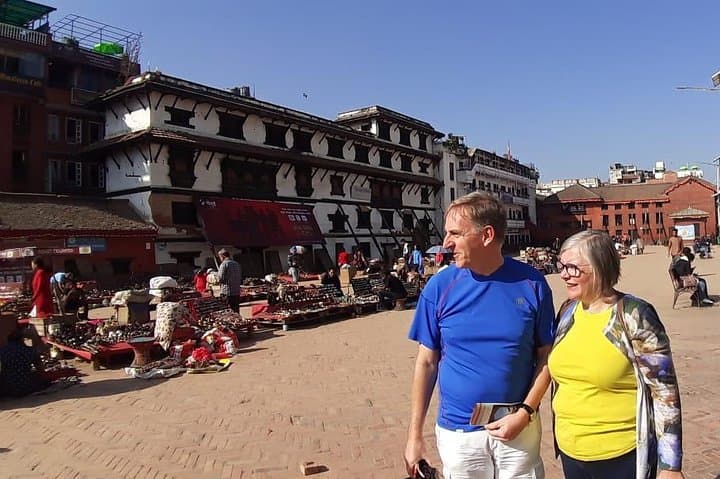
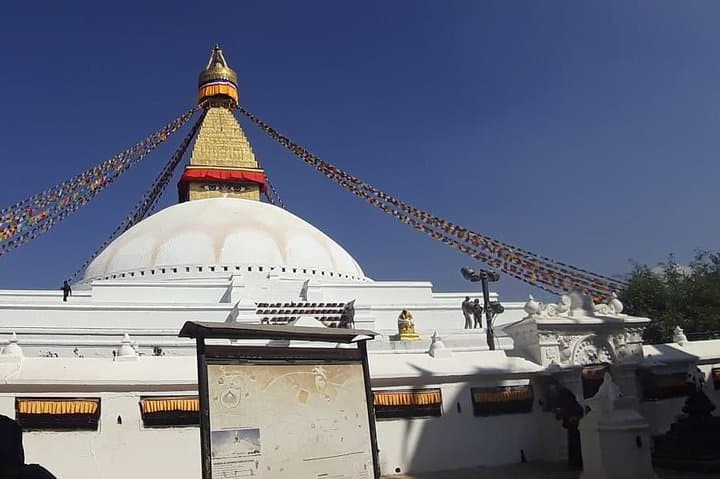
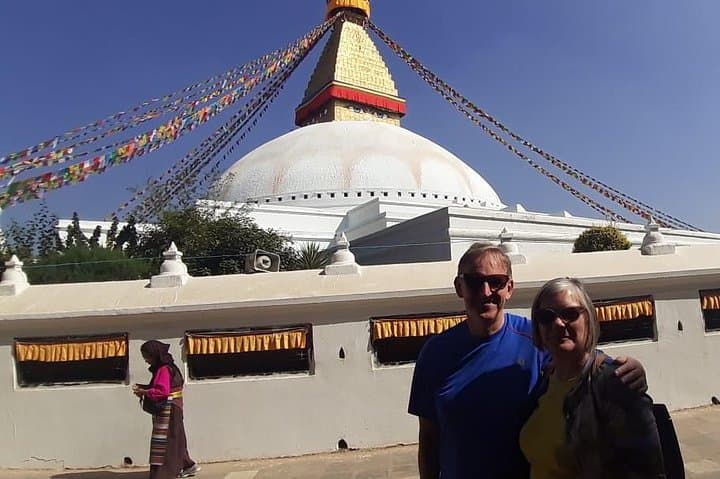
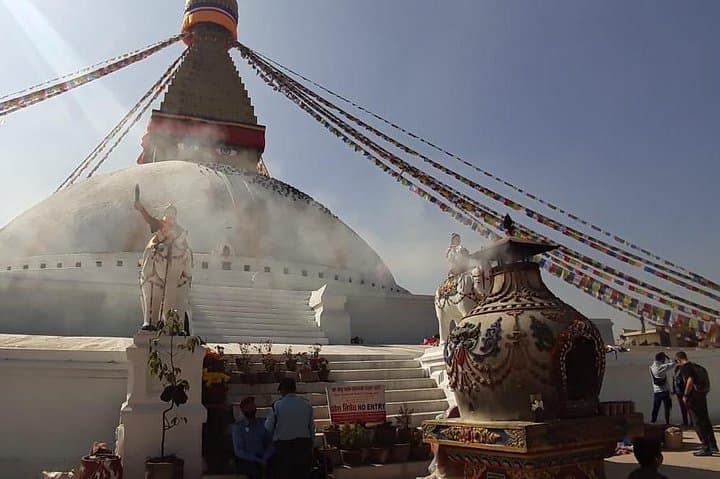
You step out of a private car and into a Kathmandu morning where temple bells puncture the air and smoke from ritual fires threads through narrow alleys. The tour moves deliberately—Pashupatinath’s saffron-cloaked priests, the climb of the hilltop Buddhist monastery with its stacked prayer flags, the courtyard hush of a centuries-old palace, and the living squares of Bhaktapur where craftsmen still carve wood by hand.
You step out of a private car and into a Kathmandu morning where temple bells puncture the air and smoke from ritual fires threads through narrow alleys. The tour moves deliberately—Pashupatinath’s saffron-cloaked priests, the climb of the hilltop Buddhist monastery with its stacked prayer flags, the courtyard hush of a centuries-old palace, and the living squares of Bhaktapur where craftsmen still carve wood by hand.
Kathmandu Valley has been a crossroads of Himalayan trade and Newar culture for a millennium. The city’s geology—an alluvial basin ringed by low hills—creates pockets of microclimate that influenced settlement patterns and the placement of stupas and temples. You’ll encounter Hindu and Buddhist iconography side by side, witness pagoda roofs layered with history, and hear stories of the 2015 earthquakes and the ongoing restoration of UNESCO-listed sites.
Practical guidance anchors the experience: expect 6–7 hours in a private vehicle with short walks and stair climbs; bring comfortable shoes for uneven stone courtyards and hundreds of stairs at hilltop shrines. Carry a water bottle (provided on the tour), sunscreen, and a small scarf to cover shoulders at religious sites. Mornings are cooler and less crowded; afternoons bring more pilgrims and vendors.
Be mindful of camera etiquette around worshippers, leave offerings and donations at official sites, and follow your guide’s instructions at restricted areas. The route offers a compact, sensory-rich survey of Kathmandu’s cultural core—ideal for first-time visitors who want structured access to the valley’s most significant monuments without navigating public transport.