THE ADVENTURE COLLECTIVE® · Independent discovery and booking for outdoor travel

Spend a day moving through Kathmandu’s living heritage: three durbar squares, a major riverside temple complex, and a hilltop stupa. This private circuit pairs compact logistics with in-depth local context—ideal for travelers who want culture, architecture, and practical pacing.
Spend a day moving through Kathmandu’s living heritage: three durbar squares, a major riverside temple complex, and a hilltop stupa. This private circuit pairs compact logistics with in-depth local context—ideal for travelers who want culture, architecture, and practical pacing.
The day begins on a city street framed by carved wood and brick: sunlight slices between pagoda roofs while the Bagmati River threads the eastern edge of the old city, daring you to slow down and look.
Verified experiences and guided adventures in the surrounding area.
Operated by Swami Narayan Travels Pvt Ltd · Kathmandu, Bagmati Province
The day begins on a city street framed by carved wood and brick: sunlight slices between pagoda roofs while the Bagmati River threads the eastern edge of the old city, daring you to slow down and look.
This private, 6–7 hour circuit stitches together Kathmandu Durbar Square, Patan and Bhaktapur durbar squares, Pashupatinath’s riverbank cremation ghats, and the hilltop stairs of Swayambhunath. These sites are part of the Kathmandu Valley UNESCO inscription—seven monument zones where Newar craftsmen once refined woodcarving, bronze casting, and brick masonry into civic language.
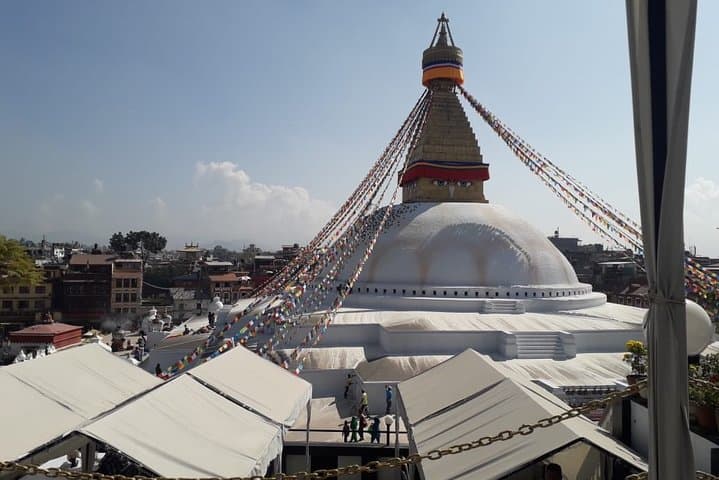
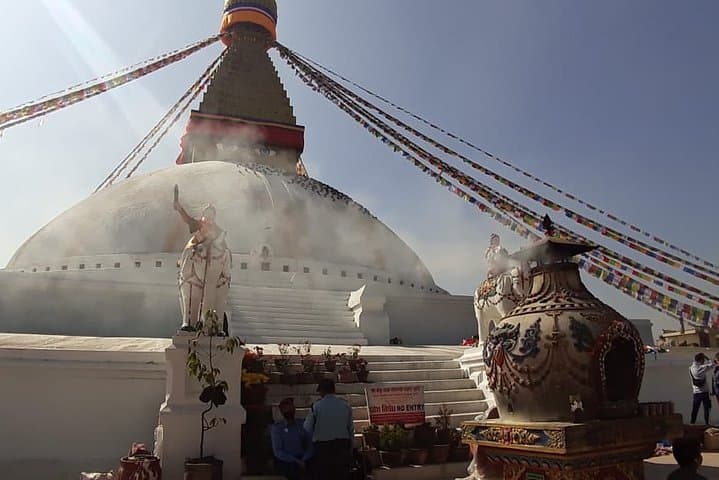
Geologically, the valley is an alluvial bowl encircled by low hills; its soft soils shaped courtyard architecture and narrow alleys. Culturally, the route traces Hindu and Buddhist practices living side-by-side: brass lamps at shrines, saffron-clad priests chanting by the Bagmati, and monkeys claiming the stupa terraces.
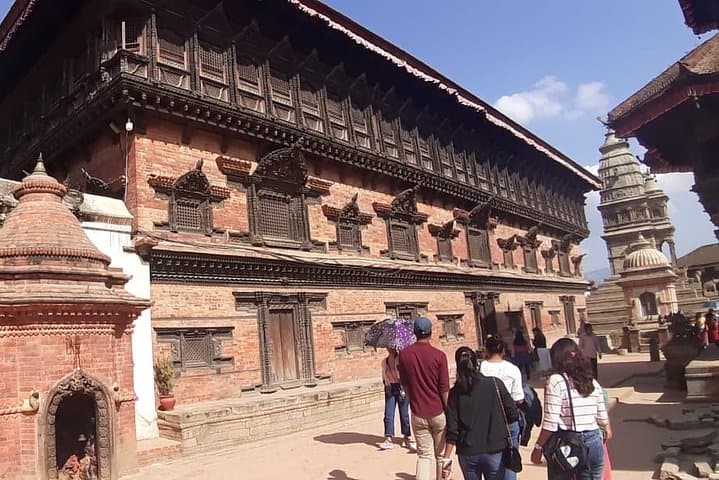
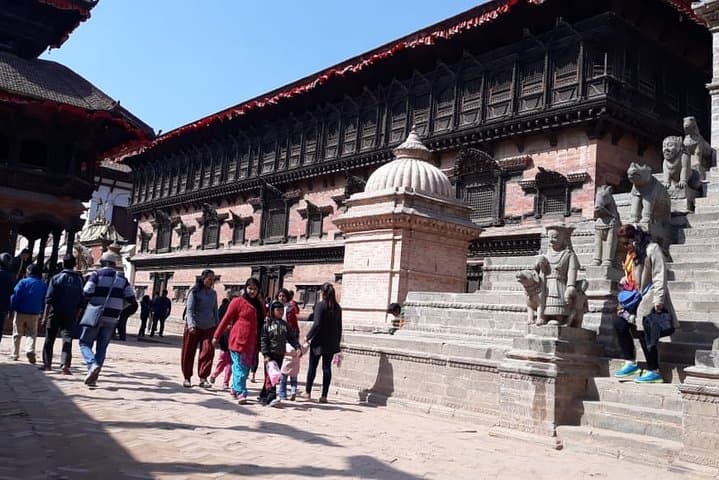
Expect uneven stone courtyards, stepped approaches, and set times for viewing certain rituals at Pashupatinath. Your guide will negotiate entrances and explain iconography — look for the royal palaces’ carved windows, Patan’s metalwork, and Bhaktapur’s 55-Window Palace.
Practical guidance: wear comfortable walking shoes you can remove at shrines, carry small-denomination Nepalese rupees for donations and small purchases, and bring a light scarf for temple respect. Start early to dodge midday crowds and the monsoon heat; in wet months, pack a compact rain shell and expect slick stone underfoot. The tour is accessible for most visitors but includes stairs and standing periods—plan frequent water breaks and a relaxed pace to take in both architecture and living rituals.
easy.
6–7 hours.
Suitable for most fitness levels; involves walking on uneven surfaces and climbing stairs at Swayambhunath.
This tour typically does not include individual monument entrance fees; bring cash for admissions or confirm inclusions with the operator.
Some parts of the tour and transportation claim wheelchair accessibility, but principal sites have uneven stone and steps—accessibility may be limited on-site.
Photography rules vary: outdoor courtyards and exteriors are generally fine, but some inner sanctums and ritual moments at Pashupatinath restrict photography—ask your guide before shooting.
This daytime private tour usually does not include lunch; plan for a stop at a local restaurant or carry snacks, and inform your guide of dietary needs in advance.
The Kathmandu Valley inscription protects seven groups of monuments that reflect centuries of Newar urbanism and religious coexistence, with principal palaces and temples dating from the medieval Malla period onward.
Rising visitor numbers strain ancient timber and brick structures; support conservation by following site rules, avoiding touching carvings, and using licensed guides who contribute to local preservation.
Swami Narayan Travels Pvt Ltd operates guided outdoor trips and adventures with an emphasis on safety, stewardship, and memorable experiences.
The day begins on a city street framed by carved wood and brick: sunlight slices between pagoda roofs while the Bagmati River threads the eastern edge of the old city, daring you to slow down and look.
The day begins on a city street framed by carved wood and brick: sunlight slices between pagoda roofs while the Bagmati River threads the eastern edge of the old city, daring you to slow down and look.
This private, 6–7 hour circuit stitches together Kathmandu Durbar Square, Patan and Bhaktapur durbar squares, Pashupatinath’s riverbank cremation ghats, and the hilltop stairs of Swayambhunath. These sites are part of the Kathmandu Valley UNESCO inscription—seven monument zones where Newar craftsmen once refined woodcarving, bronze casting, and brick masonry into civic language.
Geologically, the valley is an alluvial bowl encircled by low hills; its soft soils shaped courtyard architecture and narrow alleys. Culturally, the route traces Hindu and Buddhist practices living side-by-side: brass lamps at shrines, saffron-clad priests chanting by the Bagmati, and monkeys claiming the stupa terraces.
Expect uneven stone courtyards, stepped approaches, and set times for viewing certain rituals at Pashupatinath. Your guide will negotiate entrances and explain iconography — look for the royal palaces’ carved windows, Patan’s metalwork, and Bhaktapur’s 55-Window Palace.
Practical guidance: wear comfortable walking shoes you can remove at shrines, carry small-denomination Nepalese rupees for donations and small purchases, and bring a light scarf for temple respect. Start early to dodge midday crowds and the monsoon heat; in wet months, pack a compact rain shell and expect slick stone underfoot. The tour is accessible for most visitors but includes stairs and standing periods—plan frequent water breaks and a relaxed pace to take in both architecture and living rituals.