THE ADVENTURE COLLECTIVE® · Independent discovery and booking for outdoor travel

Walk among the giant columns of Karnak and the courts of Luxor Temple on this private 3‑hour East Bank tour. With an Egyptologist guide and hotel pickup, see the Hypostyle Hall, Avenue of the Sphinxes and the sacred lake while avoiding the midday heat.
Walk among the giant columns of Karnak and the courts of Luxor Temple on this private 3‑hour East Bank tour. With an Egyptologist guide and hotel pickup, see the Hypostyle Hall, Avenue of the Sphinxes and the sacred lake while avoiding the midday heat.
You step from the air‑conditioned minivan into a wash of Nile light and stone: colossal columns rise around you like a forest of carved trunks, their hieroglyphs catching the sun. The Avenue of the Sphinxes stretches toward the city as if pointing the way back through three millennia of ritual processions. Nearby, Luxor Temple sits lower to the ground, its courts and obelisks carrying layers of pharaohs, priests and foreign conquerors who all left marks in stone.
Verified experiences and guided adventures in the surrounding area.
Operated by Charming Egypt Tours · Luxor, Luxor Governorate
You step from the air‑conditioned minivan into a wash of Nile light and stone: colossal columns rise around you like a forest of carved trunks, their hieroglyphs catching the sun. The Avenue of the Sphinxes stretches toward the city as if pointing the way back through three millennia of ritual processions. Nearby, Luxor Temple sits lower to the ground, its courts and obelisks carrying layers of pharaohs, priests and foreign conquerors who all left marks in stone.
Karnak is less a single temple than a palimpsest — scarred sandstone, granite pylons and recurring rebuilding campaigns from the Middle Kingdom through the Ptolemaic era. Luxor Temple, rebuilt and repurposed over centuries, is notable for its association with the annual Opet Festival and later additions by Tutankhamun and Alexander the Great.
Expect broad open courtyards, uneven pavements and shaded colonnades; the ground is mostly compacted sand and stone with steps and low curbs. Guides often point out the sacred lake, the Hypostyle Hall’s enormous columns, and the avenue that once connected the two complexes.
Practical: this private, 3‑hour tour includes hotel pickup and drop‑off by minibus and an Egyptologist guide. Wear sun protection and modest clothing that covers shoulders and knees, bring a refillable water bottle, and plan for early morning or late afternoon to avoid the heat and crowds. Cameras are welcome but avoid touching reliefs. The itinerary is light on strenuous walking but involves several short walks across uneven ancient surfaces.
easy.
3 hours.
Low to moderate — suitable for most travelers who can walk on uneven surfaces for short stretches.
The tour description does not explicitly list entrance fees; confirm with the operator before booking so you can plan cash or card payment if needed.
Yes — this private tour includes pickup from and drop-off to your Luxor hotel by air‑conditioned minibus, per the inclusion list.
Children are permitted but infants must sit on an adult’s lap; specialized infant seats are available on request.
The tour is classified as easy but involves walking across irregular stone and some steps; bring comfortable shoes and take breaks as needed.
Karnak and Luxor were linked by ritual processions, most famously the Opet Festival; the complexes evolved over millennia with contributions from pharaohs, priests and later conquerors.
Ongoing conservation work focuses on stabilizing sandstone reliefs and managing visitor flow; avoid touching carvings, stick to paths and carry out litter to help protect the sites.
Charming Egypt Tours operates guided outdoor trips and adventures with an emphasis on safety, stewardship, and memorable experiences.
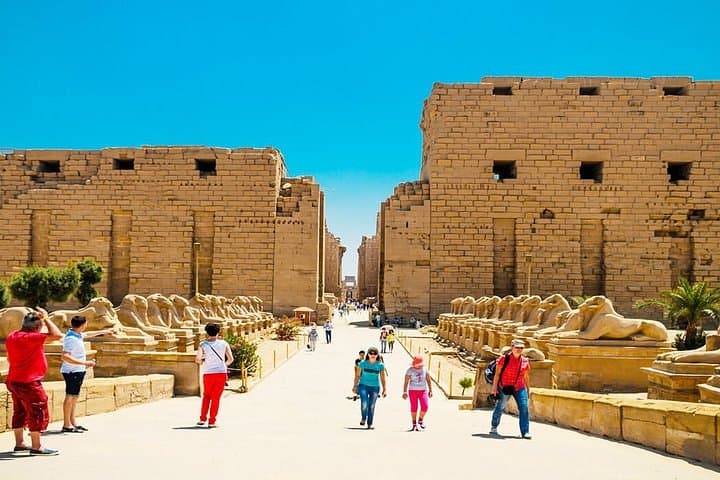
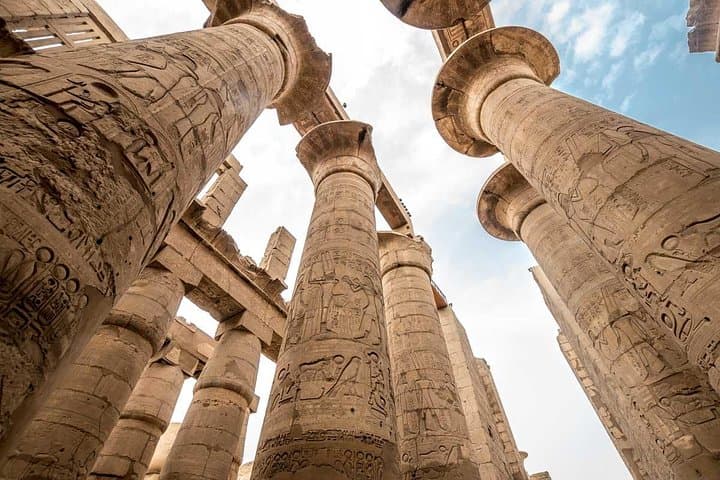
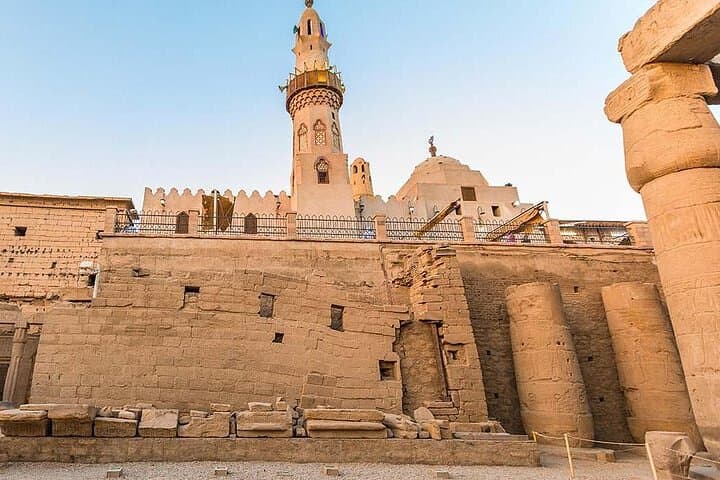
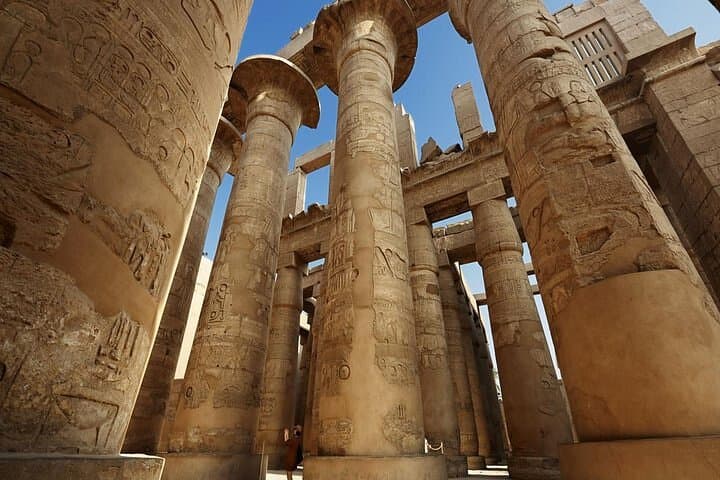
You step from the air‑conditioned minivan into a wash of Nile light and stone: colossal columns rise around you like a forest of carved trunks, their hieroglyphs catching the sun. The Avenue of the Sphinxes stretches toward the city as if pointing the way back through three millennia of ritual processions. Nearby, Luxor Temple sits lower to the ground, its courts and obelisks carrying layers of pharaohs, priests and foreign conquerors who all left marks in stone.
You step from the air‑conditioned minivan into a wash of Nile light and stone: colossal columns rise around you like a forest of carved trunks, their hieroglyphs catching the sun. The Avenue of the Sphinxes stretches toward the city as if pointing the way back through three millennia of ritual processions. Nearby, Luxor Temple sits lower to the ground, its courts and obelisks carrying layers of pharaohs, priests and foreign conquerors who all left marks in stone.
Karnak is less a single temple than a palimpsest — scarred sandstone, granite pylons and recurring rebuilding campaigns from the Middle Kingdom through the Ptolemaic era. Luxor Temple, rebuilt and repurposed over centuries, is notable for its association with the annual Opet Festival and later additions by Tutankhamun and Alexander the Great.
Expect broad open courtyards, uneven pavements and shaded colonnades; the ground is mostly compacted sand and stone with steps and low curbs. Guides often point out the sacred lake, the Hypostyle Hall’s enormous columns, and the avenue that once connected the two complexes.
Practical: this private, 3‑hour tour includes hotel pickup and drop‑off by minibus and an Egyptologist guide. Wear sun protection and modest clothing that covers shoulders and knees, bring a refillable water bottle, and plan for early morning or late afternoon to avoid the heat and crowds. Cameras are welcome but avoid touching reliefs. The itinerary is light on strenuous walking but involves several short walks across uneven ancient surfaces.