THE ADVENTURE COLLECTIVE® · Independent discovery and booking for outdoor travel

Spend a focused half day in Jozani Forest—walk the mangrove boardwalk, meet the endemic Zanzibar red colobus, and learn how geology, tides, and local culture shape this island ecosystem. Practical details and timing make this an easy, informative nature outing.
Spend a focused half day in Jozani Forest—walk the mangrove boardwalk, meet the endemic Zanzibar red colobus, and learn how geology, tides, and local culture shape this island ecosystem. Practical details and timing make this an easy, informative nature outing.
You step off the shaded track and the forest breathes around you — humid air, the distant chatter of birds, and the soft, papery rustle of mangrove leaves as you move onto the boardwalk. On this half-day exploration of Jozani Forest, the landscape feels immediate: low, peat-rich soil giving way to tangle roots and pools where crabs and fish slip between the prop roots.
Verified experiences and guided adventures in the surrounding area.
Operated by Zanzibar Tour Guide Francophone/Anglophone · Jozani, Zanzibar
You step off the shaded track and the forest breathes around you — humid air, the distant chatter of birds, and the soft, papery rustle of mangrove leaves as you move onto the boardwalk. On this half-day exploration of Jozani Forest, the landscape feels immediate: low, peat-rich soil giving way to tangle roots and pools where crabs and fish slip between the prop roots.
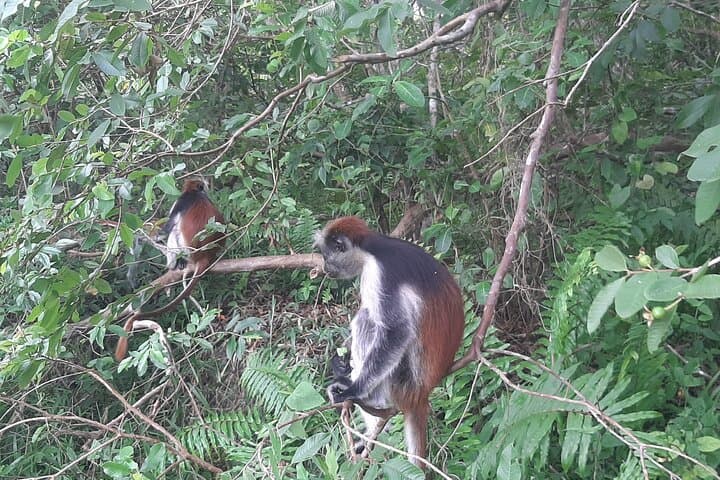
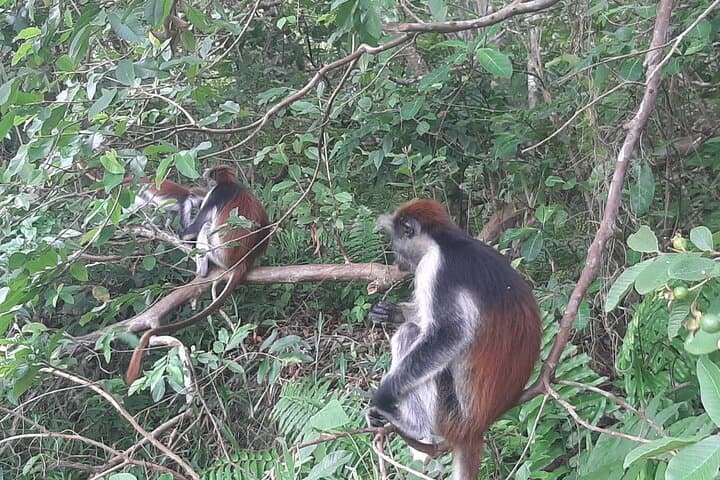
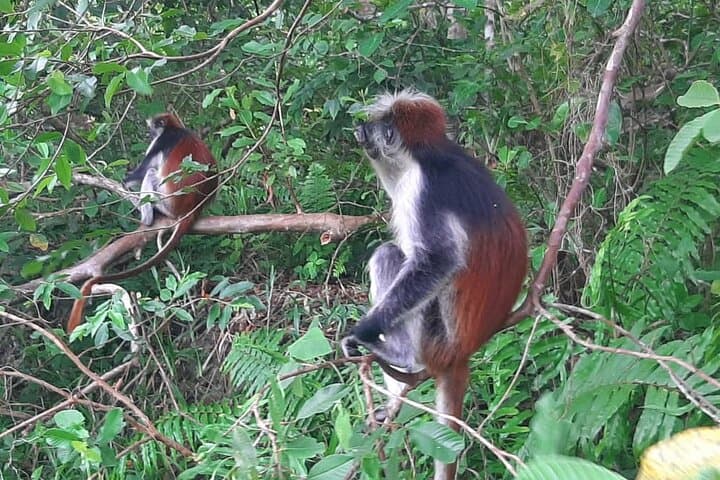
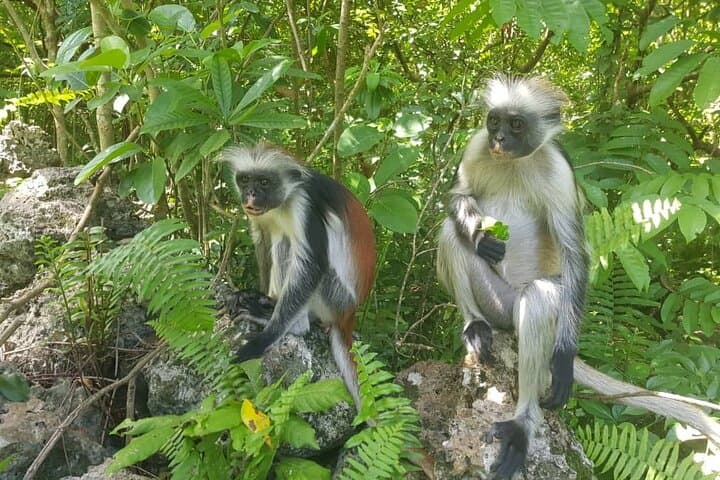
Jozani Chwaka Bay National Park protects the island’s last substantial tracts of native forest and the endemic Zanzibar red colobus monkey, a species found only on Unguja. Geologically the area is formed of limestone and coastal sediments; the mangroves sit at the edge of tidal flats that have shaped local fishing and salt-working communities for generations. Culturally, visits here connect to Swahili village life — guides often point out medicinal plants and explain how villagers have long used both forest and mangrove resources.
The tour mixes short forest trails and a purpose-built mangrove boardwalk; expect mostly flat walking, a few muddy sections after rain, and boardwalk views over root systems and tidal channels. Guides provide natural-history interpretation, pointing out colobus troops, butterflies, and mangrove specialists.
Practical details: plan 3–4 hours, go early for cooler air and better wildlife viewing, bring insect repellent, sun protection, and water, and wear sturdy closed-toe shoes. The tour includes pickup, air-conditioned transport, and admission. Photography is permitted; keep distance from monkeys and avoid feeding wildlife to reduce human impact.
easy.
3–4 hours.
Suitable for most fitness levels; involves short, mostly flat walks and some standing while observing wildlife.
The tour runs about 3–4 hours (180–240 minutes), including transport, a guided forest walk, and time on the mangrove boardwalk.
Guides know local troop locations and sightings are common, but wildlife sightings can't be guaranteed—early starts improve your chances.
The tour notes wheelchair-accessible options for transport and some surfaces; contact the operator to confirm accessibility for specific needs.
Yes, the tour includes park admission and private pickup/drop-off in an air-conditioned vehicle as listed in the inclusions.
Jozani’s forests have long supported local livelihoods; portions were protected in the 20th century to safeguard endemic species and traditional uses tied to the mangrove-lined coastline.
Visitor impact is managed with boardwalks and guided routes to protect root systems and sensitive habitats; avoid littering and do not feed wildlife to support conservation goals.
Zanzibar Tour Guide Francophone/Anglophone operates guided outdoor trips and adventures with an emphasis on safety, stewardship, and memorable experiences.
You step off the shaded track and the forest breathes around you — humid air, the distant chatter of birds, and the soft, papery rustle of mangrove leaves as you move onto the boardwalk. On this half-day exploration of Jozani Forest, the landscape feels immediate: low, peat-rich soil giving way to tangle roots and pools where crabs and fish slip between the prop roots.
You step off the shaded track and the forest breathes around you — humid air, the distant chatter of birds, and the soft, papery rustle of mangrove leaves as you move onto the boardwalk. On this half-day exploration of Jozani Forest, the landscape feels immediate: low, peat-rich soil giving way to tangle roots and pools where crabs and fish slip between the prop roots.
Jozani Chwaka Bay National Park protects the island’s last substantial tracts of native forest and the endemic Zanzibar red colobus monkey, a species found only on Unguja. Geologically the area is formed of limestone and coastal sediments; the mangroves sit at the edge of tidal flats that have shaped local fishing and salt-working communities for generations. Culturally, visits here connect to Swahili village life — guides often point out medicinal plants and explain how villagers have long used both forest and mangrove resources.
The tour mixes short forest trails and a purpose-built mangrove boardwalk; expect mostly flat walking, a few muddy sections after rain, and boardwalk views over root systems and tidal channels. Guides provide natural-history interpretation, pointing out colobus troops, butterflies, and mangrove specialists.
Practical details: plan 3–4 hours, go early for cooler air and better wildlife viewing, bring insect repellent, sun protection, and water, and wear sturdy closed-toe shoes. The tour includes pickup, air-conditioned transport, and admission. Photography is permitted; keep distance from monkeys and avoid feeding wildlife to reduce human impact.