THE ADVENTURE COLLECTIVE® · Independent discovery and booking for outdoor travel

Spend a private day leaving Amman for the Umayyad desert castles—Qusayr Amra’s frescoes, the mysterious Qasr Kharana, and basalt‑built Qasr al‑Azraq. This guided drive blends history, geology and simple desert travel logistics.
Spend a private day leaving Amman for the Umayyad desert castles—Qusayr Amra’s frescoes, the mysterious Qasr Kharana, and basalt‑built Qasr al‑Azraq. This guided drive blends history, geology and simple desert travel logistics.
A low sun slants across bleached stone as the road out of Amman opens into open desert—an unbroken field of wind-smoothed limestone and basalt where towers, baths and fortresses rise like practical poems. On a full-day private tour you move with the light: an air‑conditioned vehicle, a driver familiar with remote dirt tracks, and the space to linger at doorways where centuries of sand and trade leave their marks.
Verified experiences and guided adventures in the surrounding area.
Operated by VIP Jordan Limo · Amman, Amman Governorate
A low sun slants across bleached stone as the road out of Amman opens into open desert—an unbroken field of wind-smoothed limestone and basalt where towers, baths and fortresses rise like practical poems. On a full-day private tour you move with the light: an air‑conditioned vehicle, a driver familiar with remote dirt tracks, and the space to linger at doorways where centuries of sand and trade leave their marks.
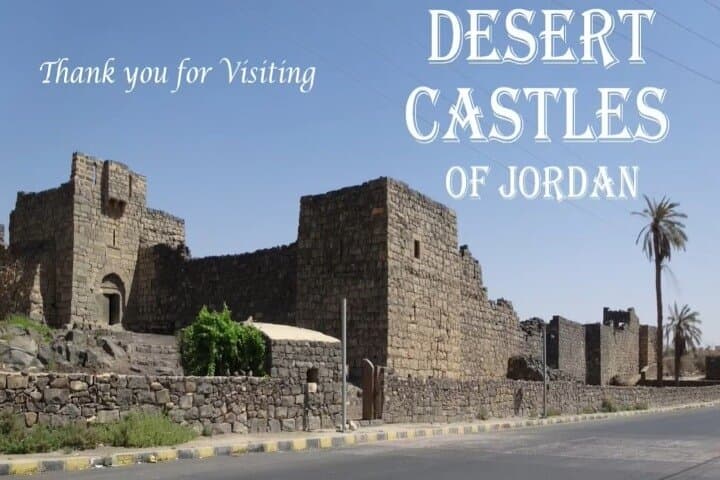
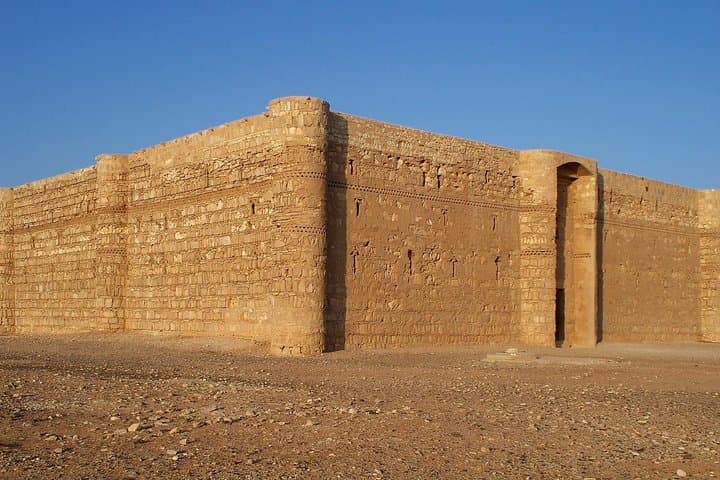
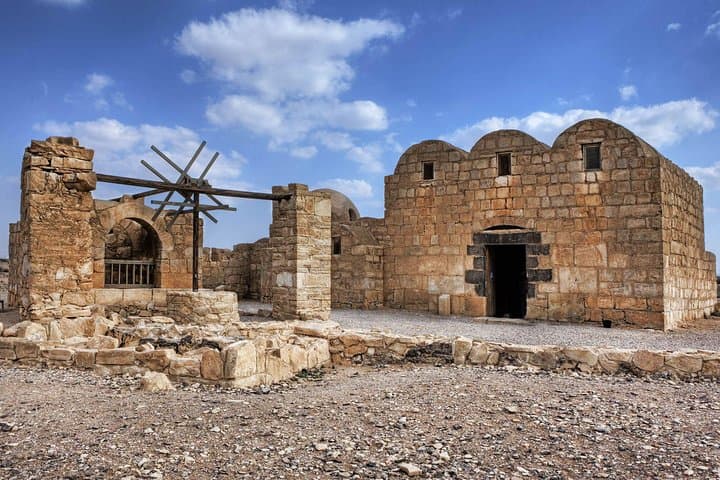
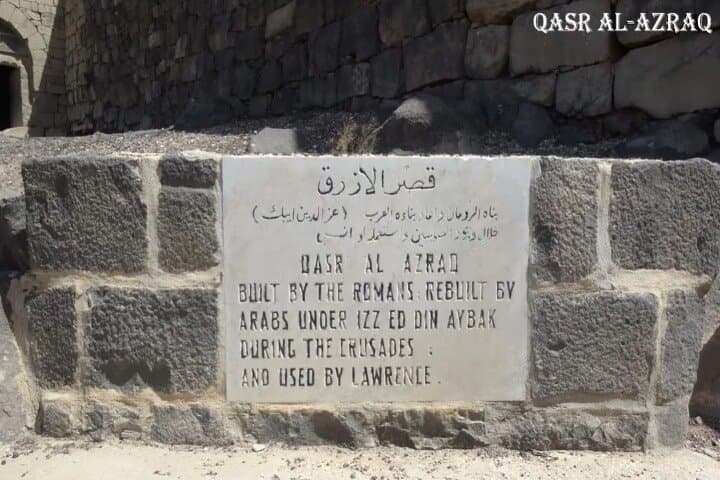
These desert castles date to the Umayyad period (8th century), when rulers built pleasure palaces, caravan stops and fortified outposts across the eastern frontier. Qusayr Amra retains rare secular frescoes and a functioning hammam layout that reveal early Islamic tastes; Qasr Kharana’s square block and corner towers pose questions about trade and tribal politics; Qasr al‑Azraq, cut from black basalt at a permanent oasis, reads as military logic and strategic water control—later a base for T.E. Lawrence during the Arab Revolt.
Geology here shifts fast: limestone mesas give way to basalt plains around Azraq, and the sparse vegetation—acacia and saltbush—tells you where water has once gathered. Local Bedouin culture still shapes road knowledge and stories you’ll hear from a driver who doubles as guide.
Practical guide: expect 6–7 hours total, significant time in the sun and short walks on uneven ground. Bring sun protection, ample water, and comfortable shoes for climbing low walls and courtyards. Morning light is best for photographing frescos; plan pickups from Amman and confirm phone/WhatsApp contact. This is a history-first day with easy walking but remote conditions—respect fragile art, pack out trash, and allow buffer time for gravel roads between sites.
easy.
6–7 hours.
Suitable for general fitness; requires short walks on uneven ground and steps inside ruins.
The private tour runs about 6–7 hours, including driving time from Amman and an hour at each main site.
This tour description lists admission as not included—bring cash or confirm whether your operator covers site fees.
The tour is rated physically easy, and vehicles can be wheelchair accessible, but some castle interiors have uneven floors and steps.
Spring and autumn offer milder temperatures and clearer skies; summer is very hot and winter can be windy with occasional rain.
The sites are largely Umayyad (8th century) constructs—mixing residential, military and caravan functions—and Qasr al‑Azraq later served as T.E. Lawrence’s headquarters during the 1917 Arab Revolt.
These monuments are vulnerable to weathering and human impact; visit with minimal contact, avoid flash photography on fragile frescoes, and support local conservation initiatives when possible.
VIP Jordan Limo operates guided outdoor trips and adventures with an emphasis on safety, stewardship, and memorable experiences.
A low sun slants across bleached stone as the road out of Amman opens into open desert—an unbroken field of wind-smoothed limestone and basalt where towers, baths and fortresses rise like practical poems. On a full-day private tour you move with the light: an air‑conditioned vehicle, a driver familiar with remote dirt tracks, and the space to linger at doorways where centuries of sand and trade leave their marks.
A low sun slants across bleached stone as the road out of Amman opens into open desert—an unbroken field of wind-smoothed limestone and basalt where towers, baths and fortresses rise like practical poems. On a full-day private tour you move with the light: an air‑conditioned vehicle, a driver familiar with remote dirt tracks, and the space to linger at doorways where centuries of sand and trade leave their marks.
These desert castles date to the Umayyad period (8th century), when rulers built pleasure palaces, caravan stops and fortified outposts across the eastern frontier. Qusayr Amra retains rare secular frescoes and a functioning hammam layout that reveal early Islamic tastes; Qasr Kharana’s square block and corner towers pose questions about trade and tribal politics; Qasr al‑Azraq, cut from black basalt at a permanent oasis, reads as military logic and strategic water control—later a base for T.E. Lawrence during the Arab Revolt.
Geology here shifts fast: limestone mesas give way to basalt plains around Azraq, and the sparse vegetation—acacia and saltbush—tells you where water has once gathered. Local Bedouin culture still shapes road knowledge and stories you’ll hear from a driver who doubles as guide.
Practical guide: expect 6–7 hours total, significant time in the sun and short walks on uneven ground. Bring sun protection, ample water, and comfortable shoes for climbing low walls and courtyards. Morning light is best for photographing frescos; plan pickups from Amman and confirm phone/WhatsApp contact. This is a history-first day with easy walking but remote conditions—respect fragile art, pack out trash, and allow buffer time for gravel roads between sites.