THE ADVENTURE COLLECTIVE® · Independent discovery and booking for outdoor travel

Walk the alleys of Al‑Balad to meet Jeddah’s layered past: coral‑stone houses, centuries‑old mosques, and a bustling bazaar. This 4–6 hour guided tour pairs close‑up history with practical tips for navigating Old Jeddah.
Walk the alleys of Al‑Balad to meet Jeddah’s layered past: coral‑stone houses, centuries‑old mosques, and a bustling bazaar. This 4–6 hour guided tour pairs close‑up history with practical tips for navigating Old Jeddah.
A narrow lane opens and the city changes: wind towers cast lattice shadows, wooden balconies lean over alleyways, and the sea-salted air mixes with cardamom and oud. This is Al-Balad — Old Jeddah — where mud-brick and coral-stone houses press close to one another and life still moves at street level. A guided, 4–6 hour walking tour threads through these streets, pausing at restored facades, a 700‑year‑old flag mast and a 15th‑century cannon, and a mosque site in continuous use since around 1000 AD.
Verified experiences and guided adventures in the surrounding area.
Operated by Riyadh Trips · Jeddah, Makkah Province
A narrow lane opens and the city changes: wind towers cast lattice shadows, wooden balconies lean over alleyways, and the sea-salted air mixes with cardamom and oud. This is Al-Balad — Old Jeddah — where mud-brick and coral-stone houses press close to one another and life still moves at street level. A guided, 4–6 hour walking tour threads through these streets, pausing at restored facades, a 700‑year‑old flag mast and a 15th‑century cannon, and a mosque site in continuous use since around 1000 AD.
The district grew from a seventh‑century port that served pilgrims bound for Makkah; its architecture records trade routes to East Africa, India and the Levant. Geologically, buildings here were raised from coral limestone and local gypsum, giving Al‑Balad a pale, porous texture that ages rapidly in coastal humidity. Culturally, you’ll sense a living bazaar rhythm: spice sellers, perfumers, and honey traders keep traditional trades alive in Suq Al Alawi.
Expect flat but uneven paving and tight alleys—comfortable walking shoes are essential. The tour includes stops for snacks, short breaks, and an air‑conditioned transfer option between points. Best times are morning or late afternoon to avoid peak heat; bring sun protection and water even for an easy fitness level.
Practical notes: modest dress is required, and some sites are sensitive so photography may be restricted. With a local guide you’ll gain context on preserved houses, ongoing restoration efforts, and where to taste authentic street fare safely. Al‑Balad is a compact, tactile history you can walk through in a single, revealing day.
easy.
4–6 hours.
Suitable for travelers who can walk several hours on flat but uneven surfaces; light mobility issues should be considered.
The tour runs roughly 4–6 hours, including walking and short stops at historic sites and markets.
Yes—it's rated easy physically, but narrow alleys and long standing periods may be challenging for those with mobility issues or very young children.
Guides are commonly available in English and Arabic; confirm language preference at booking.
Photography is generally allowed in public areas but may be restricted at certain religious sites or vendor stalls; follow your guide’s directions.
Al‑Balad developed as Jeddah’s port from the 7th century and was officially designated the royal seaport for Makkah, growing through trade with Africa and Asia.
Restoration projects focus on stabilizing coral‑stone buildings and supporting traditional crafts; visitors can help by following marked paths and avoiding touching fragile facades.
Riyadh Trips operates guided outdoor trips and adventures with an emphasis on safety, stewardship, and memorable experiences.
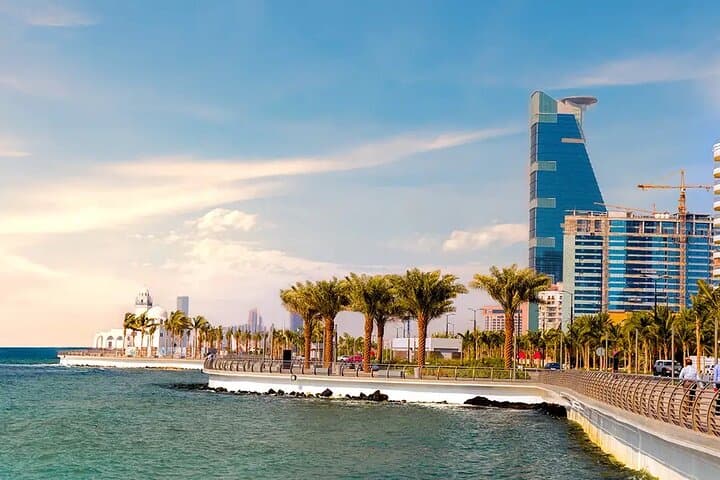
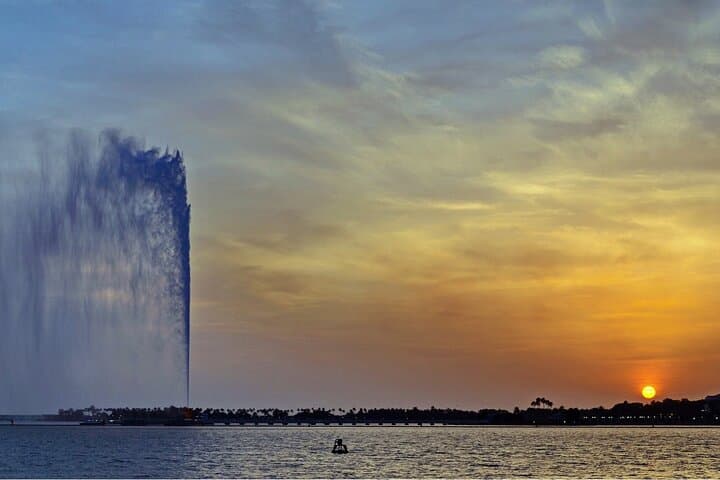
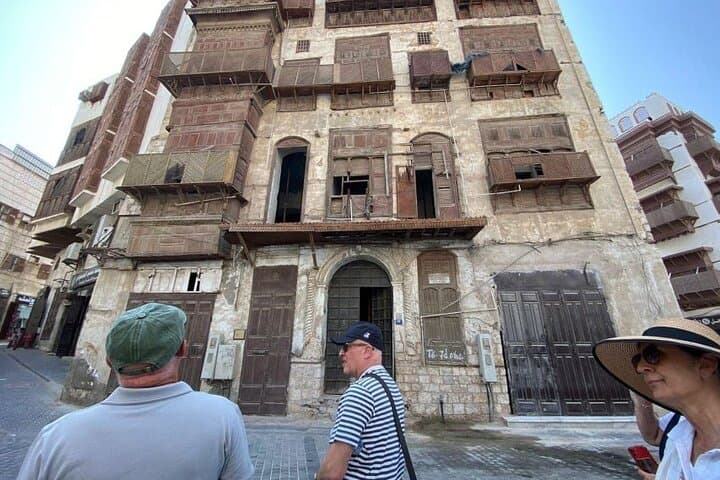
A narrow lane opens and the city changes: wind towers cast lattice shadows, wooden balconies lean over alleyways, and the sea-salted air mixes with cardamom and oud. This is Al-Balad — Old Jeddah — where mud-brick and coral-stone houses press close to one another and life still moves at street level. A guided, 4–6 hour walking tour threads through these streets, pausing at restored facades, a 700‑year‑old flag mast and a 15th‑century cannon, and a mosque site in continuous use since around 1000 AD.
A narrow lane opens and the city changes: wind towers cast lattice shadows, wooden balconies lean over alleyways, and the sea-salted air mixes with cardamom and oud. This is Al-Balad — Old Jeddah — where mud-brick and coral-stone houses press close to one another and life still moves at street level. A guided, 4–6 hour walking tour threads through these streets, pausing at restored facades, a 700‑year‑old flag mast and a 15th‑century cannon, and a mosque site in continuous use since around 1000 AD.
The district grew from a seventh‑century port that served pilgrims bound for Makkah; its architecture records trade routes to East Africa, India and the Levant. Geologically, buildings here were raised from coral limestone and local gypsum, giving Al‑Balad a pale, porous texture that ages rapidly in coastal humidity. Culturally, you’ll sense a living bazaar rhythm: spice sellers, perfumers, and honey traders keep traditional trades alive in Suq Al Alawi.
Expect flat but uneven paving and tight alleys—comfortable walking shoes are essential. The tour includes stops for snacks, short breaks, and an air‑conditioned transfer option between points. Best times are morning or late afternoon to avoid peak heat; bring sun protection and water even for an easy fitness level.
Practical notes: modest dress is required, and some sites are sensitive so photography may be restricted. With a local guide you’ll gain context on preserved houses, ongoing restoration efforts, and where to taste authentic street fare safely. Al‑Balad is a compact, tactile history you can walk through in a single, revealing day.