THE ADVENTURE COLLECTIVE® · Independent discovery and booking for outdoor travel

Walk the coral-stone alleys of Al-Balad with a local guide to uncover centuries of maritime trade, traditional architecture, and bustling souqs. This half-day tour mixes history, food stops, and market time—ideal for curious travelers who want context as well as atmosphere.
Walk the coral-stone alleys of Al-Balad with a local guide to uncover centuries of maritime trade, traditional architecture, and bustling souqs. This half-day tour mixes history, food stops, and market time—ideal for curious travelers who want context as well as atmosphere.
A morning in Al-Balad opens with light off the Red Sea and the narrow alleys already warming from the day’s sun. Walkers move between coral-stone houses topped by rawasheen—projecting wooden windows that throw lattice shadows onto the packed-earth streets—while vendors call out spices and coffee. The air tastes faintly of cardamom and sea salt, and the town presses forward like an old ship docked to the shore.
Verified experiences and guided adventures in the surrounding area.
Operated by Abha Trips · Jeddah, Makkah Province
A morning in Al-Balad opens with light off the Red Sea and the narrow alleys already warming from the day’s sun. Walkers move between coral-stone houses topped by rawasheen—projecting wooden windows that throw lattice shadows onto the packed-earth streets—while vendors call out spices and coffee. The air tastes faintly of cardamom and sea salt, and the town presses forward like an old ship docked to the shore.
Al-Balad began as Jeddah’s urban core in the 7th century and evolved as the royal seaport for pilgrims bound for Makkah. Its buildings are literal records: coral-limestone construction, wooden mashrabiya, and restored mansions such as Bait Nassif where a 700-year-old flag mast and a 15th-century cannon mark past trade and defense. Geologically, the district sits on coastal coral and sand deposits shaped by Red Sea tides; culturally, it’s a living mercantile quarter where souqs still trade spices, perfumes, and dates.
Expect a mostly flat, pedestrian route that threads markets, an old mosque site, and narrow passageways best experienced at a relaxed pace. Local cafés serve strong Arabic coffee and small plates—try a light snack to sustain the walk. Wear breathable clothing that respects local norms, sturdy walking shoes for uneven thresholds, and sun protection: shade is limited in parts of the route.
Practicalities: plan for a five-hour window including hotel pickup, carry small cash for purchases, and keep a flexible pace to photograph façades and watch trade rituals. The tour is low-intensity but rich in detail; it rewards curiosity and a steady pair of feet.
easy.
5 hours.
Suitable for general fitness; involves walking on flat but uneven surfaces for several hours
The tour is approximately five hours including pickup and return transport; it includes guided walking through Al-Balad, stops at key historic sites, a cafe break, and time in the bazaar.
Many areas have been made accessible and the provider lists wheelchair accessibility, but some alleys and historic buildings have thresholds—check ahead for specific needs.
Beverages at the café and small tastings are typically included in the itinerary, but larger purchases in the souq are pay-as-you-go.
Modest, breathable clothing, comfortable shoes, sun protection, and small cash for market purchases are recommended.
Al-Balad served as Jeddah’s port from the 7th century and grew into a key hub for Red Sea trade and pilgrim traffic; many homes use coral-stone and traditional wooden screens.
Recent restoration projects aim to preserve coral-stone architecture, but rapid urban development poses pressure—visitors should avoid touching fragile façades and dispose of waste properly.
Abha Trips operates guided outdoor trips and adventures with an emphasis on safety, stewardship, and memorable experiences.
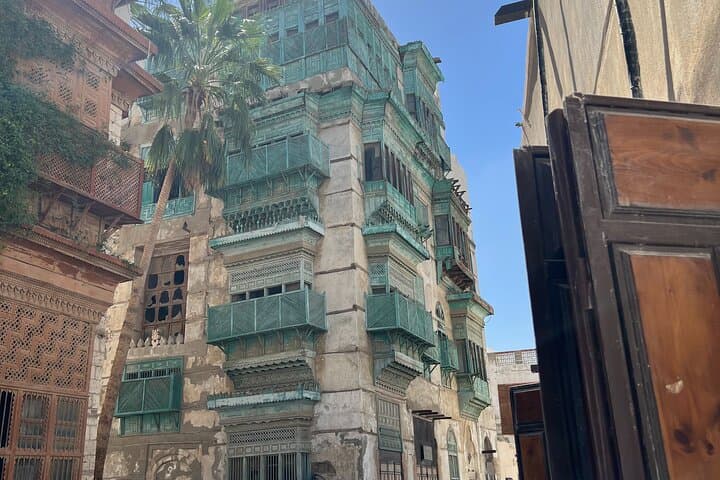
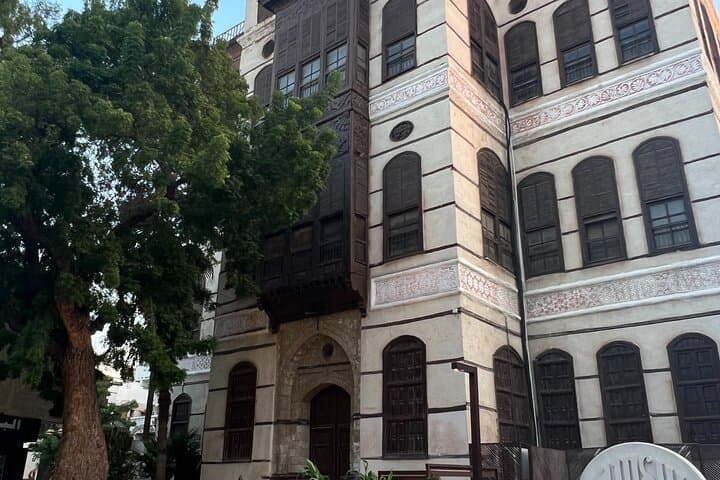
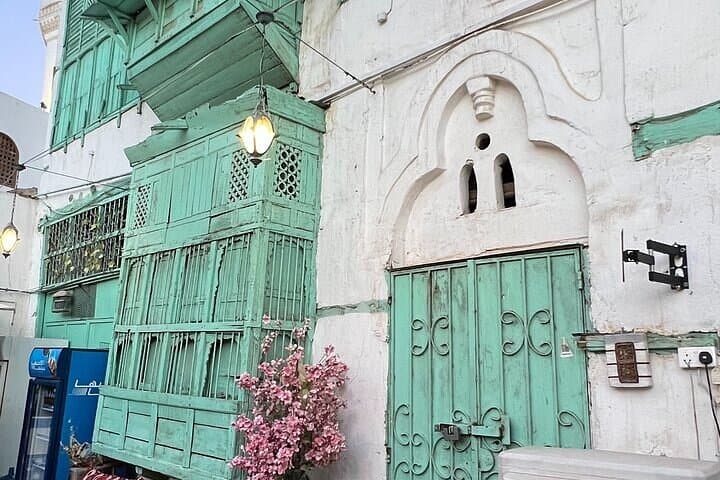
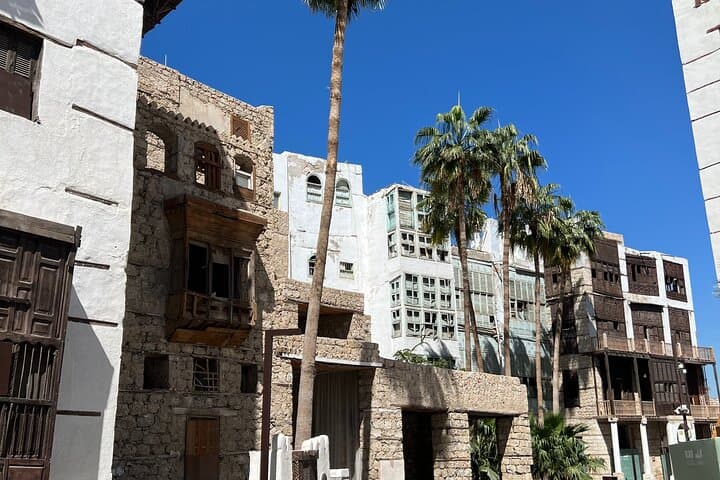
A morning in Al-Balad opens with light off the Red Sea and the narrow alleys already warming from the day’s sun. Walkers move between coral-stone houses topped by rawasheen—projecting wooden windows that throw lattice shadows onto the packed-earth streets—while vendors call out spices and coffee. The air tastes faintly of cardamom and sea salt, and the town presses forward like an old ship docked to the shore.
A morning in Al-Balad opens with light off the Red Sea and the narrow alleys already warming from the day’s sun. Walkers move between coral-stone houses topped by rawasheen—projecting wooden windows that throw lattice shadows onto the packed-earth streets—while vendors call out spices and coffee. The air tastes faintly of cardamom and sea salt, and the town presses forward like an old ship docked to the shore.
Al-Balad began as Jeddah’s urban core in the 7th century and evolved as the royal seaport for pilgrims bound for Makkah. Its buildings are literal records: coral-limestone construction, wooden mashrabiya, and restored mansions such as Bait Nassif where a 700-year-old flag mast and a 15th-century cannon mark past trade and defense. Geologically, the district sits on coastal coral and sand deposits shaped by Red Sea tides; culturally, it’s a living mercantile quarter where souqs still trade spices, perfumes, and dates.
Expect a mostly flat, pedestrian route that threads markets, an old mosque site, and narrow passageways best experienced at a relaxed pace. Local cafés serve strong Arabic coffee and small plates—try a light snack to sustain the walk. Wear breathable clothing that respects local norms, sturdy walking shoes for uneven thresholds, and sun protection: shade is limited in parts of the route.
Practicalities: plan for a five-hour window including hotel pickup, carry small cash for purchases, and keep a flexible pace to photograph façades and watch trade rituals. The tour is low-intensity but rich in detail; it rewards curiosity and a steady pair of feet.