THE ADVENTURE COLLECTIVE® · Independent discovery and booking for outdoor travel

See Iguazu Falls from both national perspectives with coordinated shared transfers that handle border crossings and hotel pickup. This full-day approach pairs guided access on the Argentine walkways with panoramic terraces on the Brazilian side.
See Iguazu Falls from both national perspectives with coordinated shared transfers that handle border crossings and hotel pickup. This full-day approach pairs guided access on the Argentine walkways with panoramic terraces on the Brazilian side.
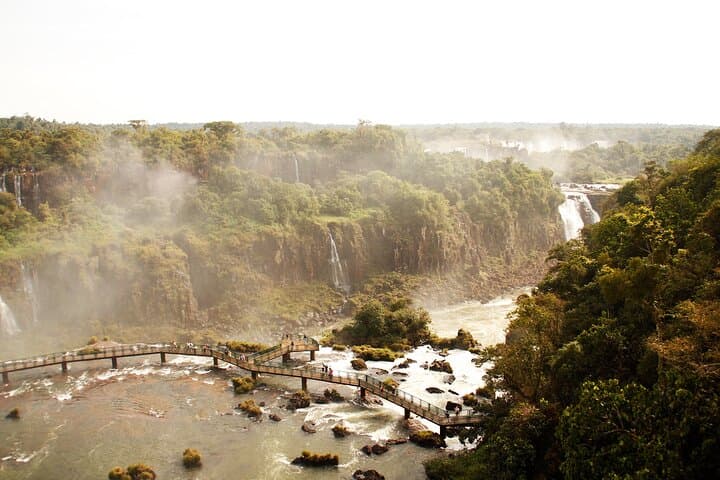
The morning light hits the spray first — a low cloud of mist lifting from the gorge while buses hum in the parking lot and guides gather passports. Travelers board shared vans that thread between Foz do Iguaçu and Puerto Iguazú, trading perspectives as the falls demand attention from both shores.
Verified experiences and guided adventures in the surrounding area.
Operated by Gray Line Brazil · Foz do Iguaçu, Paraná
The morning light hits the spray first — a low cloud of mist lifting from the gorge while buses hum in the parking lot and guides gather passports. Travelers board shared vans that thread between Foz do Iguaçu and Puerto Iguazú, trading perspectives as the falls demand attention from both shores.
Geologically, Iguazu is a scar left by volcanic flows and tectonic uplift some 150 million years ago; the river now throws itself over basalt steps and carves a canyon through stone. Culturally, the area sits at a crossroads — Guarani communities, Portuguese and Spanish colonial histories, and 20th-century hydroelectric projects have all shaped the towns at the river’s lip.
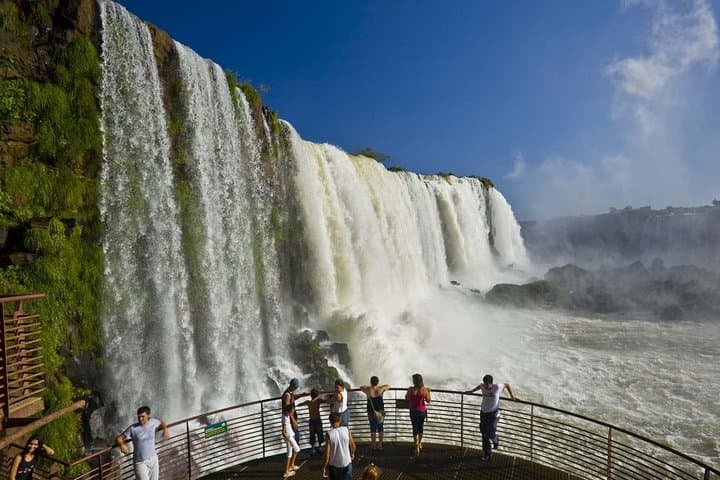
On the Argentine side the walkways push visitors close to Garganta del Diablo, where water roars and rain pursues you like a living thing; on the Brazilian terraces the falls open into panoramas that let you read the full scale. Guides explain border procedures, local park fees, and how the eco-tax works while pointing out endemic plants and viewing platforms.
Practical guidance: plan for full-day park access, carry ID that matches cross-border requirements, and buy national park tickets or set aside time to purchase them at the Visitor Center. Wear quick-dry clothing and sturdy footwear — boardwalks can be wet and sometimes slippery. Bring cash for small local fees and a lightweight rain shell to stay comfortable near the thundering cascades. Timing your visit for morning light improves visibility and reduces afternoon crowds; regardless of the hour, the falls will insist you pay attention.
easy.
5–6 hours per park visit.
Light fitness required; expect multiple boardwalks, short stairs, and standing at viewpoints for extended periods
Yes — to cross the international border you must carry an original passport or nationally accepted ID (check current entry rules for minors and national documents).
No — national park fees are paid locally at visitor centers or online and are not included in the shared transfer package.
Minors must be accompanied by both parents or carry notarized authorization if one parent is absent; carry required documentation to avoid delays.
Plan for at least a full day per side to experience the main circuits comfortably, though shared schedules sometimes combine highlights into a single long day.
The falls have long been significant to the Guarani people and later became a focus of 19th-century explorers and bilateral conservation efforts between Brazil and Argentina.
Both national parks prioritize visitor management and habitat protection; stick to boardwalks, avoid feeding wildlife, and pay local entrance fees that fund conservation programs.
Gray Line Brazil operates guided outdoor trips and adventures with an emphasis on safety, stewardship, and memorable experiences.
The morning light hits the spray first — a low cloud of mist lifting from the gorge while buses hum in the parking lot and guides gather passports. Travelers board shared vans that thread between Foz do Iguaçu and Puerto Iguazú, trading perspectives as the falls demand attention from both shores.
The morning light hits the spray first — a low cloud of mist lifting from the gorge while buses hum in the parking lot and guides gather passports. Travelers board shared vans that thread between Foz do Iguaçu and Puerto Iguazú, trading perspectives as the falls demand attention from both shores.
Geologically, Iguazu is a scar left by volcanic flows and tectonic uplift some 150 million years ago; the river now throws itself over basalt steps and carves a canyon through stone. Culturally, the area sits at a crossroads — Guarani communities, Portuguese and Spanish colonial histories, and 20th-century hydroelectric projects have all shaped the towns at the river’s lip.
On the Argentine side the walkways push visitors close to Garganta del Diablo, where water roars and rain pursues you like a living thing; on the Brazilian terraces the falls open into panoramas that let you read the full scale. Guides explain border procedures, local park fees, and how the eco-tax works while pointing out endemic plants and viewing platforms.
Practical guidance: plan for full-day park access, carry ID that matches cross-border requirements, and buy national park tickets or set aside time to purchase them at the Visitor Center. Wear quick-dry clothing and sturdy footwear — boardwalks can be wet and sometimes slippery. Bring cash for small local fees and a lightweight rain shell to stay comfortable near the thundering cascades. Timing your visit for morning light improves visibility and reduces afternoon crowds; regardless of the hour, the falls will insist you pay attention.