THE ADVENTURE COLLECTIVE® · Independent discovery and booking for outdoor travel

An eight-day guided circuit through Hunza and upper Gilgit-Baltistan that pairs glacier viewpoints, lake boating on Attabad and a high-altitude drive to Khunjerab Pass. Expect cultural forts, riverside meadows and dramatic Karakoram panoramas—ideal for travelers seeking rugged scenery without technical climbing.
An eight-day guided circuit through Hunza and upper Gilgit-Baltistan that pairs glacier viewpoints, lake boating on Attabad and a high-altitude drive to Khunjerab Pass. Expect cultural forts, riverside meadows and dramatic Karakoram panoramas—ideal for travelers seeking rugged scenery without technical climbing.
The van climbs a ribbon of asphalt carved along stone, and below the valley widens into fields of apricot and terraced wheat. High above, jagged peaks—Karakoram spires and distant Hindu Kush teeth—catch late light while the Hunza River threads a silver line through the floor. You arrive in Karimabad with the smell of wood smoke and fresh naan, and the mountains feel like a careful, watchful host.
Verified experiences and guided adventures in the surrounding area.
Operated by Exploria · Karimabad, Gilgit-Baltistan
The van climbs a ribbon of asphalt carved along stone, and below the valley widens into fields of apricot and terraced wheat. High above, jagged peaks—Karakoram spires and distant Hindu Kush teeth—catch late light while the Hunza River threads a silver line through the floor. You arrive in Karimabad with the smell of wood smoke and fresh naan, and the mountains feel like a careful, watchful host.
Hunza sits at the crossroads of ancient Silk Road routes and modern geopolitics. Baltit and Altit forts are concrete stories in baked mud and wood—centuries of local Burusho culture layered with trade-era influences. Geologically the region is young: active uplift and glacial carving have created steep folds, hanging valleys and some of the largest valley glaciers outside the polar zones. Local communities remain deeply connected to seasonal agriculture, and traditional mountain hospitality is a daily practice.
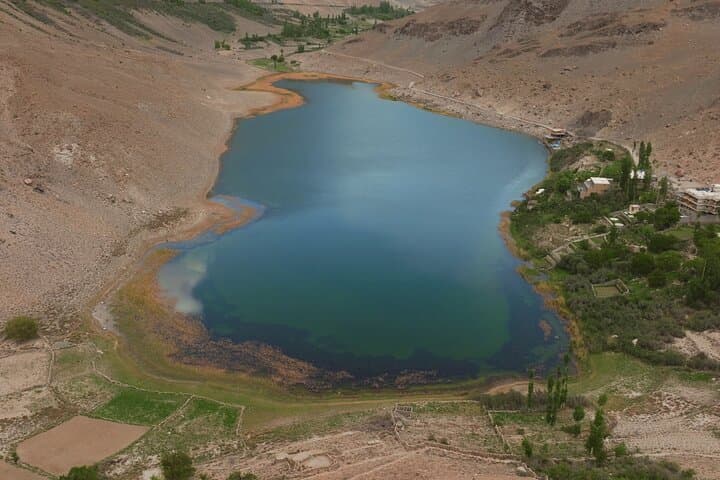
This guided eight-day itinerary balances road kilometers on the Karakoram Highway with short walks, glacier views at Hoper, the turquoise expanse of Attabad Lake, the cathedral peaks of Passu and a high-pass run to Khunjerab. Expect rocky trails beside moraines, short steep stair sections inside fort complexes and some high-altitude exposure above 3,000–4,700 m on drive segments.
Practical guidance: take time to acclimatize in Gilgit, carry layers for wide temperature swings, and limit heavy exertion the first 24–48 hours at altitude. Hydrate, protect skin from intense sun, and plan daylight drives—landslides can narrow roads. The trip is ideal for travelers comfortable with basic hiking and long scenic drives who want concentrated high-mountain landscapes and cultural contact without technical mountaineering.
moderate.
8 days.
Suitable for travelers in good general health who can handle moderate walks (30–90 minutes) and long vehicle transfers; altitude tolerance recommended.
Khunjerab Pass sits around 4,693 m (15,397 ft); many visitors feel mild effects—headache or shortness of breath—so acclimatize in Gilgit and move slowly.
Domestic flights (Islamabad–Gilgit) are included; they reduce long road time, but weather can delay flights—allow buffer days in your schedule.
Yes—accommodations and transfers are arranged for families, but long drives and high-altitude exposure may be challenging for infants and very young children.
Most international visitors need a Pakistani visa; no special permits are normally required for Hunza, but cross-border areas like Khunjerab may have checkpoints—carry passport and travel documents.
Hunza was an important Silk Road node; its forts—Altit and Baltit—reflect centuries of trade, local rule and defensive architecture adapted to steep valleys.
Glaciers and alpine lakes are sensitive to climate shifts; travel with local operators who minimize waste, stay on paths and respect community grazing areas.
Exploria operates guided outdoor trips and adventures with an emphasis on safety, stewardship, and memorable experiences.
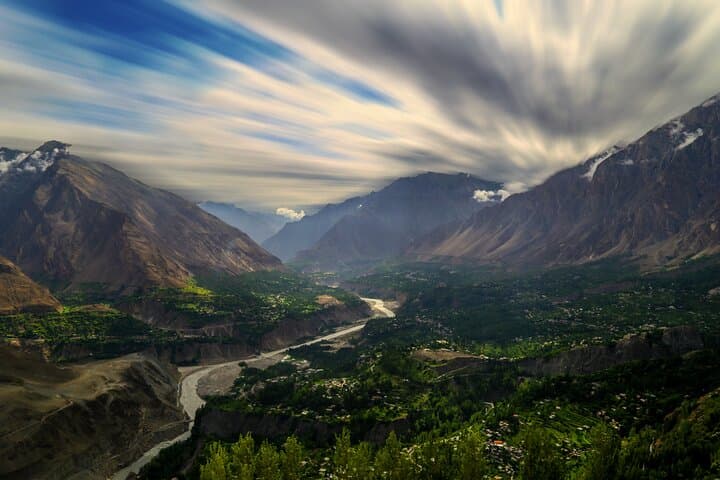
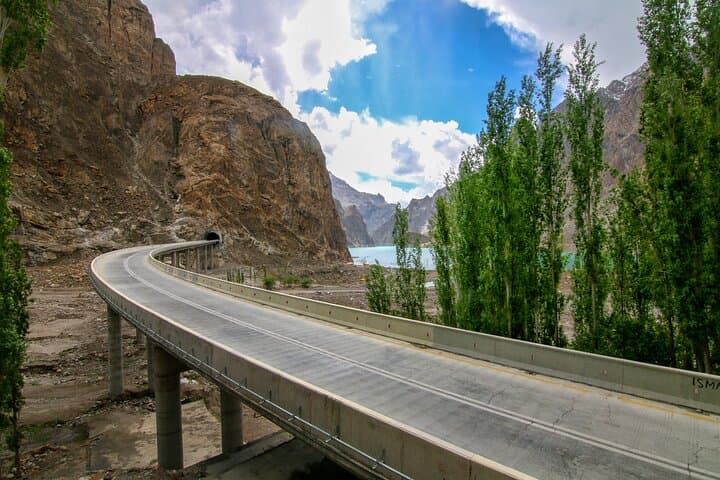
The van climbs a ribbon of asphalt carved along stone, and below the valley widens into fields of apricot and terraced wheat. High above, jagged peaks—Karakoram spires and distant Hindu Kush teeth—catch late light while the Hunza River threads a silver line through the floor. You arrive in Karimabad with the smell of wood smoke and fresh naan, and the mountains feel like a careful, watchful host.
The van climbs a ribbon of asphalt carved along stone, and below the valley widens into fields of apricot and terraced wheat. High above, jagged peaks—Karakoram spires and distant Hindu Kush teeth—catch late light while the Hunza River threads a silver line through the floor. You arrive in Karimabad with the smell of wood smoke and fresh naan, and the mountains feel like a careful, watchful host.
Hunza sits at the crossroads of ancient Silk Road routes and modern geopolitics. Baltit and Altit forts are concrete stories in baked mud and wood—centuries of local Burusho culture layered with trade-era influences. Geologically the region is young: active uplift and glacial carving have created steep folds, hanging valleys and some of the largest valley glaciers outside the polar zones. Local communities remain deeply connected to seasonal agriculture, and traditional mountain hospitality is a daily practice.
This guided eight-day itinerary balances road kilometers on the Karakoram Highway with short walks, glacier views at Hoper, the turquoise expanse of Attabad Lake, the cathedral peaks of Passu and a high-pass run to Khunjerab. Expect rocky trails beside moraines, short steep stair sections inside fort complexes and some high-altitude exposure above 3,000–4,700 m on drive segments.
Practical guidance: take time to acclimatize in Gilgit, carry layers for wide temperature swings, and limit heavy exertion the first 24–48 hours at altitude. Hydrate, protect skin from intense sun, and plan daylight drives—landslides can narrow roads. The trip is ideal for travelers comfortable with basic hiking and long scenic drives who want concentrated high-mountain landscapes and cultural contact without technical mountaineering.