THE ADVENTURE COLLECTIVE® · Independent discovery and booking for outdoor travel

Glide through Berlin-Mitte by rickshaw and see Imperial boulevards, Cold War sites, and street-art lanes in a relaxed 3–4 hour guided tour. Great for families and guests with limited mobility, this ride pairs local stories with easy urban exploration.
Glide through Berlin-Mitte by rickshaw and see Imperial boulevards, Cold War sites, and street-art lanes in a relaxed 3–4 hour guided tour. Great for families and guests with limited mobility, this ride pairs local stories with easy urban exploration.
You settle into the padded seat as the rickshaw rolls off—cobblestones click, modern glass reflects old stone, and the Spree dares you to look closer. The guide pedals with a steady rhythm, steering through the avenues of Mitte where postwar facades and 19th-century boulevards meet.
Verified experiences and guided adventures in the surrounding area.
You settle into the padded seat as the rickshaw rolls off—cobblestones click, modern glass reflects old stone, and the Spree dares you to look closer. The guide pedals with a steady rhythm, steering through the avenues of Mitte where postwar facades and 19th-century boulevards meet.
The route moves past layers of history: Imperial-era boulevards, the scars of the Wall, and restoration projects that stitch old blocks to new centers. Geologically, you’re on the Berlin glacial plain—flat streets and broad parks that once drained into the Spree; culturally, Mitte has always been a crossroads of artisans, political ferment, and nightlife. The guide points out a Cold War bunker, a restored synagogue, and a lane where street art argues with planners.
Expect stops for photo ops at major sights and short walks to monuments; the pace is conversational rather than athletic. The ride suits guests with limited mobility and families with kids on separate bikes or e-scooters. In three to four hours you’ll get a compact orientation to monuments, hidden courtyards, and local cafés where Berliners meet.
Practical notes: book morning or late afternoon to avoid midday heat and heavy traffic; bring a compact windproof layer for sudden rain or gusts off the Spree. Wear closed-toe shoes for short dismounts and keep a charged phone for mobile tickets. The guide often shares local dining tips—save time for a quick currywurst stop. This is an accessible, low-effort way to experience Mitte’s complex personality while someone else handles the pedals and the city’s negotiating traffic.
easy.
3–4 hours.
Minimal fitness required; suitable for those who can sit comfortably for the duration and do short brief walks.
Each rickshaw typically seats two guests; larger groups are split across multiple rickshaws or staggered departures.
Yes—rickshaws offer comfortable seating and minimal walking; notify the operator of mobility needs when booking so they can accommodate you.
Yes—the guide schedules short stops to step out for photos and to view nearby monuments on foot for a few minutes.
Most tours operate in light rain—bring a waterproof layer; in heavy weather operators may reschedule or offer a refund per their policy.
Mitte contains Berlin’s imperial boulevards and Cold War sites—you can trace shifts from Prussian capital to divided city within a few blocks.
Urban tours should follow low-impact practices: stay on paved routes, avoid feeding wildlife, and support local businesses that prioritize sustainable operations.
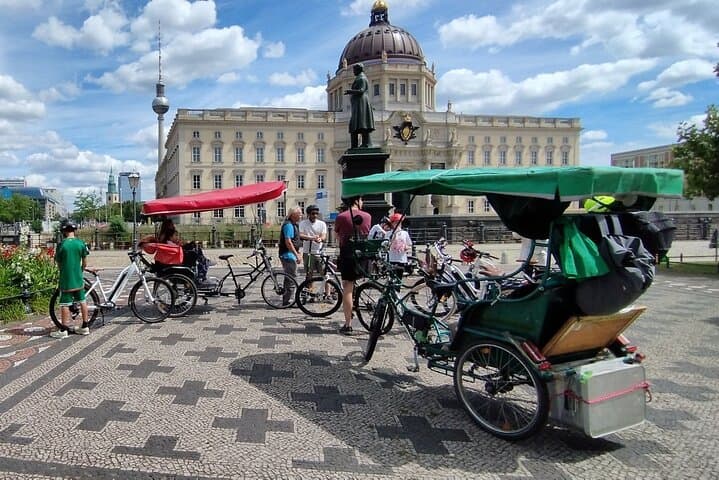
You settle into the padded seat as the rickshaw rolls off—cobblestones click, modern glass reflects old stone, and the Spree dares you to look closer. The guide pedals with a steady rhythm, steering through the avenues of Mitte where postwar facades and 19th-century boulevards meet.
You settle into the padded seat as the rickshaw rolls off—cobblestones click, modern glass reflects old stone, and the Spree dares you to look closer. The guide pedals with a steady rhythm, steering through the avenues of Mitte where postwar facades and 19th-century boulevards meet.
The route moves past layers of history: Imperial-era boulevards, the scars of the Wall, and restoration projects that stitch old blocks to new centers. Geologically, you’re on the Berlin glacial plain—flat streets and broad parks that once drained into the Spree; culturally, Mitte has always been a crossroads of artisans, political ferment, and nightlife. The guide points out a Cold War bunker, a restored synagogue, and a lane where street art argues with planners.
Expect stops for photo ops at major sights and short walks to monuments; the pace is conversational rather than athletic. The ride suits guests with limited mobility and families with kids on separate bikes or e-scooters. In three to four hours you’ll get a compact orientation to monuments, hidden courtyards, and local cafés where Berliners meet.
Practical notes: book morning or late afternoon to avoid midday heat and heavy traffic; bring a compact windproof layer for sudden rain or gusts off the Spree. Wear closed-toe shoes for short dismounts and keep a charged phone for mobile tickets. The guide often shares local dining tips—save time for a quick currywurst stop. This is an accessible, low-effort way to experience Mitte’s complex personality while someone else handles the pedals and the city’s negotiating traffic.