THE ADVENTURE COLLECTIVE® · Independent discovery and booking for outdoor travel

Skip the lines at Herculaneum and enter a town where wooden beams, mosaics and household objects survived Vesuvius’s 79 AD surge. This two-hour guided tour focuses on intact Roman homes and gives time to explore further afterward.
Skip the lines at Herculaneum and enter a town where wooden beams, mosaics and household objects survived Vesuvius’s 79 AD surge. This two-hour guided tour focuses on intact Roman homes and gives time to explore further afterward.
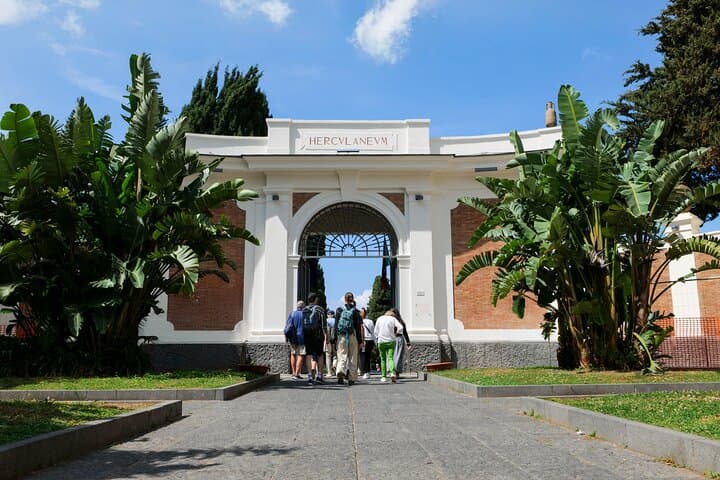
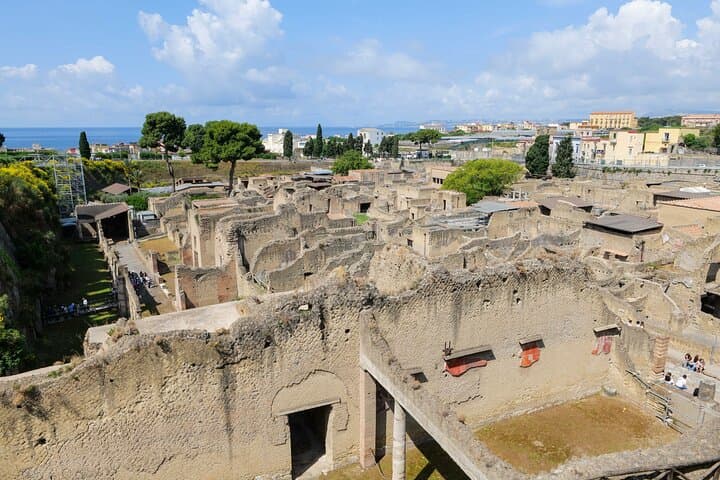
You step through a low stone arch and the street opens—sun on old volcanic stone, fresco fragments clinging to plaster, and Vesuvius watching from the skyline as if keeping an account of the day.
Verified experiences and guided adventures in the surrounding area.
Operated by InStazione · Ercolano, Campania
You step through a low stone arch and the street opens—sun on old volcanic stone, fresco fragments clinging to plaster, and Vesuvius watching from the skyline as if keeping an account of the day.
Herculaneum preserves a level of domestic detail rare elsewhere: charred wooden beams, household tools, and vivid mosaics inside the House of the Deer and the House of the Wooden Partition. The town was overwhelmed by a fast-moving surge of hot gas and ash in 79 AD, which sealed organic material that Pompeii's ash did not, creating extraordinary preservation.
Geologically, the site is a record of pyroclastic density currents and buried shorelines; culture here is intimate—graffiti, kitchens, baths and compact urban planning reveal ordinary Roman life rather than monumental spectacle.
An authorized guide will move you efficiently through main houses in a two-hour circuit, explaining household rites, construction techniques and the excavations’ 18th–20th century history. The tour's skip-the-line access minimizes time spent queuing so you can linger afterward among quieter corners.
Practical notes: pathways are uneven and partly exposed to sun—supportive shoes and water are essential. Morning visits avoid crowds and the hottest hours; winter can be blustery and some areas feel damp. Photography is allowed but avoid touching frescoes and follow signs to reduce wear on fragile surfaces.
Finish by wandering the decumanus or visiting the nearby Antiquarium of Ercolano to see artifacts removed for conservation. This short, focused tour gives a clear, sensory sense of a town paused by disaster and preserved by both ash and careful archaeology.
easy.
2 hours.
Suitable for most fitness levels; expect walking on uneven, sometimes sloping stone surfaces for two hours.
The guided portion lasts two hours, and you may remain on site to explore further after the tour ends.
Some main paths are accessible but many areas have uneven steps and narrow passages; check with the operator about mobility needs before booking.
Yes—this tour includes skip-the-line entrance, reducing wait time at the ticket office.
Frequent regional trains (Circumvesuviana) run from Naples to Ercolano Scavi station, a short walk from the archaeological entrance; buses and taxis are also options.
Herculaneum was overwhelmed in 79 AD by a high-temperature surge from Vesuvius that carbonized wood and preserved organic materials, offering a detailed window into private Roman life.
Ongoing conservation balances visitor access with protection; stay on marked paths, avoid touching surfaces and follow guide instructions to reduce wear on fragile structures.
InStazione operates guided outdoor trips and adventures with an emphasis on safety, stewardship, and memorable experiences.
You step through a low stone arch and the street opens—sun on old volcanic stone, fresco fragments clinging to plaster, and Vesuvius watching from the skyline as if keeping an account of the day.
You step through a low stone arch and the street opens—sun on old volcanic stone, fresco fragments clinging to plaster, and Vesuvius watching from the skyline as if keeping an account of the day.
Herculaneum preserves a level of domestic detail rare elsewhere: charred wooden beams, household tools, and vivid mosaics inside the House of the Deer and the House of the Wooden Partition. The town was overwhelmed by a fast-moving surge of hot gas and ash in 79 AD, which sealed organic material that Pompeii's ash did not, creating extraordinary preservation.
Geologically, the site is a record of pyroclastic density currents and buried shorelines; culture here is intimate—graffiti, kitchens, baths and compact urban planning reveal ordinary Roman life rather than monumental spectacle.
An authorized guide will move you efficiently through main houses in a two-hour circuit, explaining household rites, construction techniques and the excavations’ 18th–20th century history. The tour's skip-the-line access minimizes time spent queuing so you can linger afterward among quieter corners.
Practical notes: pathways are uneven and partly exposed to sun—supportive shoes and water are essential. Morning visits avoid crowds and the hottest hours; winter can be blustery and some areas feel damp. Photography is allowed but avoid touching frescoes and follow signs to reduce wear on fragile surfaces.
Finish by wandering the decumanus or visiting the nearby Antiquarium of Ercolano to see artifacts removed for conservation. This short, focused tour gives a clear, sensory sense of a town paused by disaster and preserved by both ash and careful archaeology.