THE ADVENTURE COLLECTIVE® · Independent discovery and booking for outdoor travel

Walk among Nabatean tombs hewn from sandstone and learn the history of Saudi Arabia’s first UNESCO World Heritage Site. This guided visit to Hegra blends geology, archaeology and local culture with practical tips for timing, transport and what to bring.
Walk among Nabatean tombs hewn from sandstone and learn the history of Saudi Arabia’s first UNESCO World Heritage Site. This guided visit to Hegra blends geology, archaeology and local culture with practical tips for timing, transport and what to bring.
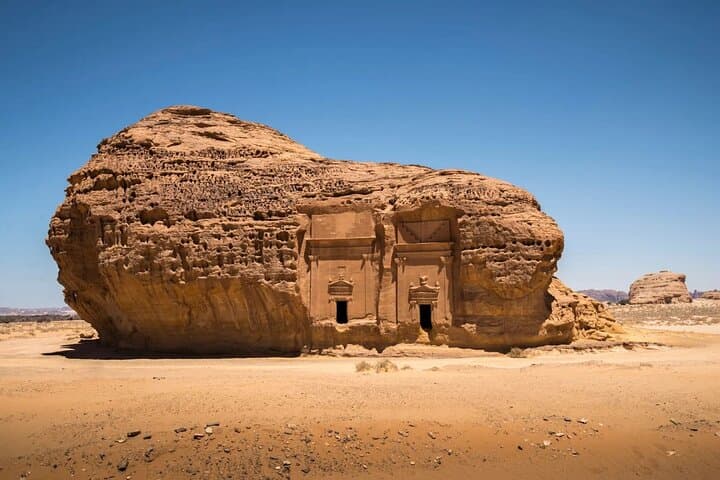
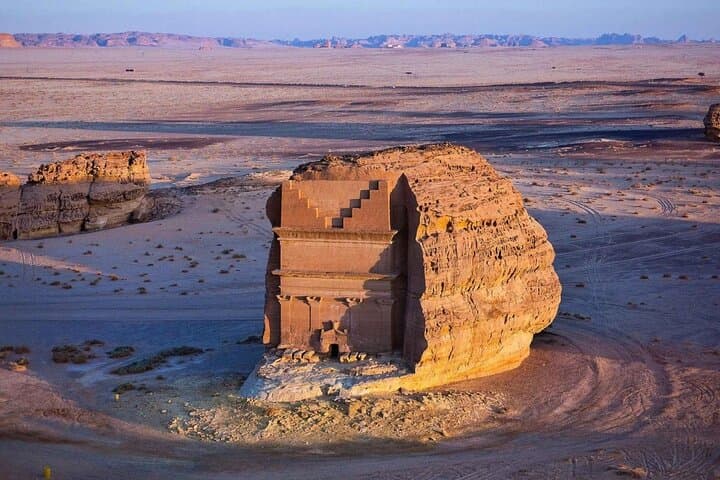
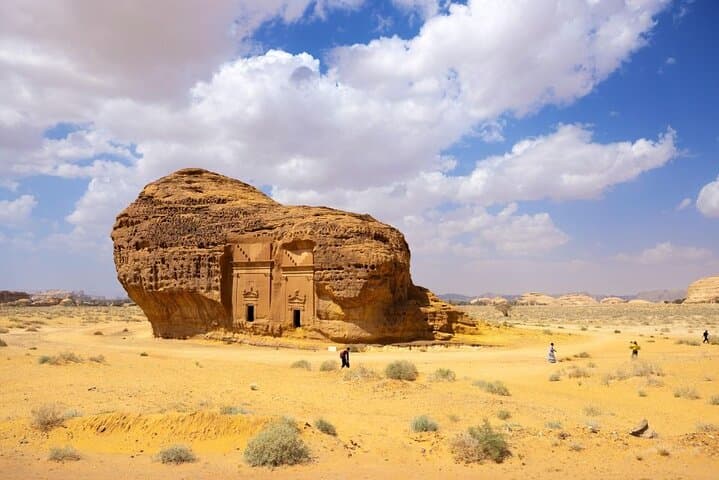
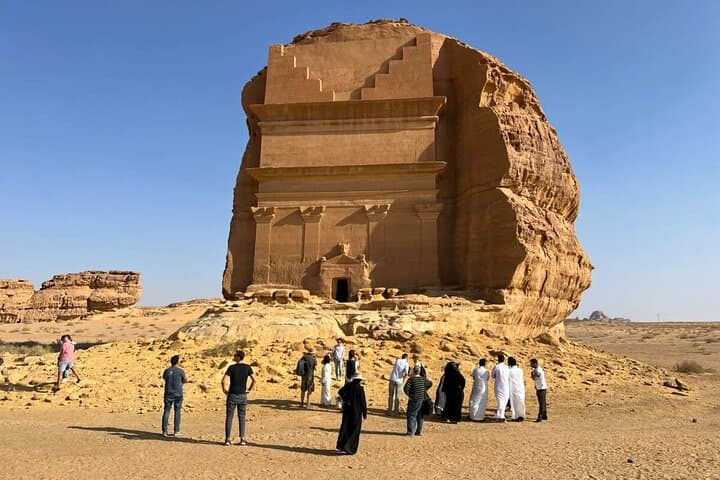
A wind-bleached corridor of sandstone opens before you as the tour group files into Hegra’s main valley. Sunlight carves the façades of monumental tombs into high-contrast relief; the air smells faintly of desert dust and date palms from the nearby oasis. Walking here feels like moving through a slow, deliberate archive where each carved doorway records a life from two millennia ago.
Verified experiences and guided adventures in the surrounding area.
Operated by Golden Destination · AlUla, Al Madinah Region
A wind-bleached corridor of sandstone opens before you as the tour group files into Hegra’s main valley. Sunlight carves the façades of monumental tombs into high-contrast relief; the air smells faintly of desert dust and date palms from the nearby oasis. Walking here feels like moving through a slow, deliberate archive where each carved doorway records a life from two millennia ago.
Hegra—also called Al‑Hijr or Madâin Sâlih—was the southern anchor of the Nabatean network that ran north to Petra. The site’s geological backbone is thick, horizontally bedded sandstone, sculpted over time by wind and flash floods into cliffs, freestanding pillars and the famous Elephant Rock a short drive away. Local culture blends Bedouin traditions with modern conservation efforts; nearby AlUla town has become a staging ground for cultural programs and contemporary art installations that frame the ruins.
On a practical note, expect linear walking on compacted sand and occasional loose gravel; the main visit lasts roughly 2–3 hours. Tours normally include entrance fees, a guide in English, and bottled water, but you should bring sun protection and at least 1–2 liters of water. Photography is excellent in morning or late afternoon light; midday flattens the relief. Respect signage and stay off tomb facades—these are fragile archaeological surfaces. Plan transport from AlUla (many tours include pickup) and aim to arrive early to avoid heat and busier midday crowds.
easy.
2–3 hours.
Suitable for most fitness levels; involves moderate walking on uneven, sandy terrain
Most guided tours include entrance fees and an English-speaking guide; check your booking details and carry your QR ticket for scanning.
Primary routes are on compacted sand and some flat paved areas, but many tomb approaches have steps or uneven surfaces—access can be limited for wheelchairs.
Tours commonly offer hotel pickup; alternatively you can taxi or drive to the Winter Park meeting point where free parking is available before transfer to the site.
Drones require permits from Saudi authorities and are generally restricted at heritage sites; climbing on tomb façades is prohibited to protect fragile carvings.
Hegra was the Nabatean kingdom’s southern settlement and contains well-preserved rock-cut tombs with decorated façades dating to the 1st century BCE–1st century CE; it became Saudi Arabia’s first UNESCO World Heritage Site in 2008.
Visitor numbers are managed and climbing is prohibited to protect sandstone tombs; stick to paths, avoid littering and follow guide instructions to minimize impact.
Golden Destination operates guided outdoor trips and adventures with an emphasis on safety, stewardship, and memorable experiences.
A wind-bleached corridor of sandstone opens before you as the tour group files into Hegra’s main valley. Sunlight carves the façades of monumental tombs into high-contrast relief; the air smells faintly of desert dust and date palms from the nearby oasis. Walking here feels like moving through a slow, deliberate archive where each carved doorway records a life from two millennia ago.
A wind-bleached corridor of sandstone opens before you as the tour group files into Hegra’s main valley. Sunlight carves the façades of monumental tombs into high-contrast relief; the air smells faintly of desert dust and date palms from the nearby oasis. Walking here feels like moving through a slow, deliberate archive where each carved doorway records a life from two millennia ago.
Hegra—also called Al‑Hijr or Madâin Sâlih—was the southern anchor of the Nabatean network that ran north to Petra. The site’s geological backbone is thick, horizontally bedded sandstone, sculpted over time by wind and flash floods into cliffs, freestanding pillars and the famous Elephant Rock a short drive away. Local culture blends Bedouin traditions with modern conservation efforts; nearby AlUla town has become a staging ground for cultural programs and contemporary art installations that frame the ruins.
On a practical note, expect linear walking on compacted sand and occasional loose gravel; the main visit lasts roughly 2–3 hours. Tours normally include entrance fees, a guide in English, and bottled water, but you should bring sun protection and at least 1–2 liters of water. Photography is excellent in morning or late afternoon light; midday flattens the relief. Respect signage and stay off tomb facades—these are fragile archaeological surfaces. Plan transport from AlUla (many tours include pickup) and aim to arrive early to avoid heat and busier midday crowds.