THE ADVENTURE COLLECTIVE® · Independent discovery and booking for outdoor travel

Skip the line and step into the GRAMMY Museum Mississippi to follow the Delta’s musical currents—from field songs to studio craft. This interactive museum packs hours of audio, artifacts and films into a focused visit minutes from key blues landmarks.
Skip the line and step into the GRAMMY Museum Mississippi to follow the Delta’s musical currents—from field songs to studio craft. This interactive museum packs hours of audio, artifacts and films into a focused visit minutes from key blues landmarks.
You step off Sunflower Road and into a cool, low-lit lobby where the Delta's past meets multimedia display—vinyl sleeves glint beneath spotlights, film clips loop on angled screens, and the hum of visitors becomes part of the exhibit. The GRAMMY Museum Mississippi places the region's musical makers front and center: songwriters, producers and performers whose work shaped country, blues, gospel and rock.
Verified experiences and guided adventures in the surrounding area.
Operated by GRAMMY Museum Mississippi · Cleveland, Mississippi
You step off Sunflower Road and into a cool, low-lit lobby where the Delta's past meets multimedia display—vinyl sleeves glint beneath spotlights, film clips loop on angled screens, and the hum of visitors becomes part of the exhibit. The GRAMMY Museum Mississippi places the region's musical makers front and center: songwriters, producers and performers whose work shaped country, blues, gospel and rock.
The museum sits in the Mississippi Delta, the broad alluvial plain that produced the acoustic and electric forms of the blues. Exhibits trace chronology and craft—sheet music, recording artifacts and oral-history clips—while films place artists in the region's social and industrial history, from plantation-era song traditions to modern studio practice.
Cultural context is concrete here: nearby Dockery Farms and the B.B. King Museum mark physical touchpoints of the blues, and Cleveland's community events often link to the museum's programming. The building is compact but curated; interactive listening stations invite close attention rather than a rush through displays.
Practical guidance: plan 90–180 minutes, bring your mobile ticket and photo ID, and arrive within posted hours (Thu–Sat 10–3, Sun 12–3). Note that photography, video and audio recording are prohibited in gallery spaces—use the museum theater and designated media for capturing memories. The facility is wheelchair-accessible and offers complimentary manual wheelchairs and accessible seating in the theater. If visiting in summer, expect heat outdoors—schedule museum time for mid-morning or late afternoon to avoid driving in peak temperatures. Respect exhibit labels and staff directions; these artifacts are fragile pieces of musical history.
easy.
2–3 hours.
Suitable for all fitness levels; mostly standing and light walking indoors
Most visitors spend 90–180 minutes exploring exhibits and watching short films; plan on at least 90 minutes to see core displays.
No—photography, video and audio recording are prohibited in all museum galleries; staff can direct you to photo-friendly areas.
Yes—grounds, galleries and theater seating are wheelchair accessible, and the museum offers a manual wheelchair or motorized scooter free to visitors.
Children are welcome but must be accompanied by an adult; stroller access is available and some exhibits are designed to engage younger visitors.
The Mississippi Delta is a birthplace of American blues; the museum highlights the region's songwriters and producers whose work influenced national music industries.
The museum focuses on preserving audio-visual artifacts and archival materials; visitors can help by following handling and recording rules that protect fragile items.
GRAMMY Museum Mississippi operates guided outdoor trips and adventures with an emphasis on safety, stewardship, and memorable experiences.
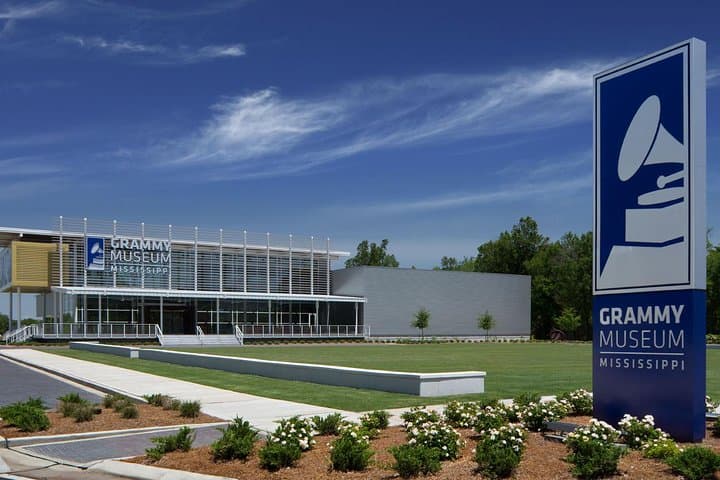

You step off Sunflower Road and into a cool, low-lit lobby where the Delta's past meets multimedia display—vinyl sleeves glint beneath spotlights, film clips loop on angled screens, and the hum of visitors becomes part of the exhibit. The GRAMMY Museum Mississippi places the region's musical makers front and center: songwriters, producers and performers whose work shaped country, blues, gospel and rock.
You step off Sunflower Road and into a cool, low-lit lobby where the Delta's past meets multimedia display—vinyl sleeves glint beneath spotlights, film clips loop on angled screens, and the hum of visitors becomes part of the exhibit. The GRAMMY Museum Mississippi places the region's musical makers front and center: songwriters, producers and performers whose work shaped country, blues, gospel and rock.
The museum sits in the Mississippi Delta, the broad alluvial plain that produced the acoustic and electric forms of the blues. Exhibits trace chronology and craft—sheet music, recording artifacts and oral-history clips—while films place artists in the region's social and industrial history, from plantation-era song traditions to modern studio practice.
Cultural context is concrete here: nearby Dockery Farms and the B.B. King Museum mark physical touchpoints of the blues, and Cleveland's community events often link to the museum's programming. The building is compact but curated; interactive listening stations invite close attention rather than a rush through displays.
Practical guidance: plan 90–180 minutes, bring your mobile ticket and photo ID, and arrive within posted hours (Thu–Sat 10–3, Sun 12–3). Note that photography, video and audio recording are prohibited in gallery spaces—use the museum theater and designated media for capturing memories. The facility is wheelchair-accessible and offers complimentary manual wheelchairs and accessible seating in the theater. If visiting in summer, expect heat outdoors—schedule museum time for mid-morning or late afternoon to avoid driving in peak temperatures. Respect exhibit labels and staff directions; these artifacts are fragile pieces of musical history.