THE ADVENTURE COLLECTIVE® · Independent discovery and booking for outdoor travel

Move through Göreme at your own pace on a private full-day tour with a licensed local guide and driver. See panoramic viewpoints, underground cities, cave churches and traditional pottery workshops while avoiding rigid group schedules.
Move through Göreme at your own pace on a private full-day tour with a licensed local guide and driver. See panoramic viewpoints, underground cities, cave churches and traditional pottery workshops while avoiding rigid group schedules.
The morning light in Göreme carves the fairy chimneys into rows of bronze and ivory; your driver eases the minivan onto a quiet road, and the valley opens like a geological atlas. On a private full-day tour you move at your own pace—stopping where the guide points out a frescoed cave church, climbing the 160 steps to Uchisar Castle for a panorama, or lingering in a family-run pottery workshop in Avanos until the wheel finds your rhythm.
Verified experiences and guided adventures in the surrounding area.
Operated by Cappadocian Guide · Göreme, Nevşehir
The morning light in Göreme carves the fairy chimneys into rows of bronze and ivory; your driver eases the minivan onto a quiet road, and the valley opens like a geological atlas. On a private full-day tour you move at your own pace—stopping where the guide points out a frescoed cave church, climbing the 160 steps to Uchisar Castle for a panorama, or lingering in a family-run pottery workshop in Avanos until the wheel finds your rhythm.
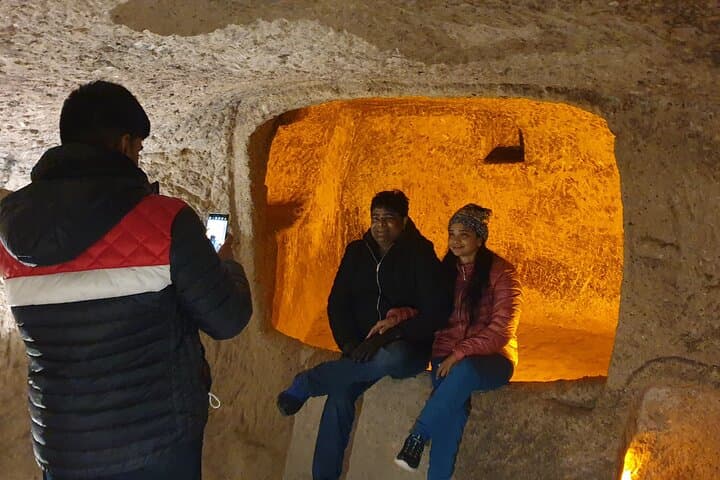
Cappadocia’s landscape is the product of volcanic ash and erosive wind. Soft tuffs laid down millions of years ago were sculpted into cones, pillars and mushroom caps; humans then hollowed into that stone, carving homes, churches and entire underground cities. Göreme and its surroundings became a refuge for early Christians; the region’s cave churches still hold frescoes dating from the 6th to 11th centuries, while towns like Avanos preserve ceramic techniques traced back to 3800 BCE.
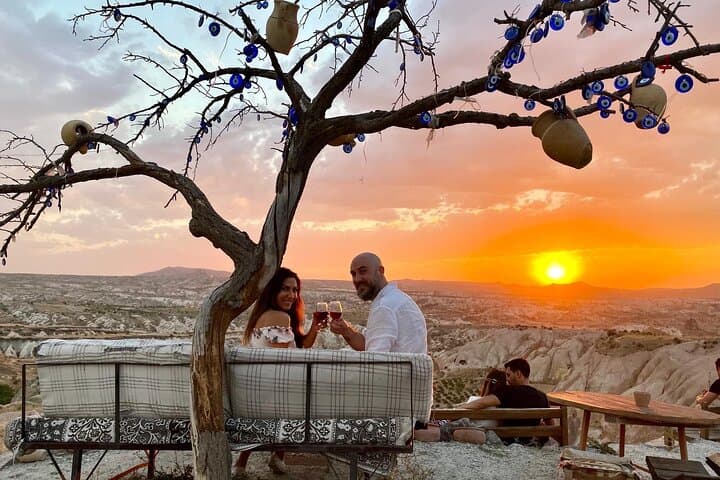
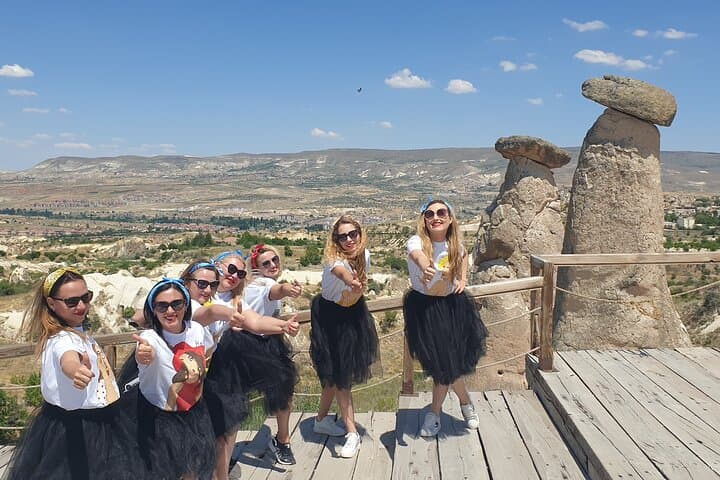
A private tour with a licensed local guide removes the usual group constraints. The operator offers up to 200 km of driving per day—ample to cover northern Cappadocia’s highlights: panoramic viewpoints, Pigeon Valley (with its famous “Blue Eyes” tree), Pasabag’s mushroom rocks, and the rock-cut monasteries of the Open-Air Museum. Guides explain geological formation and give context for the symbols painted on cave walls; drivers handle logistics so you can concentrate on observation and photos.
Expect practical trade-offs: some cultural sites have separate entrance fees (ranging roughly 100–400 TRY per site) and underground cities charge more; lunch is not included so you can choose a local pottery kebab or a simple soup at a family restaurant. The tour runs about 7–8 hours, and the terrain at viewpoints is uneven—good walking shoes and plenty of water help.
Local insights are part of the value. Guides time visits to avoid the busiest windows, recommend viewpoints for balloon-filled sunrises, and can arrange a pottery demo or a short hike through Love Valley. For preservation, avoid touching frescoes and stick to marked paths; erosion is ongoing and concentrated foot traffic accelerates it.
If you want flexibility, this private option is efficient: you control the itinerary, pay only for what you enter or eat, and benefit from local knowledge. Plan early for sunrise balloon season if that’s on your list, keep small bills for entrance fees, and schedule the day to leave time for the slower, low-sun moments when the rock faces reveal their details.
moderate.
7–8 hours.
Moderate fitness for short walks, stairs and uneven surfaces; comfortable walking for several hours.
Yes—the operator offers hotel pickup across Cappadocia; specify your hotel during booking for pickup confirmation.
The private tour runs about 7–8 hours (420–480 minutes) and includes up to 200 km of driving per day.
No—entrance fees to museums, underground cities and some sites are usually paid on site and vary by attraction.
Yes—this private tour is built around your preferences; guides will suggest options and tailor the route accordingly.
Yes—infant seats are available and many stops are stroller-accessible, but some viewpoints have stairs and uneven ground.
Yes—visits are possible but require additional entrance fees and some sites have narrow passages; guides can recommend the best option.
Cappadocia’s hollowed rock dwellings and underground cities served as refuge and community centers for early Christians and earlier Anatolian cultures.
Erosion and visitor pressure threaten soft tuff and frescoes—follow marked trails, don’t touch artworks, and use licensed local guides to support sustainable tourism.
Cappadocian Guide operates guided outdoor trips and adventures with an emphasis on safety, stewardship, and memorable experiences.

The morning light in Göreme carves the fairy chimneys into rows of bronze and ivory; your driver eases the minivan onto a quiet road, and the valley opens like a geological atlas. On a private full-day tour you move at your own pace—stopping where the guide points out a frescoed cave church, climbing the 160 steps to Uchisar Castle for a panorama, or lingering in a family-run pottery workshop in Avanos until the wheel finds your rhythm.
The morning light in Göreme carves the fairy chimneys into rows of bronze and ivory; your driver eases the minivan onto a quiet road, and the valley opens like a geological atlas. On a private full-day tour you move at your own pace—stopping where the guide points out a frescoed cave church, climbing the 160 steps to Uchisar Castle for a panorama, or lingering in a family-run pottery workshop in Avanos until the wheel finds your rhythm.
Cappadocia’s landscape is the product of volcanic ash and erosive wind. Soft tuffs laid down millions of years ago were sculpted into cones, pillars and mushroom caps; humans then hollowed into that stone, carving homes, churches and entire underground cities. Göreme and its surroundings became a refuge for early Christians; the region’s cave churches still hold frescoes dating from the 6th to 11th centuries, while towns like Avanos preserve ceramic techniques traced back to 3800 BCE.
A private tour with a licensed local guide removes the usual group constraints. The operator offers up to 200 km of driving per day—ample to cover northern Cappadocia’s highlights: panoramic viewpoints, Pigeon Valley (with its famous “Blue Eyes” tree), Pasabag’s mushroom rocks, and the rock-cut monasteries of the Open-Air Museum. Guides explain geological formation and give context for the symbols painted on cave walls; drivers handle logistics so you can concentrate on observation and photos.
Expect practical trade-offs: some cultural sites have separate entrance fees (ranging roughly 100–400 TRY per site) and underground cities charge more; lunch is not included so you can choose a local pottery kebab or a simple soup at a family restaurant. The tour runs about 7–8 hours, and the terrain at viewpoints is uneven—good walking shoes and plenty of water help.
Local insights are part of the value. Guides time visits to avoid the busiest windows, recommend viewpoints for balloon-filled sunrises, and can arrange a pottery demo or a short hike through Love Valley. For preservation, avoid touching frescoes and stick to marked paths; erosion is ongoing and concentrated foot traffic accelerates it.
If you want flexibility, this private option is efficient: you control the itinerary, pay only for what you enter or eat, and benefit from local knowledge. Plan early for sunrise balloon season if that’s on your list, keep small bills for entrance fees, and schedule the day to leave time for the slower, low-sun moments when the rock faces reveal their details.