THE ADVENTURE COLLECTIVE® · Independent discovery and booking for outdoor travel

Stand beside a thunderous, ice‑rimmed fall on a 2.5‑hour winter tour from Akureyri. Learn the Viking‑era story behind Goðafoss, try crampons on packed snow, and shoot dramatic long exposures with local guide support.
Stand beside a thunderous, ice‑rimmed fall on a 2.5‑hour winter tour from Akureyri. Learn the Viking‑era story behind Goðafoss, try crampons on packed snow, and shoot dramatic long exposures with local guide support.
Wind cuts the air as the coach eases to a stop and the river announces itself: a broad curtain of water carving through black basalt, steam rising where warm currents meet the cold. On this 2.5‑hour winter tour from Akureyri you have time to stand, listen, and move deliberately—crampons on when needed—while the falls dare you closer with a low, relentless roar.
Verified experiences and guided adventures in the surrounding area.
Operated by Saga Travel · Akureyri, Northeastern Region
Wind cuts the air as the coach eases to a stop and the river announces itself: a broad curtain of water carving through black basalt, steam rising where warm currents meet the cold. On this 2.5‑hour winter tour from Akureyri you have time to stand, listen, and move deliberately—crampons on when needed—while the falls dare you closer with a low, relentless roar.
Geology here is blunt and immediate: Skjálfandafljót has carved Goðafoss through successive lava flows, leaving stepped basalt ledges and spray-chilled terraces. Culturally the site carries a story from around Iceland’s conversion to Christianity (circa 1000 AD); Goðafoss is called the “Waterfall of the Gods” after sagas that link it to the casting away of pagan idols. Local guides usually weave those legends into practical notes about footing and photo angles.
Expect roughly 70 minutes at the falls and the rest of the 150-minute excursion for round-trip driving and brief stops. Trails are short but icy in winter; elevation change is modest, though exposed edges and spray create slippery pockets. Guides supply crampons when conditions demand and will position you for long exposures or wide-angle shots.
Practical edge: layer for wind, carry waterproof boots and a hands-free camera setup, and time visits for midday when winter light is kinder and access is safest. Respect ropes and stabilized paths—this is dynamic terrain, not a flat park. Do that, and Goðafoss in winter becomes a compact, memorable alpine‑coastal encounter.
easy.
2–3 hours.
Suitable for most fitness levels; participants should be able to walk short, uneven icy sections and stand for observation.
Guides typically carry crampons or microspikes and will fit them when conditions require—bring your own if you prefer a particular model.
The activity is rated easy and accessible for most, but icy sections may be challenging for very young children or those with mobility issues—ask about stroller access when booking.
Expect about 60–75 minutes at the waterfall to explore viewpoints, take photos, and return to the coach.
Tours can be cancelled for severe weather; the operator requests at least 24 hours for full refunds if you cancel beforehand, and they may cancel if conditions are unsafe.
Goðafoss is tied to Iceland’s conversion around 1000 AD and carries sagas about pagan idols being thrown into the falls, giving the site its name "Waterfall of the Gods."
Winter tours should stay on marked paths and avoid trampling fragile moss and ice features; small‑group guiding helps limit erosion and disturbance.
Saga Travel operates guided outdoor trips and adventures with an emphasis on safety, stewardship, and memorable experiences.
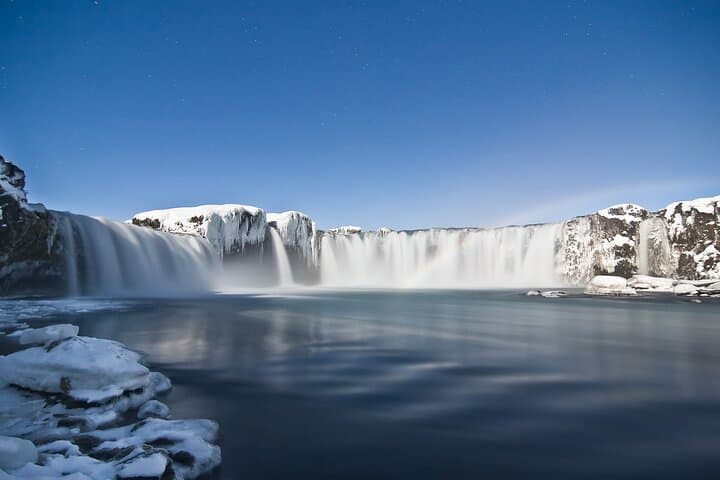
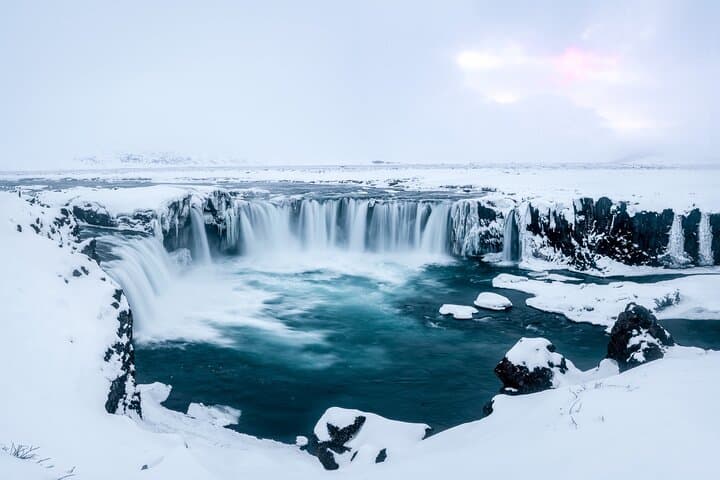
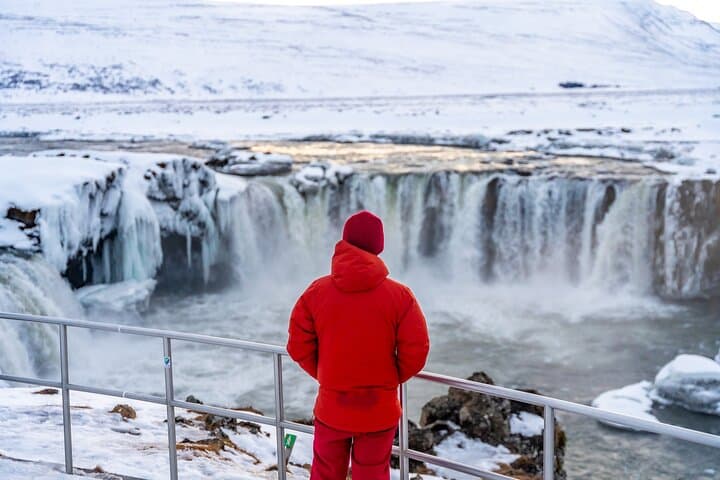
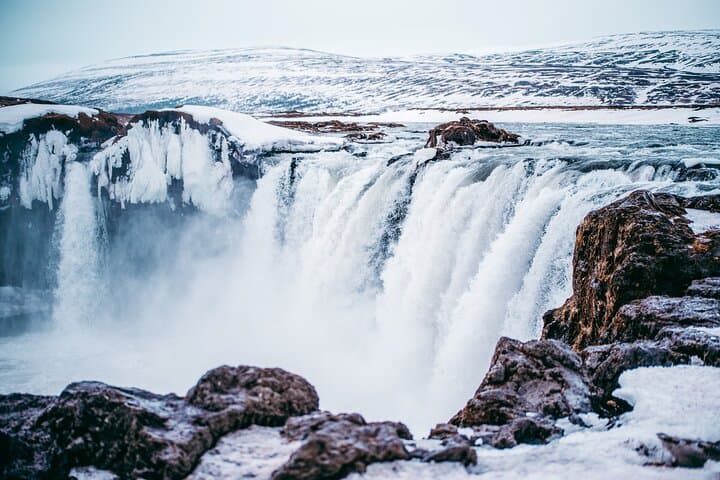
Wind cuts the air as the coach eases to a stop and the river announces itself: a broad curtain of water carving through black basalt, steam rising where warm currents meet the cold. On this 2.5‑hour winter tour from Akureyri you have time to stand, listen, and move deliberately—crampons on when needed—while the falls dare you closer with a low, relentless roar.
Wind cuts the air as the coach eases to a stop and the river announces itself: a broad curtain of water carving through black basalt, steam rising where warm currents meet the cold. On this 2.5‑hour winter tour from Akureyri you have time to stand, listen, and move deliberately—crampons on when needed—while the falls dare you closer with a low, relentless roar.
Geology here is blunt and immediate: Skjálfandafljót has carved Goðafoss through successive lava flows, leaving stepped basalt ledges and spray-chilled terraces. Culturally the site carries a story from around Iceland’s conversion to Christianity (circa 1000 AD); Goðafoss is called the “Waterfall of the Gods” after sagas that link it to the casting away of pagan idols. Local guides usually weave those legends into practical notes about footing and photo angles.
Expect roughly 70 minutes at the falls and the rest of the 150-minute excursion for round-trip driving and brief stops. Trails are short but icy in winter; elevation change is modest, though exposed edges and spray create slippery pockets. Guides supply crampons when conditions demand and will position you for long exposures or wide-angle shots.
Practical edge: layer for wind, carry waterproof boots and a hands-free camera setup, and time visits for midday when winter light is kinder and access is safest. Respect ropes and stabilized paths—this is dynamic terrain, not a flat park. Do that, and Goðafoss in winter becomes a compact, memorable alpine‑coastal encounter.