THE ADVENTURE COLLECTIVE® · Independent discovery and booking for outdoor travel

Stand before the Great Pyramid and the Sphinx with a private Egyptologist guiding your visit across the Giza Plateau. This five-hour tour combines archaeological context, close-up views, and optional camel or horse rides for striking photos.
Stand before the Great Pyramid and the Sphinx with a private Egyptologist guiding your visit across the Giza Plateau. This five-hour tour combines archaeological context, close-up views, and optional camel or horse rides for striking photos.
You arrive on the Giza Plateau with wind carrying dust and the hard geometry of stone looming ahead — three pyramids cut the pale horizon while the Sphinx watches the approach like an ancient guardian. The guide meets you at the parked vehicle and the day unfurls in clear, measured stages: approach, context, and close inspection.
Verified experiences and guided adventures in the surrounding area.
Operated by Esso Tours · Giza, Giza Governorate
You arrive on the Giza Plateau with wind carrying dust and the hard geometry of stone looming ahead — three pyramids cut the pale horizon while the Sphinx watches the approach like an ancient guardian. The guide meets you at the parked vehicle and the day unfurls in clear, measured stages: approach, context, and close inspection.
This landscape is both human-made and geological. The pyramids rise from a limestone ridge formed in the late Eocene; blocks quarried nearby became the raw material for tombs intended to last millennia. The Great Pyramid of Khufu (Cheops) is the oldest surviving Wonder, built during the Fourth Dynasty around 2560 BCE; nearby, the Valley Temple and Khafre’s complex reveal funerary engineering and ritual practice.
Walking the plateau, you pass shifting sands, low scrub, and scattered modern markers — camel handlers, stone conservators, and small museums. Your Egyptologist explains construction hypotheses, cartouche symbols, and the social organization behind the monuments; the Sphinx’s face looks southward, weathered by wind and time.
Practical edges: plan for sun, dust, and uneven footing. A private vehicle picks you up and returns you to your accommodation, and bottled water is provided. Expect about five hours on-site with optional short camel or horse rides for photos (usually extra). Wear sturdy shoes, a wide-brim hat, and sunscreen; mornings or late afternoons offer cooler light and thinner crowds. For travelers seeking a compact, authoritative introduction to ancient Egypt, this private tour compresses essential history, close-up archaeology, and the raw physicality of one of the world’s most inspected landscapes.
easy.
5 hours.
Suitable for most fitness levels; involves walking over uneven ground and short climbs of low rumble-stone areas.
Basic admission to the Giza Plateau is typically separate from the private tour price; verify whether site entry fees are included when booking.
Access inside the Great Pyramid is restricted and requires a special ticket that may not be available through every tour; ask your operator in advance.
Camel and horse rides are usually optional and paid locally; prices and safety standards vary, so confirm details with your guide before mounting.
The plateau has uneven terrain and limited accessibility; while vehicle drop-off is close, full mobility access is restricted in many areas.
The Giza complexes were built during Egypt’s Old Kingdom (c. 2630–2150 BCE) as funerary complexes centered on royal burials and associated ritual structures.
Ongoing conservation balances tourism with preservation; visitors should avoid touching carved surfaces and follow designated paths to limit erosion and wear.
Esso Tours operates guided outdoor trips and adventures with an emphasis on safety, stewardship, and memorable experiences.
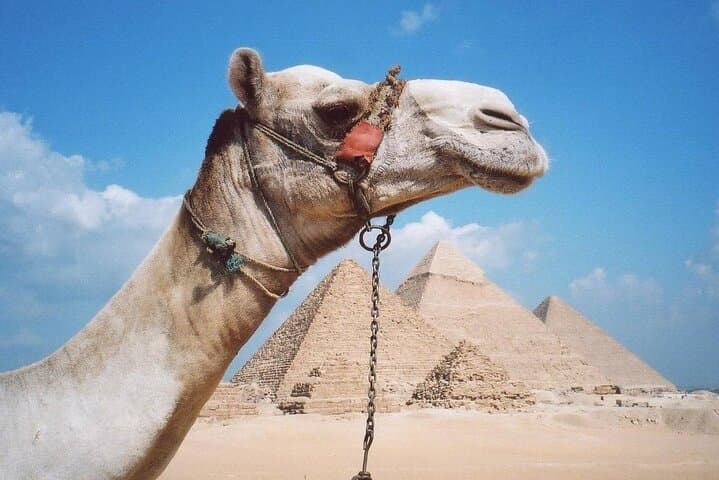
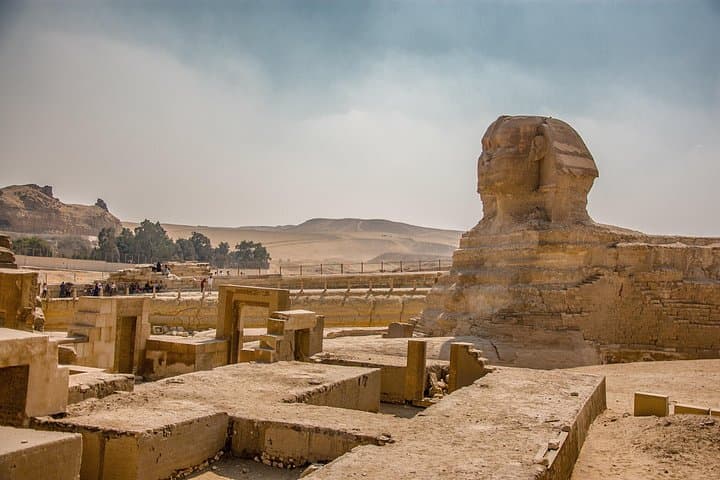
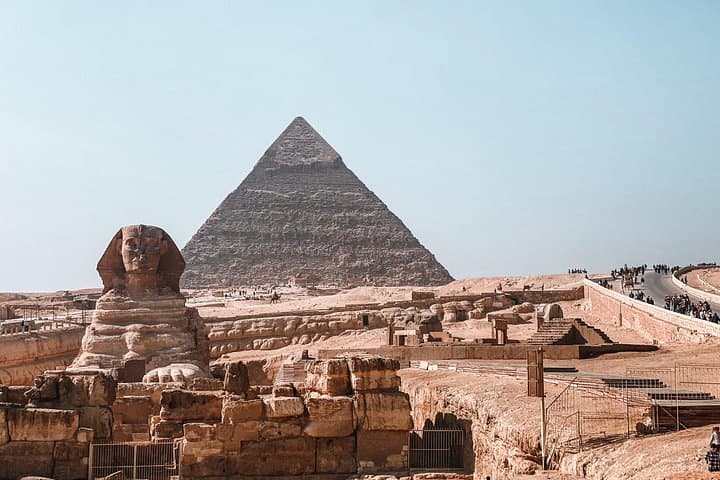
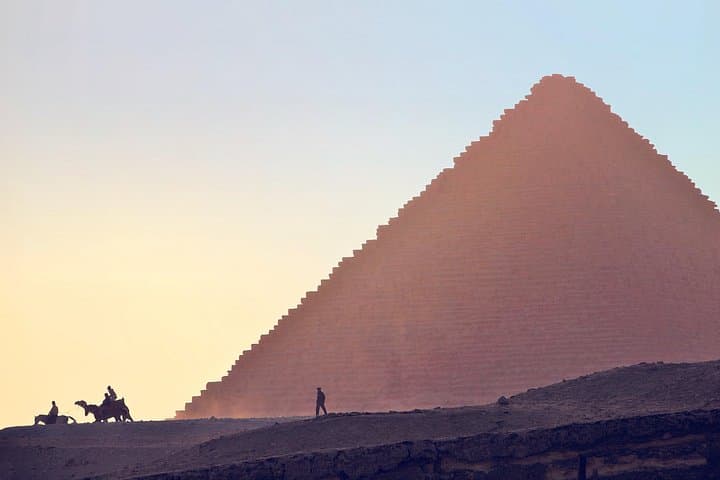
You arrive on the Giza Plateau with wind carrying dust and the hard geometry of stone looming ahead — three pyramids cut the pale horizon while the Sphinx watches the approach like an ancient guardian. The guide meets you at the parked vehicle and the day unfurls in clear, measured stages: approach, context, and close inspection.
You arrive on the Giza Plateau with wind carrying dust and the hard geometry of stone looming ahead — three pyramids cut the pale horizon while the Sphinx watches the approach like an ancient guardian. The guide meets you at the parked vehicle and the day unfurls in clear, measured stages: approach, context, and close inspection.
This landscape is both human-made and geological. The pyramids rise from a limestone ridge formed in the late Eocene; blocks quarried nearby became the raw material for tombs intended to last millennia. The Great Pyramid of Khufu (Cheops) is the oldest surviving Wonder, built during the Fourth Dynasty around 2560 BCE; nearby, the Valley Temple and Khafre’s complex reveal funerary engineering and ritual practice.
Walking the plateau, you pass shifting sands, low scrub, and scattered modern markers — camel handlers, stone conservators, and small museums. Your Egyptologist explains construction hypotheses, cartouche symbols, and the social organization behind the monuments; the Sphinx’s face looks southward, weathered by wind and time.
Practical edges: plan for sun, dust, and uneven footing. A private vehicle picks you up and returns you to your accommodation, and bottled water is provided. Expect about five hours on-site with optional short camel or horse rides for photos (usually extra). Wear sturdy shoes, a wide-brim hat, and sunscreen; mornings or late afternoons offer cooler light and thinner crowds. For travelers seeking a compact, authoritative introduction to ancient Egypt, this private tour compresses essential history, close-up archaeology, and the raw physicality of one of the world’s most inspected landscapes.