THE ADVENTURE COLLECTIVE® · Independent discovery and booking for outdoor travel

Spend a day tracing Galle’s colonial walls, coastal viewpoints and community conservation projects. This private guided tour mixes history, wildlife encounters and hands-on local culture across 6–10 hours.
Spend a day tracing Galle’s colonial walls, coastal viewpoints and community conservation projects. This private guided tour mixes history, wildlife encounters and hands-on local culture across 6–10 hours.
You step off the shaded van and onto a sun-warmed cobblestone lane; the air smells of sea salt, frying fish and sweet tea. The ramparts of Galle Fort loom ahead—thick Dutch-era walls that curve around the bay like a ship’s hull—with a lighthouse keeping a slow watch over fishing boats and surfers beyond.
Verified experiences and guided adventures in the surrounding area.
Operated by Magam Tours / W.S.A Prasad Suranjeewa · Galle, Southern Province
You step off the shaded van and onto a sun-warmed cobblestone lane; the air smells of sea salt, frying fish and sweet tea. The ramparts of Galle Fort loom ahead—thick Dutch-era walls that curve around the bay like a ship’s hull—with a lighthouse keeping a slow watch over fishing boats and surfers beyond.
Galle’s layers are visible in brick and mortar: a Portuguese outpost from 1588, rebuilt and widened by the Dutch in the 17th century and modified by the British in the 18th. The Fort’s geology is coastal limestone over older coastal deposits, and its streets retain colonial grids, churches, a clock tower and the low-lying Dutch Hospital arcade that now hums with cafes and craft shops.
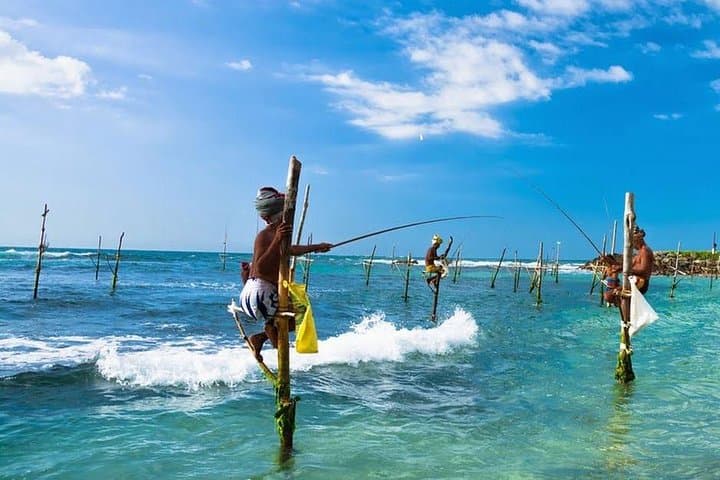
Beyond the fort, Rumassala headland drops to Jungle Beach, a small crescent where local legends and coral outcrops invite short swims. Nearby, a sea turtle conservation center explains decades of community-led releases, while stilt fishermen demonstrate a fragile, shoreline practice that dates generations.
Practical guidance: this private tour runs 6–10 hours and includes air-conditioned transport and bottled water; plan for several short walks on uneven cobbles and sandy shorelines. Bring sun protection, a light rain layer in the monsoon months, and comfortable shoes for footing on ramparts and plantation paths. Time visits to avoid midday heat in coastal Sri Lanka, and carry small cash for local crafts and teas. Expect moderate walking, engaging local history, coastal wildlife spotting, and a chance to taste low-country tea at a working estate—an efficient, grounded introduction to Galle’s culture and coast.
easy.
6–10 hours.
Suitable for most fitness levels; involves several short walks (0.5–2 km segments) and standing at viewpoints.
The private tour runs approximately 6–10 hours depending on your chosen itinerary and time spent at each stop.
Access to the fort and public areas is included; specific paid attractions (museums) may have separate fees.
The tour visits a turtle conservation center where you can learn about rehabilitation and, seasonally, observe released hatchlings—wild turtle sightings off beaches are possible but not guaranteed.
Yes; the tour notes stroller accessibility and infant seats are available in vehicles, though some walking areas have uneven surfaces.
Galle Fort started as a Portuguese outpost in 1588, expanded by the Dutch in the 1600s and later modified under British rule; it became a UNESCO World Heritage Site in 1988.
Local conservation focuses on sea turtle rehabilitation and community-led beach protection; visitors are encouraged to avoid single-use plastics and respect nesting areas.
Magam Tours / W.S.A Prasad Suranjeewa operates guided outdoor trips and adventures with an emphasis on safety, stewardship, and memorable experiences.



You step off the shaded van and onto a sun-warmed cobblestone lane; the air smells of sea salt, frying fish and sweet tea. The ramparts of Galle Fort loom ahead—thick Dutch-era walls that curve around the bay like a ship’s hull—with a lighthouse keeping a slow watch over fishing boats and surfers beyond.
You step off the shaded van and onto a sun-warmed cobblestone lane; the air smells of sea salt, frying fish and sweet tea. The ramparts of Galle Fort loom ahead—thick Dutch-era walls that curve around the bay like a ship’s hull—with a lighthouse keeping a slow watch over fishing boats and surfers beyond.
Galle’s layers are visible in brick and mortar: a Portuguese outpost from 1588, rebuilt and widened by the Dutch in the 17th century and modified by the British in the 18th. The Fort’s geology is coastal limestone over older coastal deposits, and its streets retain colonial grids, churches, a clock tower and the low-lying Dutch Hospital arcade that now hums with cafes and craft shops.
Beyond the fort, Rumassala headland drops to Jungle Beach, a small crescent where local legends and coral outcrops invite short swims. Nearby, a sea turtle conservation center explains decades of community-led releases, while stilt fishermen demonstrate a fragile, shoreline practice that dates generations.
Practical guidance: this private tour runs 6–10 hours and includes air-conditioned transport and bottled water; plan for several short walks on uneven cobbles and sandy shorelines. Bring sun protection, a light rain layer in the monsoon months, and comfortable shoes for footing on ramparts and plantation paths. Time visits to avoid midday heat in coastal Sri Lanka, and carry small cash for local crafts and teas. Expect moderate walking, engaging local history, coastal wildlife spotting, and a chance to taste low-country tea at a working estate—an efficient, grounded introduction to Galle’s culture and coast.