THE ADVENTURE COLLECTIVE® · Independent discovery and booking for outdoor travel

Drive the Hajjar Mountains from Dubai to Fujairah on an eight‑hour cultural and geological loop, visiting Al Dhaid palms, Masafi highlands, Fujairah Fort and the historic Al‑Bidya Mosque. Practical tips on timing, gear and accessibility help you make the most of the day.
Drive the Hajjar Mountains from Dubai to Fujairah on an eight‑hour cultural and geological loop, visiting Al Dhaid palms, Masafi highlands, Fujairah Fort and the historic Al‑Bidya Mosque. Practical tips on timing, gear and accessibility help you make the most of the day.
You step out of the air-conditioned van and the Hajjar Mountains push up against the sky, their weathered limestone faces catching afternoon light. Dusty palms line irrigation channels, and a cooling breeze from the Gulf threads through valley farms as your guide points toward a compact fort on a rocky rise.
Verified experiences and guided adventures in the surrounding area.
Operated by Excellence Gulf Tourism · Fujairah, Emirate of Fujairah
You step out of the air-conditioned van and the Hajjar Mountains push up against the sky, their weathered limestone faces catching afternoon light. Dusty palms line irrigation channels, and a cooling breeze from the Gulf threads through valley farms as your guide points toward a compact fort on a rocky rise.
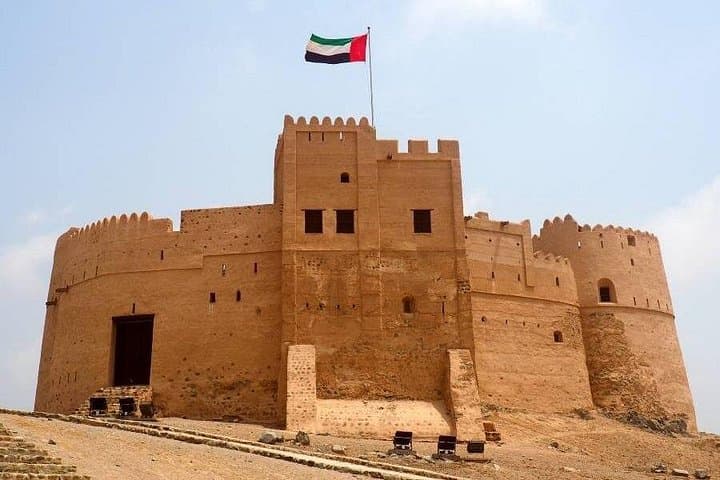
This full-day circuit moves from Al Dhaid’s palm plots and strawberry gardens through Masafi’s mountain passes to Fujairah’s coastal plain. History is visible in stone: Fujairah Fort (16th century) and the small Al-Bidya Mosque — built of mud and stone and long regarded as one of the UAE’s oldest — sit amid palm groves and villages that grew around seasonal wadis. Geology here is rugged; the Hajjar range is primarily ophiolite and limestone, producing steep gullies, terraced farms and natural springs that concentrate rainfall compared with the coastal desert.
Culturally the region bridges maritime and mountain livelihoods — weekend markets, simple fish stalls and roadside spice vendors speak to trade routes that predate modern borders.
Practical guidance: expect a full 8‑hour day with roughly 1.5–2 hours driving each way from Dubai depending on traffic. Wear breathable, sun-protective clothing and sturdy walking shoes for short site walks and uneven ground. Bring sunscreen, a refillable water bottle (bottled water is provided), a hat and small cash for the Friday Market. Accessibility is generally good for vehicle transfers, but some heritage sites have uneven surfaces. Plan to start early to avoid peak heat and to capture the best light for photos.
moderate.
8 hours.
Suitable for travelers with moderate fitness—short walks and some standing; mostly vehicle-based with periodic site walking.
Typical driving time is about 1.5–2 hours each way depending on traffic and the route; the tour is a full 8‑hour day including stops.
This tour description indicates admission is not applicable or not included for some sites; confirm with the operator if site fees are covered before booking.
Transport and many areas are wheelchair accessible, but some heritage sites have uneven ground and steps—check specific site accessibility with the operator if mobility is a concern.
Yes; the itinerary includes a stop at the Friday Market on the main road to Fujairah where you can browse local goods—bring small cash for purchases.
Fujairah’s stone forts and compact museums reflect centuries of coastal and mountain settlement; Al‑Bidya Mosque has long been regarded locally as one of the emirate’s oldest maintained congregational sites.
The Hajjar foothills capture more seasonal rainfall than surrounding deserts—respect local water sources, avoid off‑trail driving, and minimize single‑use plastics to reduce pressure on fragile valley ecosystems.
Excellence Gulf Tourism operates guided outdoor trips and adventures with an emphasis on safety, stewardship, and memorable experiences.
You step out of the air-conditioned van and the Hajjar Mountains push up against the sky, their weathered limestone faces catching afternoon light. Dusty palms line irrigation channels, and a cooling breeze from the Gulf threads through valley farms as your guide points toward a compact fort on a rocky rise.
You step out of the air-conditioned van and the Hajjar Mountains push up against the sky, their weathered limestone faces catching afternoon light. Dusty palms line irrigation channels, and a cooling breeze from the Gulf threads through valley farms as your guide points toward a compact fort on a rocky rise.
This full-day circuit moves from Al Dhaid’s palm plots and strawberry gardens through Masafi’s mountain passes to Fujairah’s coastal plain. History is visible in stone: Fujairah Fort (16th century) and the small Al-Bidya Mosque — built of mud and stone and long regarded as one of the UAE’s oldest — sit amid palm groves and villages that grew around seasonal wadis. Geology here is rugged; the Hajjar range is primarily ophiolite and limestone, producing steep gullies, terraced farms and natural springs that concentrate rainfall compared with the coastal desert.
Culturally the region bridges maritime and mountain livelihoods — weekend markets, simple fish stalls and roadside spice vendors speak to trade routes that predate modern borders.
Practical guidance: expect a full 8‑hour day with roughly 1.5–2 hours driving each way from Dubai depending on traffic. Wear breathable, sun-protective clothing and sturdy walking shoes for short site walks and uneven ground. Bring sunscreen, a refillable water bottle (bottled water is provided), a hat and small cash for the Friday Market. Accessibility is generally good for vehicle transfers, but some heritage sites have uneven surfaces. Plan to start early to avoid peak heat and to capture the best light for photos.