THE ADVENTURE COLLECTIVE® · Independent discovery and booking for outdoor travel

Visit Fallingwater and watch Frank Lloyd Wright’s concrete cantilevers hover over a mountain stream. This guided drive-tour mixes architecture, Allegheny geology and short walks to scenic overlooks—plan ahead for the house tour reservation.
Visit Fallingwater and watch Frank Lloyd Wright’s concrete cantilevers hover over a mountain stream. This guided drive-tour mixes architecture, Allegheny geology and short walks to scenic overlooks—plan ahead for the house tour reservation.
You step from a shaded lane and the forest exhales: oak leaves rattle, the Youghiogheny River dares you with a steady riffle, and concrete planes extend over water as if grown from the rock itself. Fallingwater sits astride Bear Run—its cantilevers jut out from the hillside and pull your gaze down to the stream that Wright made central to the design.
Verified experiences and guided adventures in the surrounding area.
Operated by The Essential Pittsburgh Experience · Mill Run, Pennsylvania
You step from a shaded lane and the forest exhales: oak leaves rattle, the Youghiogheny River dares you with a steady riffle, and concrete planes extend over water as if grown from the rock itself. Fallingwater sits astride Bear Run—its cantilevers jut out from the hillside and pull your gaze down to the stream that Wright made central to the design.
Built in 1935 for Edgar Kaufmann, Fallingwater revived Frank Lloyd Wright’s career and influenced modern architecture worldwide; the house is now a UNESCO World Heritage Site. Geologically, the Laurel Highlands are folded Allegheny Plateau—sandstone ridges, steep hollows and fast, clear streams that shaped both the house’s site and the nearby Ohiopyle Falls. Culturally, the estate reflects an early 20th-century American experiment in blending architecture with landscape, with the Kaufmann family's social history woven into the site.
On a typical tour day you’ll ride from Pittsburgh through pastoral ridges, pass under the Great Allegheny Passage and stop at viewpoints of the Youghiogheny. Expect moderate walking on paved and natural paths, small staircases and limited indoor access unless you book Fallingwater’s house tour directly.
Practicalities: house tours require separate reservations through Fallingwater; bring sturdy, closed-toe shoes for wet rocks and creek-side paths, a refillable water bottle, and dress in layers—the forest can be markedly cooler than the valley. Time your visit for morning or late afternoon light to avoid crowds and to see the structure interact with shadow and stream.
easy.
4 hours.
Basic fitness for short walks on uneven terrain; ability to climb stairs recommended
No. House tour reservations must be made directly with Fallingwater via their website or phone; many guided tours include exterior access and commentary only.
Plan about four hours for travel, stops at viewpoints and time at the site; the official house tour has its own set schedule and duration.
Parts of the site have limited accessibility due to historic construction and terrain; check Fallingwater’s accessibility information and request accommodations in advance.
Yes. Ohiopyle Falls and sections of the Great Allegheny Passage are nearby and can be combined into a full-day itinerary for hiking, biking or brief river viewpoints.
Constructed in 1935 for Edgar Kaufmann, Fallingwater helped re-establish Frank Lloyd Wright’s international reputation and is one of several Wright sites now protected for their cultural significance.
Fallingwater manages visitor numbers and directs tours to minimize wear on the property; practice Leave No Trace around the stream and trails to protect fragile riparian habitat.
The Essential Pittsburgh Experience operates guided outdoor trips and adventures with an emphasis on safety, stewardship, and memorable experiences.


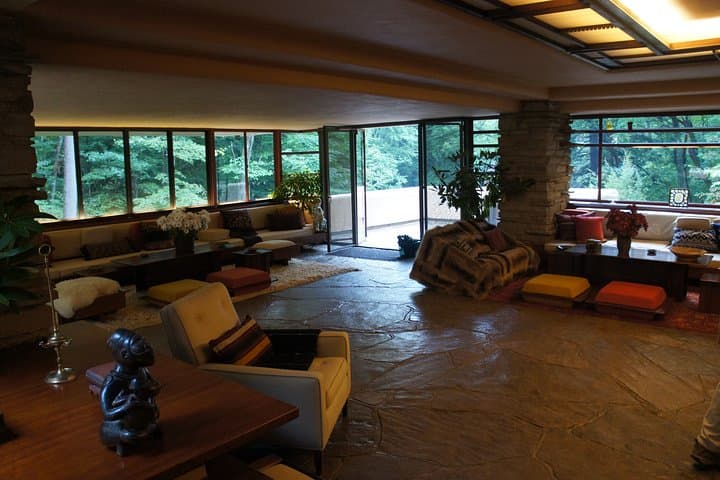

You step from a shaded lane and the forest exhales: oak leaves rattle, the Youghiogheny River dares you with a steady riffle, and concrete planes extend over water as if grown from the rock itself. Fallingwater sits astride Bear Run—its cantilevers jut out from the hillside and pull your gaze down to the stream that Wright made central to the design.
You step from a shaded lane and the forest exhales: oak leaves rattle, the Youghiogheny River dares you with a steady riffle, and concrete planes extend over water as if grown from the rock itself. Fallingwater sits astride Bear Run—its cantilevers jut out from the hillside and pull your gaze down to the stream that Wright made central to the design.
Built in 1935 for Edgar Kaufmann, Fallingwater revived Frank Lloyd Wright’s career and influenced modern architecture worldwide; the house is now a UNESCO World Heritage Site. Geologically, the Laurel Highlands are folded Allegheny Plateau—sandstone ridges, steep hollows and fast, clear streams that shaped both the house’s site and the nearby Ohiopyle Falls. Culturally, the estate reflects an early 20th-century American experiment in blending architecture with landscape, with the Kaufmann family's social history woven into the site.
On a typical tour day you’ll ride from Pittsburgh through pastoral ridges, pass under the Great Allegheny Passage and stop at viewpoints of the Youghiogheny. Expect moderate walking on paved and natural paths, small staircases and limited indoor access unless you book Fallingwater’s house tour directly.
Practicalities: house tours require separate reservations through Fallingwater; bring sturdy, closed-toe shoes for wet rocks and creek-side paths, a refillable water bottle, and dress in layers—the forest can be markedly cooler than the valley. Time your visit for morning or late afternoon light to avoid crowds and to see the structure interact with shadow and stream.