THE ADVENTURE COLLECTIVE® · Independent discovery and booking for outdoor travel

Step behind the hoardings of Euston to explore disused platforms, Victorian passageways and preserved advertising fragments on a guided 75‑minute walking tour. Ideal for fans of urban history and industrial archaeology.
Step behind the hoardings of Euston to explore disused platforms, Victorian passageways and preserved advertising fragments on a guided 75‑minute walking tour. Ideal for fans of urban history and industrial archaeology.
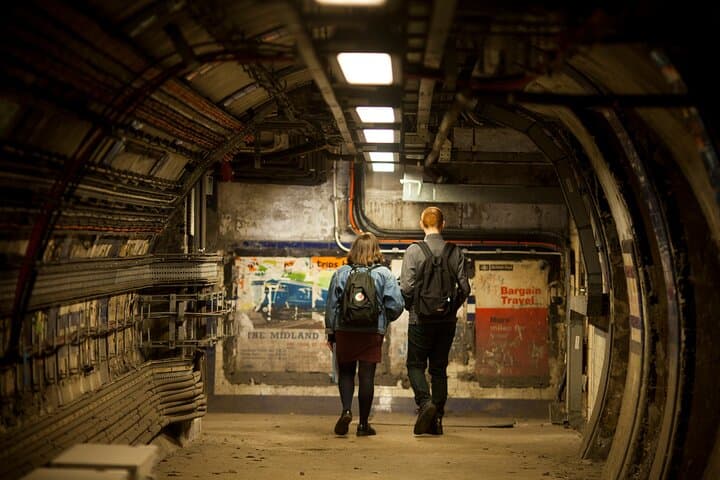
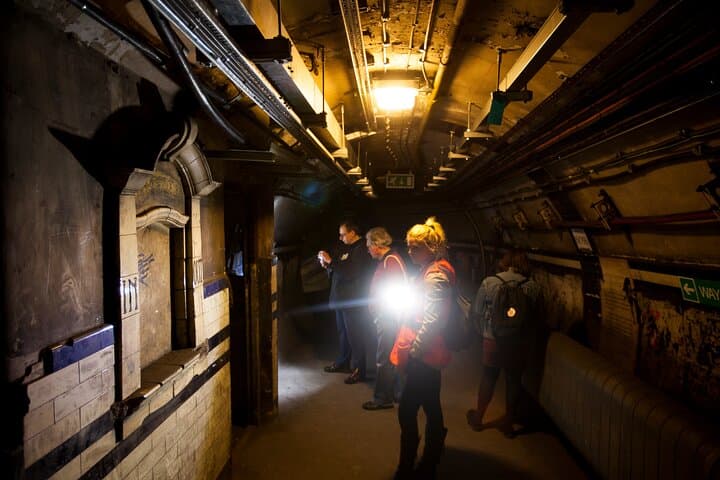
The light of the Euston piazza falls away as you step through a service door and the city narrows to tunnels and brick. The guide’s torch throws a rectangle of warmth across tiles fading to dust, and the station that carries millions daily reveals its quieter, shadowed architecture: sidings where posters have slept for decades, stairways carved by Victorian feet, and curving passageways that still remember the hiss of steam.
Verified experiences and guided adventures in the surrounding area.
Operated by London Transport Museum · London, England
The light of the Euston piazza falls away as you step through a service door and the city narrows to tunnels and brick. The guide’s torch throws a rectangle of warmth across tiles fading to dust, and the station that carries millions daily reveals its quieter, shadowed architecture: sidings where posters have slept for decades, stairways carved by Victorian feet, and curving passageways that still remember the hiss of steam.
Euston grew from competing private rail and tube schemes in the late 19th and early 20th centuries. Leslie Green’s distinctive ox-blood tile facades and the station’s layered plans reflect a patchwork of engineering choices—cut-and-cover sections in London clay below shallow bored tunnels—each phase buried beneath later redevelopment. The tour moves through preserved advertising fragments, redundant platforms and disused corridors, tracing transport history alongside London’s social shifts, wartime adjustments and the modern pressure for expansion.
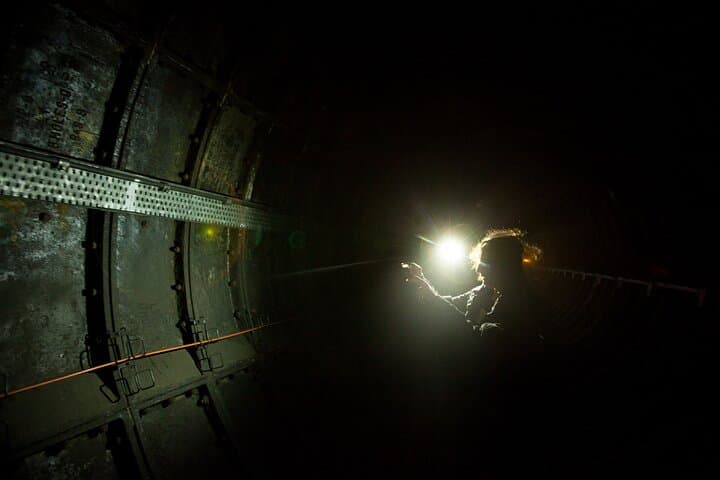
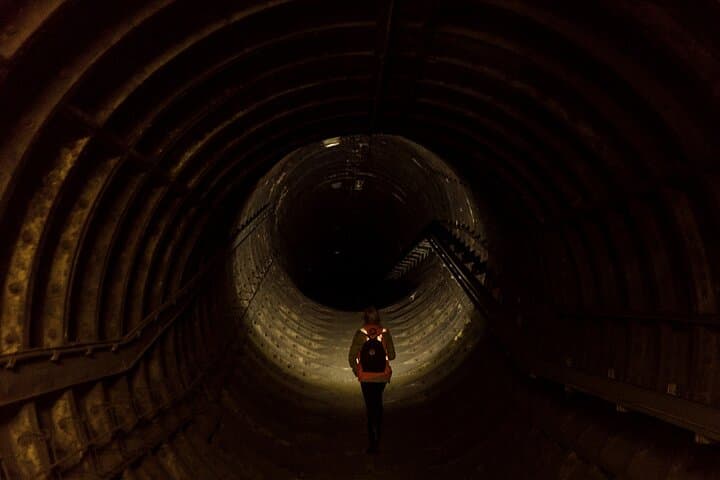
Expect dim lighting, narrow flights of stairs and uneven underfoot surfaces; the tunnels keep their own temperatures and moods. Guides from the London Transport Museum point out construction details—brick bonding, cast-iron columns, hidden signage—and explain preservation choices as new station works proceed.
Practicalities: bring photo ID, wear closed-toe shoes, and be prepared for 75 minutes of steady walking with stairs and low clearances. The experience suits those curious about industrial archaeology and urban infrastructure rather than casual sightseers: minimal elevation but maximum close-up access to a vanished layer of city life. Tours are limited in size to protect fragile spaces—book in advance and arrive at the Euston Square / Melton Street meeting point on time.
moderate.
1–1.5 hours.
Moderate fitness—able to climb stairs repeatedly and walk on uneven surfaces without assistance
The guided tour runs approximately 75 minutes and involves continuous walking with stairs and narrow passages.
No — the experience is not step-free and includes multiple flights of stairs and low-clearance areas.
Children under 10 are not permitted; for ages 10–15 a maximum of four children per adult applies, and guardians must ensure suitability.
Photography is generally allowed but follow your guide’s instructions; avoid flash or touching historic surfaces and do not bring large bags.
Euston station evolved from competing private rail and underground companies; Leslie Green’s early 20th-century design and later wartime alterations are visible in surviving fabric.
Tours are limited in size and guided to minimize wear on fragile surfaces; follow rules (no food, no touching) to support heritage preservation.
London Transport Museum operates guided outdoor trips and adventures with an emphasis on safety, stewardship, and memorable experiences.
The light of the Euston piazza falls away as you step through a service door and the city narrows to tunnels and brick. The guide’s torch throws a rectangle of warmth across tiles fading to dust, and the station that carries millions daily reveals its quieter, shadowed architecture: sidings where posters have slept for decades, stairways carved by Victorian feet, and curving passageways that still remember the hiss of steam.
The light of the Euston piazza falls away as you step through a service door and the city narrows to tunnels and brick. The guide’s torch throws a rectangle of warmth across tiles fading to dust, and the station that carries millions daily reveals its quieter, shadowed architecture: sidings where posters have slept for decades, stairways carved by Victorian feet, and curving passageways that still remember the hiss of steam.
Euston grew from competing private rail and tube schemes in the late 19th and early 20th centuries. Leslie Green’s distinctive ox-blood tile facades and the station’s layered plans reflect a patchwork of engineering choices—cut-and-cover sections in London clay below shallow bored tunnels—each phase buried beneath later redevelopment. The tour moves through preserved advertising fragments, redundant platforms and disused corridors, tracing transport history alongside London’s social shifts, wartime adjustments and the modern pressure for expansion.
Expect dim lighting, narrow flights of stairs and uneven underfoot surfaces; the tunnels keep their own temperatures and moods. Guides from the London Transport Museum point out construction details—brick bonding, cast-iron columns, hidden signage—and explain preservation choices as new station works proceed.
Practicalities: bring photo ID, wear closed-toe shoes, and be prepared for 75 minutes of steady walking with stairs and low clearances. The experience suits those curious about industrial archaeology and urban infrastructure rather than casual sightseers: minimal elevation but maximum close-up access to a vanished layer of city life. Tours are limited in size to protect fragile spaces—book in advance and arrive at the Euston Square / Melton Street meeting point on time.