THE ADVENTURE COLLECTIVE® · Independent discovery and booking for outdoor travel

Head up Etna’s quieter north flank for a volcanological day that combines a 4x4 climb with a crater-edge trek. Expect steam, ash slopes, lava tubes and expert commentary from licensed volcanologists.
Head up Etna’s quieter north flank for a volcanological day that combines a 4x4 climb with a crater-edge trek. Expect steam, ash slopes, lava tubes and expert commentary from licensed volcanologists.
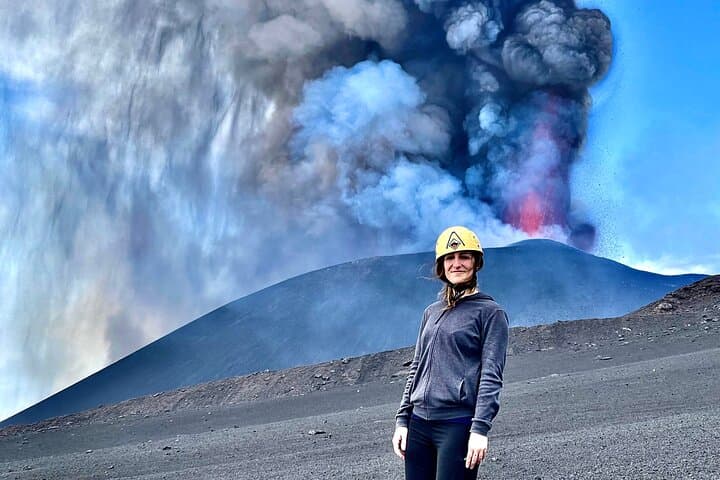
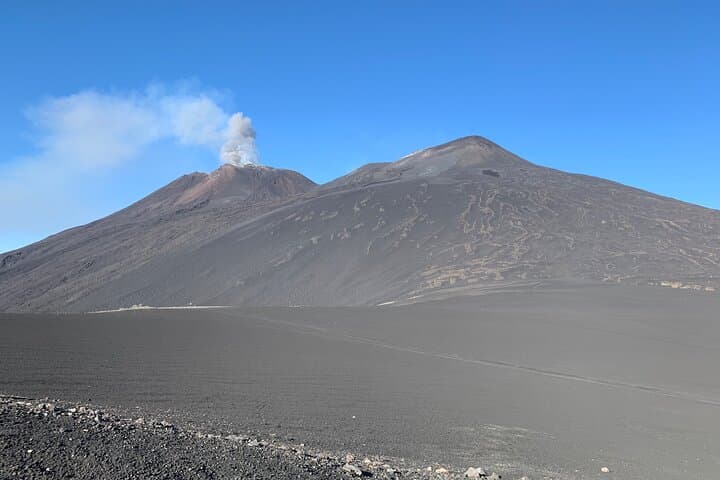
You step out of the 4x4 at 2,860 m and the mountain meets you with heat and hiss — steam rolling from fumaroles, ash shifting underfoot like a slow tide. The northern flank of Etna feels deliberate: fractures yaw, lava flows freeze mid-motion, and skeletal pines cling to wind-scoured ridges. Licensed volcanologists guide the route, narrating events written in layers of black rock.
Verified experiences and guided adventures in the surrounding area.
Operated by Guide Vulcanologiche Etna Nord · Linguaglossa, Sicily
You step out of the 4x4 at 2,860 m and the mountain meets you with heat and hiss — steam rolling from fumaroles, ash shifting underfoot like a slow tide. The northern flank of Etna feels deliberate: fractures yaw, lava flows freeze mid-motion, and skeletal pines cling to wind-scoured ridges. Licensed volcanologists guide the route, narrating events written in layers of black rock.
Etna’s story is recent and ancient at once. The 2002 eruption reshaped Piano Provenzana, burying buildings and exposing supply ducts; older cones and fissures record centuries of activity from 1600s eruptions to 20th-century flank events. Geology here is raw — basaltic lava flows, ash slopes, and intact volcanic chimneys you can enter in helmets. Culturally, the north side is quieter than the tourist-saturated south; local bars in Piano Provenzana serve robust espresso and provide the last supplies before ascent.
Expect a mixed day: an authorized 4x4 climb of roughly 8 km and a guided trek of about 6–8 km across loose ash, lava slabs, and crater rims, with up to 1,000 m vertical change depending on exact route. Conditions change fast — wind, ash, and sharp temperature drops are common. Practical essentials: layered clothing, sturdy boots with ankle support, and close-fitting eye protection; follow the volcanologist’s instructions about fumes and unstable ground.
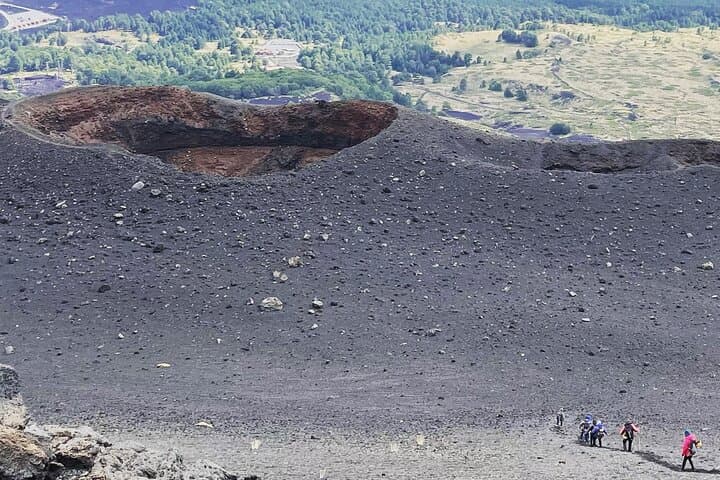
The route rewards attention: discover lava tubes, peer into recent craters, and on clear days scan the Ionian coast and Aeolian isles. This is a field classroom as much as a hike — immediate, physical, and governed by the volcano’s own rules.
challenging.
4–4.5 hours.
Good cardiovascular fitness and regular hiking experience; comfortable on loose, steep terrain and high elevation.
Vehicles and the hike reach roughly 2,800–3,000 m on Etna’s north flank, depending on volcanic activity and park restrictions.
Children over about 6 years can join, but the itinerary requires steady walkers and adult supervision; consult the operator about age limits.
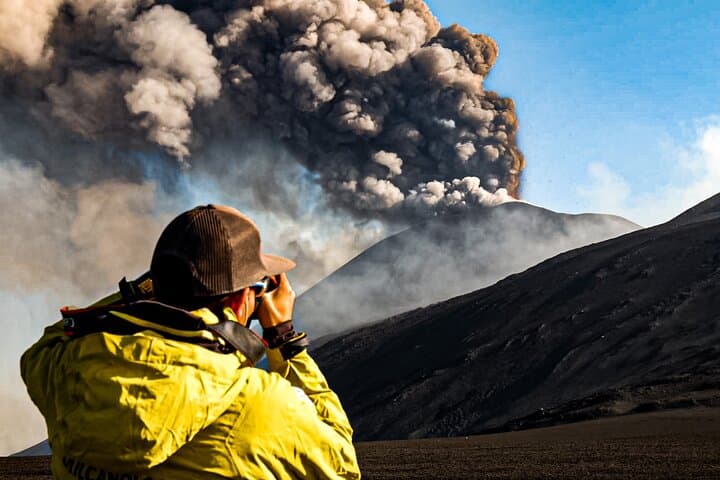
Active lava is intermittent; visitors typically see fumaroles, fresh lava flows, and recent crater mouths rather than continuous lava fountains.
No — a licensed volcanological guide provides explanations; basic fitness and comfort on unstable ground are more important.
The north route crosses lava fields from the destructive October 27, 2002 eruption and older flank eruptions; geological records here span centuries of activity.
Etna is a protected regional park; stick to marked paths, avoid collecting rocks or plants, and follow guide instructions to limit erosion and disturbance.
Guide Vulcanologiche Etna Nord operates guided outdoor trips and adventures with an emphasis on safety, stewardship, and memorable experiences.
You step out of the 4x4 at 2,860 m and the mountain meets you with heat and hiss — steam rolling from fumaroles, ash shifting underfoot like a slow tide. The northern flank of Etna feels deliberate: fractures yaw, lava flows freeze mid-motion, and skeletal pines cling to wind-scoured ridges. Licensed volcanologists guide the route, narrating events written in layers of black rock.
You step out of the 4x4 at 2,860 m and the mountain meets you with heat and hiss — steam rolling from fumaroles, ash shifting underfoot like a slow tide. The northern flank of Etna feels deliberate: fractures yaw, lava flows freeze mid-motion, and skeletal pines cling to wind-scoured ridges. Licensed volcanologists guide the route, narrating events written in layers of black rock.
Etna’s story is recent and ancient at once. The 2002 eruption reshaped Piano Provenzana, burying buildings and exposing supply ducts; older cones and fissures record centuries of activity from 1600s eruptions to 20th-century flank events. Geology here is raw — basaltic lava flows, ash slopes, and intact volcanic chimneys you can enter in helmets. Culturally, the north side is quieter than the tourist-saturated south; local bars in Piano Provenzana serve robust espresso and provide the last supplies before ascent.
Expect a mixed day: an authorized 4x4 climb of roughly 8 km and a guided trek of about 6–8 km across loose ash, lava slabs, and crater rims, with up to 1,000 m vertical change depending on exact route. Conditions change fast — wind, ash, and sharp temperature drops are common. Practical essentials: layered clothing, sturdy boots with ankle support, and close-fitting eye protection; follow the volcanologist’s instructions about fumes and unstable ground.
The route rewards attention: discover lava tubes, peer into recent craters, and on clear days scan the Ionian coast and Aeolian isles. This is a field classroom as much as a hike — immediate, physical, and governed by the volcano’s own rules.