THE ADVENTURE COLLECTIVE® · Independent discovery and booking for outdoor travel

Ride from flower-lined alleys to the seaside promenade on a two-hour guided bike tour of Estepona. Learn local history, spot hidden plazas and coastal views, and enjoy a relaxed, accessible route suited to most riders.
Ride from flower-lined alleys to the seaside promenade on a two-hour guided bike tour of Estepona. Learn local history, spot hidden plazas and coastal views, and enjoy a relaxed, accessible route suited to most riders.
The ride begins where tiled facades meet the sea breeze: wheels on sun-warmed pavement, the Mediterranean daring you forward along the Paseo Marítimo. Cyclists thread through narrow white streets dusted with geraniums, then spill onto the seafront where the sea pulls at the horizon and the promenade hums with early vendors.
Verified experiences and guided adventures in the surrounding area.
Operated by South Coast Aventuras · Estepona, Andalusia
The ride begins where tiled facades meet the sea breeze: wheels on sun-warmed pavement, the Mediterranean daring you forward along the Paseo Marítimo. Cyclists thread through narrow white streets dusted with geraniums, then spill onto the seafront where the sea pulls at the horizon and the promenade hums with early vendors.
Estepona’s story is visible in layers — a fishing port reshaped by Phoenician and Roman trade, later touched by the Nasrid era and contemporary Andalusian renovation. Geologically the Costa del Sol is a mix of coastal alluvium and nearby Sierra Bermeja’s iron-rich rocks, which give the skyline its rusty tones. Architecturally, tiled churches and low, whitewashed houses reveal a town that rebuilt itself around community life and the sea.
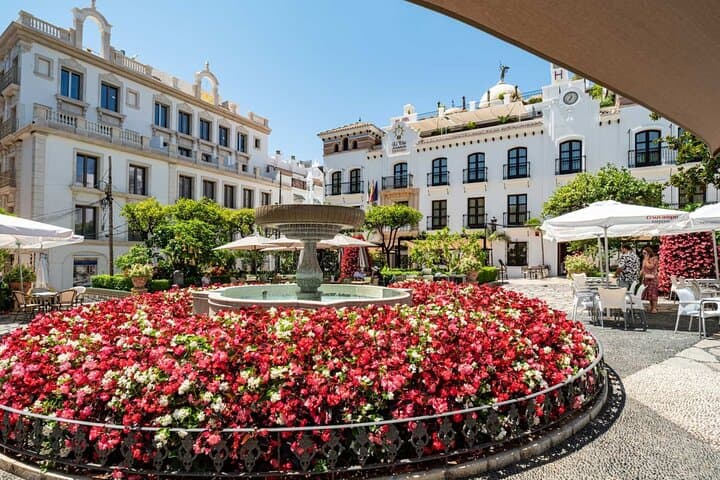
Culturally the city favors a relaxed rhythm: cafes open late, markets brim with local catch, and public plazas invite conversation. Small-scale tourism keeps many corners approachable; the guide steers you past main attractions to alleys, murals, and hidden plazas that locals frequent.
Practical guidance: this two-hour tour is largely flat and paved — cobbles appear in the old town — and suitable for most riders. Wear closed-toe shoes, sunscreen, and carry a light layer for coastal breeze. Water is provided, but bring a refillable bottle for comfort. Mornings offer cooler temperatures and softer light for photos; afternoons bring heat and stronger sun.
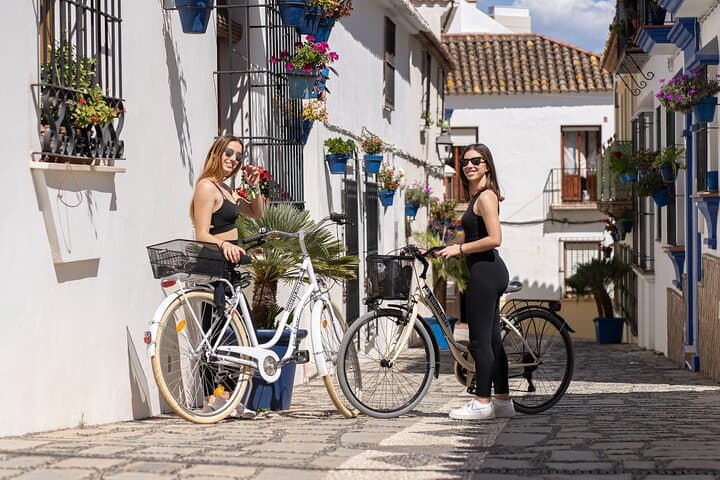
Expect moderate pace, frequent stops to listen to local history, and a friendly guide who adjusts the route to group ability. It’s an accessible way to feel the city like a local while covering more ground than a walking tour.
easy.
2 hours.
Casual fitness — comfortable riding on flat paved streets for two hours; able to stand and walk during stops.
No — the tour is adapted for all levels, though basic balance and the ability to ride on paved surfaces for up to two hours helps.
Yes — bicycle use and bottled water are included; helmets are provided and recommended.
Yes — infant seats and child-friendly options are available; indicate age and weight at booking so the operator can prepare.
Full refund if you cancel at least 24 hours before departure; tours may be canceled for bad weather or insufficient travelers.
Estepona grew from a fishing village into a strategic coastal town influenced by Phoenician, Roman and Nasrid presences; its modern revival emphasizes public plazas and restored facades.
Local initiatives prioritize floral displays and pedestrian-friendly streets; visitors should minimize waste, respect plantings and stick to paved routes to avoid eroding fragile coastal habitats.
South Coast Aventuras operates guided outdoor trips and adventures with an emphasis on safety, stewardship, and memorable experiences.
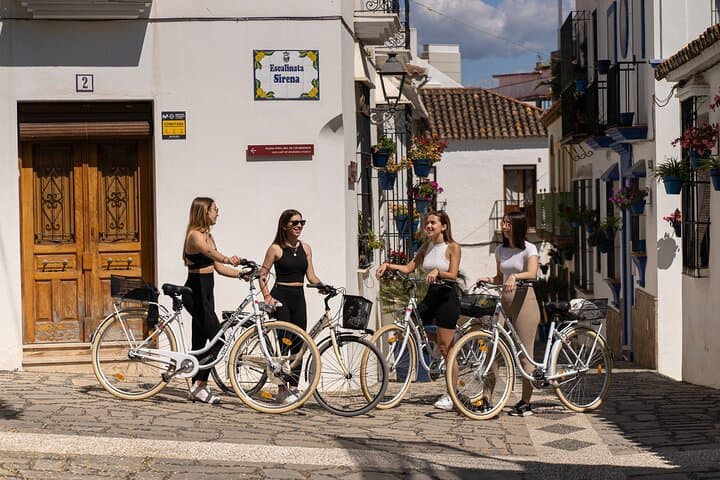
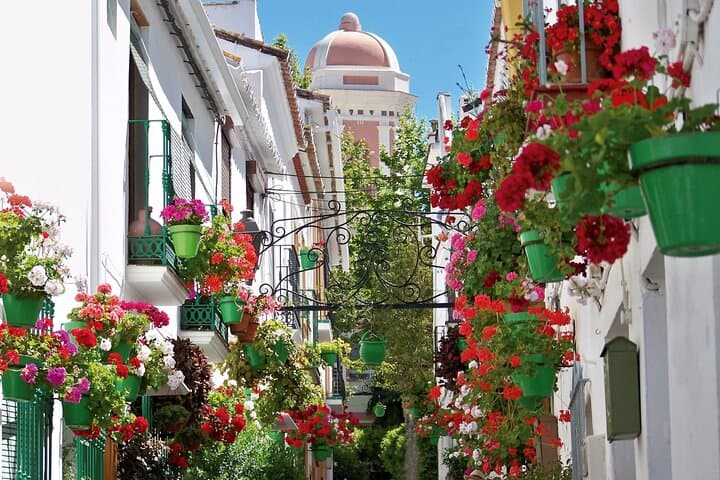
The ride begins where tiled facades meet the sea breeze: wheels on sun-warmed pavement, the Mediterranean daring you forward along the Paseo Marítimo. Cyclists thread through narrow white streets dusted with geraniums, then spill onto the seafront where the sea pulls at the horizon and the promenade hums with early vendors.
The ride begins where tiled facades meet the sea breeze: wheels on sun-warmed pavement, the Mediterranean daring you forward along the Paseo Marítimo. Cyclists thread through narrow white streets dusted with geraniums, then spill onto the seafront where the sea pulls at the horizon and the promenade hums with early vendors.
Estepona’s story is visible in layers — a fishing port reshaped by Phoenician and Roman trade, later touched by the Nasrid era and contemporary Andalusian renovation. Geologically the Costa del Sol is a mix of coastal alluvium and nearby Sierra Bermeja’s iron-rich rocks, which give the skyline its rusty tones. Architecturally, tiled churches and low, whitewashed houses reveal a town that rebuilt itself around community life and the sea.
Culturally the city favors a relaxed rhythm: cafes open late, markets brim with local catch, and public plazas invite conversation. Small-scale tourism keeps many corners approachable; the guide steers you past main attractions to alleys, murals, and hidden plazas that locals frequent.
Practical guidance: this two-hour tour is largely flat and paved — cobbles appear in the old town — and suitable for most riders. Wear closed-toe shoes, sunscreen, and carry a light layer for coastal breeze. Water is provided, but bring a refillable bottle for comfort. Mornings offer cooler temperatures and softer light for photos; afternoons bring heat and stronger sun.
Expect moderate pace, frequent stops to listen to local history, and a friendly guide who adjusts the route to group ability. It’s an accessible way to feel the city like a local while covering more ground than a walking tour.