THE ADVENTURE COLLECTIVE® · Independent discovery and booking for outdoor travel

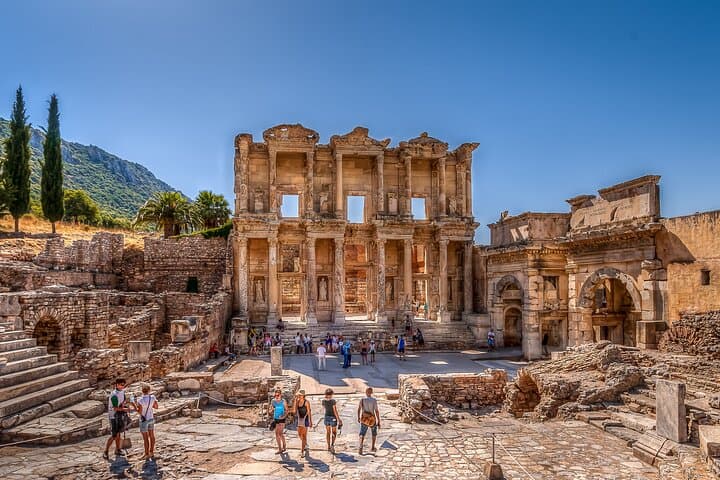
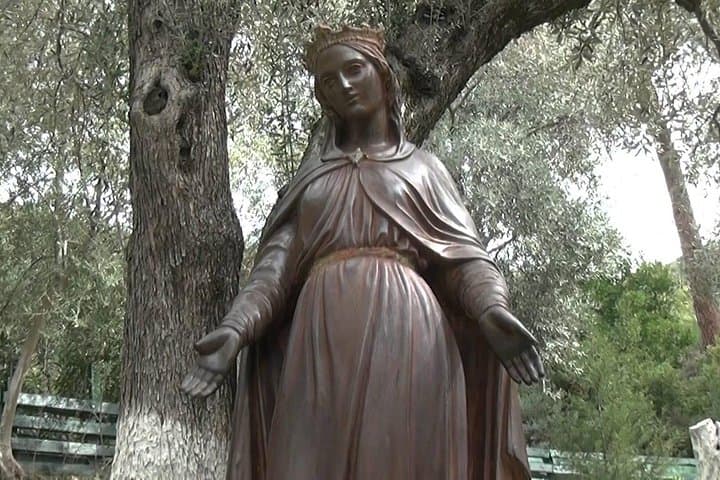
Walk the marble streets of Ephesus, from the Celsus Library to the enormous theatre, and visit the House of the Virgin Mary on nearby Bulbul Mountain. This full-day guided tour pairs archaeological highlights with practical route planning for a long, immersive day.
Walk the marble streets of Ephesus, from the Celsus Library to the enormous theatre, and visit the House of the Virgin Mary on nearby Bulbul Mountain. This full-day guided tour pairs archaeological highlights with practical route planning for a long, immersive day.
You step off the minibus into a sun-warmed stretch of road and the first slab of marble underfoot feels like history under your palm—Ephesus opens with Greco-Roman geometry, columns tilted like old sentries and a theatre that still leans into the hillside.
Verified experiences and guided adventures in the surrounding area.
Operated by TRAVELIUM · Selçuk, Izmir
You step off the minibus into a sun-warmed stretch of road and the first slab of marble underfoot feels like history under your palm—Ephesus opens with Greco-Roman geometry, columns tilted like old sentries and a theatre that still leans into the hillside.
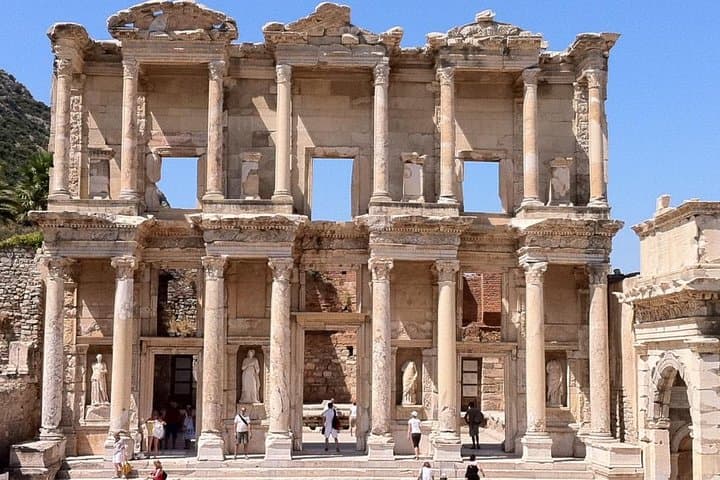
The city grew at a crossroads of sea and empire. Once a major Ionian port, Ephesus flourished under Hellenistic and Roman rule; its streets, the Celsus Library and the Odeon map the civic life of an ancient metropolis. Nearby, the House of the Virgin Mary perches on Bulbul Mountain—an intimate stone structure that draws pilgrim and curious traveler alike.
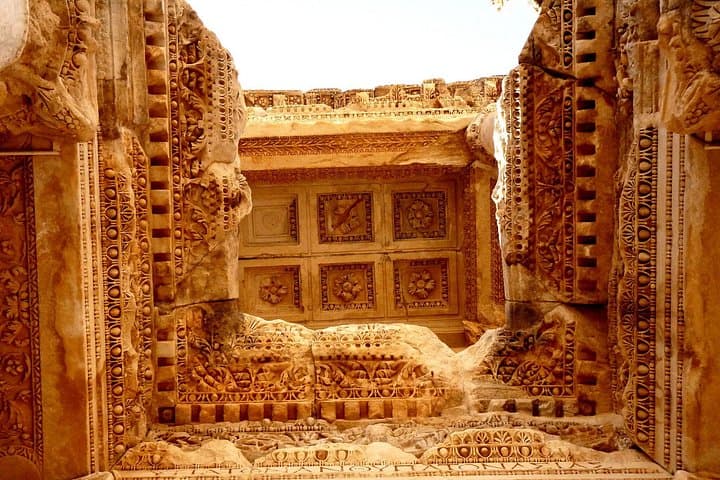
Geologically, the area is coastal plain where the Aegean once lapped closer to the city; silting and earthquakes reshaped the landscape, burying parts of the ancient harbor and preserving marble facades. Culturally you’ll sense layers: pagan temples, later Christian churches, and Ottoman-era rural life in surrounding villages.
Practical guidance: the full-day itinerary covers several kilometers on packed dirt and uneven marble—expect 6–8 hours door‑to‑door with guided stops at Celsus, Curetes Street, the Great Theatre and the Virgin Mary shrine. Carry water, sun protection and comfortable soles with good grip; stairs and steep ramps are common. Admission and local transfers may be separate—confirm pick-up point in Selçuk or İzmir, and allow time for security lines in high season. Early starts mean cooler light and fewer crowds; late afternoons bring golden stone and easier walking. Listen to your guide for archaeological context and stay on marked paths to help preserve fragile ruins.
moderate.
6–8 hours.
Moderately fit: you should be comfortable walking several kilometers and climbing stairs over uneven surfaces.
Admission is often not included—check the booking details and bring local currency or card for entrance fees and optional sites.
Expect several kilometers on marble streets and staircases across uneven terrain; plan for 3–4 hours of walking in the archaeological area plus transfers.
Yes—the standard day tour includes the House of the Virgin Mary, located about 9 km from the ruins, with time for quiet reflection and photos.
Children with supervision can join, but the site has many stairs and uneven surfaces; travelers with limited mobility should consult the operator about specific accessibility accommodations.
Ephesus was a major Ionian port and later a wealthy Roman provincial capital; its Celsus Library once held more than 12,000 scrolls and the Great Theatre seated up to 25,000.
Rising visitor numbers and natural erosion stress fragile marble and mosaics—stick to paths, avoid touching reliefs and support local conservation fees when offered.
TRAVELIUM operates guided outdoor trips and adventures with an emphasis on safety, stewardship, and memorable experiences.
You step off the minibus into a sun-warmed stretch of road and the first slab of marble underfoot feels like history under your palm—Ephesus opens with Greco-Roman geometry, columns tilted like old sentries and a theatre that still leans into the hillside.
You step off the minibus into a sun-warmed stretch of road and the first slab of marble underfoot feels like history under your palm—Ephesus opens with Greco-Roman geometry, columns tilted like old sentries and a theatre that still leans into the hillside.
The city grew at a crossroads of sea and empire. Once a major Ionian port, Ephesus flourished under Hellenistic and Roman rule; its streets, the Celsus Library and the Odeon map the civic life of an ancient metropolis. Nearby, the House of the Virgin Mary perches on Bulbul Mountain—an intimate stone structure that draws pilgrim and curious traveler alike.
Geologically, the area is coastal plain where the Aegean once lapped closer to the city; silting and earthquakes reshaped the landscape, burying parts of the ancient harbor and preserving marble facades. Culturally you’ll sense layers: pagan temples, later Christian churches, and Ottoman-era rural life in surrounding villages.
Practical guidance: the full-day itinerary covers several kilometers on packed dirt and uneven marble—expect 6–8 hours door‑to‑door with guided stops at Celsus, Curetes Street, the Great Theatre and the Virgin Mary shrine. Carry water, sun protection and comfortable soles with good grip; stairs and steep ramps are common. Admission and local transfers may be separate—confirm pick-up point in Selçuk or İzmir, and allow time for security lines in high season. Early starts mean cooler light and fewer crowds; late afternoons bring golden stone and easier walking. Listen to your guide for archaeological context and stay on marked paths to help preserve fragile ruins.