THE ADVENTURE COLLECTIVE® · Independent discovery and booking for outdoor travel

See the island’s most storied sites in a compact, guided package: moai at Ahu Akivi, the Birdman ceremonies of Orongo and the white sand of Anakena. Practical transport, guides and one lunch make this a straightforward way to experience Rapa Nui’s culture and geology.
See the island’s most storied sites in a compact, guided package: moai at Ahu Akivi, the Birdman ceremonies of Orongo and the white sand of Anakena. Practical transport, guides and one lunch make this a straightforward way to experience Rapa Nui’s culture and geology.
You arrive to winded cliffs and a low-slung Pacific horizon: volcanic ridgelines cup the sky and stone giants stare back, their hollow eyes casting a patient silence over the coastline. This packaged multi-day tour strings together three of Rapa Nui’s defining experiences—Ahu Akivi, Orongo and Anakena—so travelers move from ceremonial platforms to quarry slopes and finally to white sand without losing the island’s slow rhythm.
Verified experiences and guided adventures in the surrounding area.
Operated by Gray Line Chile · Hanga Roa, Valparaíso Region
You arrive to winded cliffs and a low-slung Pacific horizon: volcanic ridgelines cup the sky and stone giants stare back, their hollow eyes casting a patient silence over the coastline. This packaged multi-day tour strings together three of Rapa Nui’s defining experiences—Ahu Akivi, Orongo and Anakena—so travelers move from ceremonial platforms to quarry slopes and finally to white sand without losing the island’s slow rhythm.
Geology here is hand-sized and dramatic: compacted volcanic tuff at Rano Raraku, the open scoria of Puna Pau and the sheer caldera rim at Rano Kau reveal how eruptions and erosion shaped both landscape and culture. The moai are cultural anchors—carved and transported by the Rapa Nui people between roughly the 13th and 17th centuries—and Orongo’s Birdman platform speaks to later ritual adaptations centered on seabird eggs and leadership. Expect pottery shards, stone houses and petroglyphs dotting field and shore.
Practically, this is a low-impact, accessible itinerary. Walks are short but over uneven volcanic ground—sturdy shoes matter. Anakena includes lunch and a beach break; Ahu Akivi and Orongo run on specific days (book accordingly). Guides provide context at every site; hotel pickup and return, plus airport transfers, simplify logistics. Bring water, sun protection and a light wind layer for the crater rims.
Respect boundaries: stay on marked trails, don’t climb restored ahu platforms and avoid touching the moai. With simple preparation, this Super Saver package delivers concentrated history, raw geology and a memorable shoreline finale.
easy.
3 days.
Suitable for most travelers with basic mobility; involves short walks on uneven ground and some stairs at viewpoints.
This Super Saver package covers three guided half- and full-day excursions spread across multiple days—plan on three days to complete all included sites.
Lunch is included for the Anakena Beach day; other days typically do not include meals so bring snacks or purchase locally.
Yes—email [email protected] with a copy of your voucher 48 hours before your tour to confirm logistics and pickup details.
The tour is described as suitable for all fitness levels; infants must sit on an adult’s lap and a minimum of two people per booking is required.
Moai construction and transport were central to Rapa Nui society from roughly the 13th–17th centuries; later Birdman ceremonies at Orongo shifted ritual power toward maritime skills.
Visitor pressure and natural erosion threaten fragile sites—follow marked trails, avoid touching carvings and don’t remove stones or artifacts.
Gray Line Chile operates guided outdoor trips and adventures with an emphasis on safety, stewardship, and memorable experiences.
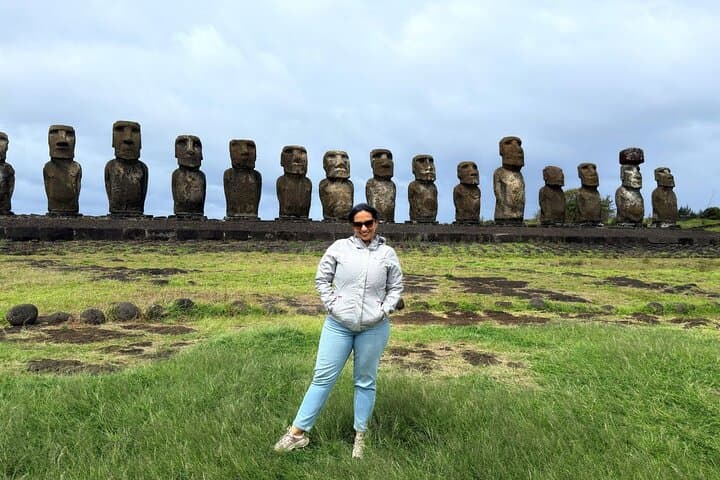
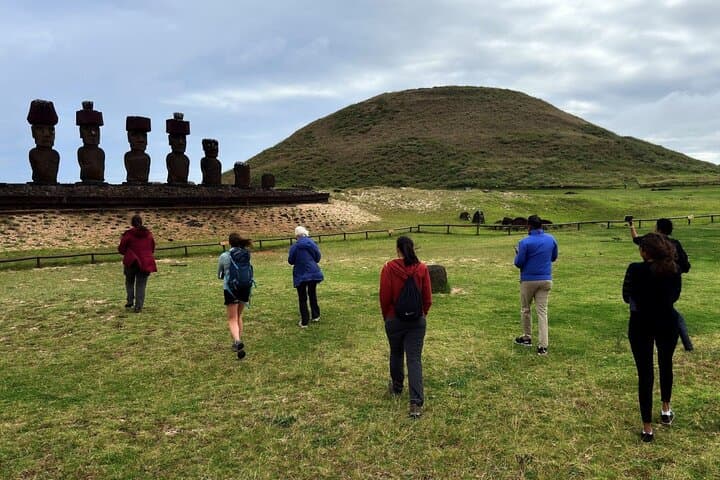
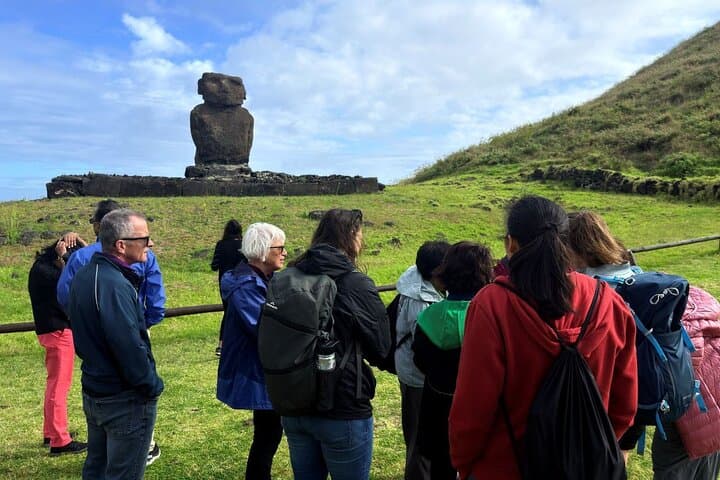
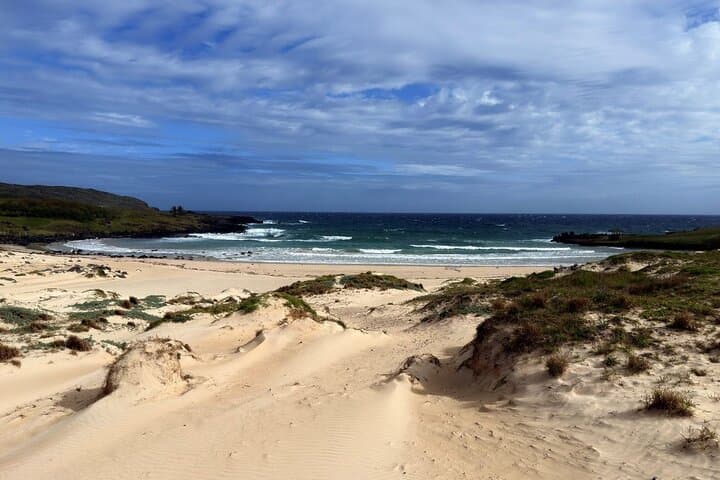
You arrive to winded cliffs and a low-slung Pacific horizon: volcanic ridgelines cup the sky and stone giants stare back, their hollow eyes casting a patient silence over the coastline. This packaged multi-day tour strings together three of Rapa Nui’s defining experiences—Ahu Akivi, Orongo and Anakena—so travelers move from ceremonial platforms to quarry slopes and finally to white sand without losing the island’s slow rhythm.
You arrive to winded cliffs and a low-slung Pacific horizon: volcanic ridgelines cup the sky and stone giants stare back, their hollow eyes casting a patient silence over the coastline. This packaged multi-day tour strings together three of Rapa Nui’s defining experiences—Ahu Akivi, Orongo and Anakena—so travelers move from ceremonial platforms to quarry slopes and finally to white sand without losing the island’s slow rhythm.
Geology here is hand-sized and dramatic: compacted volcanic tuff at Rano Raraku, the open scoria of Puna Pau and the sheer caldera rim at Rano Kau reveal how eruptions and erosion shaped both landscape and culture. The moai are cultural anchors—carved and transported by the Rapa Nui people between roughly the 13th and 17th centuries—and Orongo’s Birdman platform speaks to later ritual adaptations centered on seabird eggs and leadership. Expect pottery shards, stone houses and petroglyphs dotting field and shore.
Practically, this is a low-impact, accessible itinerary. Walks are short but over uneven volcanic ground—sturdy shoes matter. Anakena includes lunch and a beach break; Ahu Akivi and Orongo run on specific days (book accordingly). Guides provide context at every site; hotel pickup and return, plus airport transfers, simplify logistics. Bring water, sun protection and a light wind layer for the crater rims.
Respect boundaries: stay on marked trails, don’t climb restored ahu platforms and avoid touching the moai. With simple preparation, this Super Saver package delivers concentrated history, raw geology and a memorable shoreline finale.