THE ADVENTURE COLLECTIVE® · Independent discovery and booking for outdoor travel

Two compact days in Dunhuang take you from the singing sand dunes and camel tracks around Crescent Lake to the frescoed halls of the Mogao Grottoes. This guided private tour blends desert landscapes with Silk Road history — best done early in the day to beat the heat and the crowds.
Two compact days in Dunhuang take you from the singing sand dunes and camel tracks around Crescent Lake to the frescoed halls of the Mogao Grottoes. This guided private tour blends desert landscapes with Silk Road history — best done early in the day to beat the heat and the crowds.
Morning light cuts across the sand and the dunes seem to dare you forward as the tour vehicle rolls out from Dunhuang.
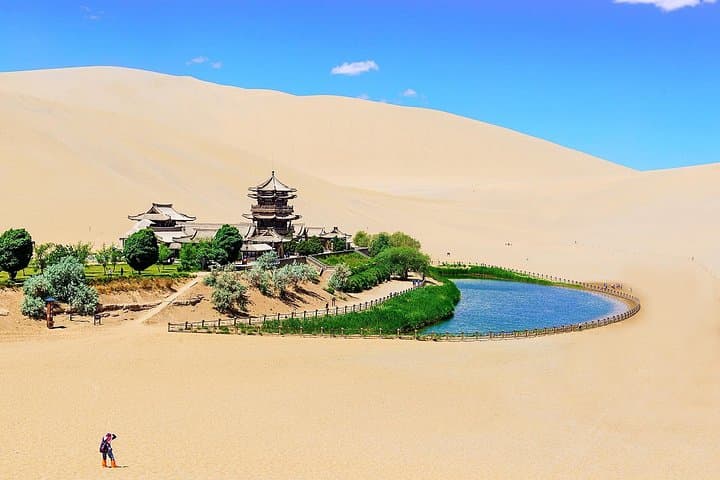
On day one the road threads through loess and gravel for roughly 20 km — about 40 minutes — until the crescent-shaped pool of Crescent Lake appears, an improbable eye of water hemmed by towering dunes. Sand sighs underfoot; camels tread a steady rhythm as guides point out the dunes’ singing places where wind and grain conspire to produce a low, droning note.
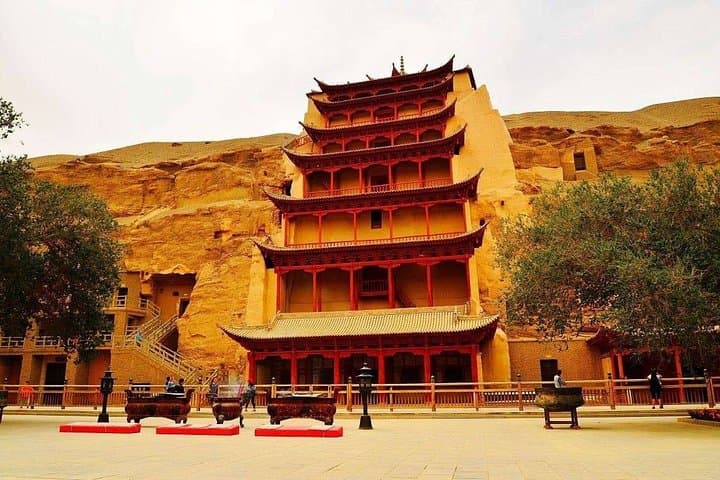
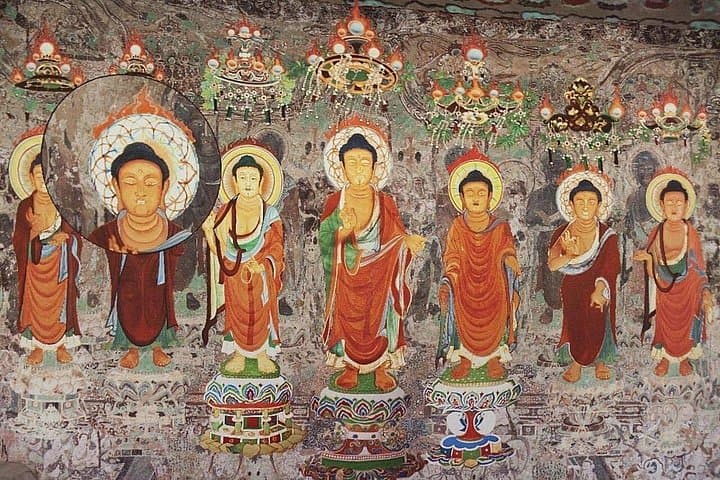
This region sits on the western edge of China’s Hexi Corridor, a crucial Silk Road spine where merchants and monks moved between east and west. The Mogao Grottoes, visited on day two, are a millennium-spanning archive of Buddhist murals and sculptures carved into sandstone cliffs from the 4th–14th centuries — one of the world’s best-preserved repositories of Silk Road art.
Culturally, Dunhuang still smells of cumin and roasted mutton at the Shazhou Night Market; stalls sell lacquered wood crafts and paper rubbings. Geologically, the area is driven by wind-sculpted dunes and perched springs; scientists still debate the exact mechanics that keep Crescent Lake fed amid the sand.
Practical guidance: book morning slots for Mogao to avoid crowds and heat; the grottoes limit group sizes and require guided entry. Carry 1–2 liters of water per person, sunscreen, and a light jacket for cool desert nights. Comfortable closed-toe shoes and a camera with a polarizer help with bright sand glare. Note: holiday dates (Oct 1–7, Chinese New Year) may incur extra hotel fees and heavier crowds — confirm pickup details and any seasonal surcharges in advance.
Verified experiences and guided adventures in the surrounding area.
Operated by happychinatours · Dunhuang, Gansu
Morning light cuts across the sand and the dunes seem to dare you forward as the tour vehicle rolls out from Dunhuang.
On day one the road threads through loess and gravel for roughly 20 km — about 40 minutes — until the crescent-shaped pool of Crescent Lake appears, an improbable eye of water hemmed by towering dunes. Sand sighs underfoot; camels tread a steady rhythm as guides point out the dunes’ singing places where wind and grain conspire to produce a low, droning note.
This region sits on the western edge of China’s Hexi Corridor, a crucial Silk Road spine where merchants and monks moved between east and west. The Mogao Grottoes, visited on day two, are a millennium-spanning archive of Buddhist murals and sculptures carved into sandstone cliffs from the 4th–14th centuries — one of the world’s best-preserved repositories of Silk Road art.
Culturally, Dunhuang still smells of cumin and roasted mutton at the Shazhou Night Market; stalls sell lacquered wood crafts and paper rubbings. Geologically, the area is driven by wind-sculpted dunes and perched springs; scientists still debate the exact mechanics that keep Crescent Lake fed amid the sand.
Practical guidance: book morning slots for Mogao to avoid crowds and heat; the grottoes limit group sizes and require guided entry. Carry 1–2 liters of water per person, sunscreen, and a light jacket for cool desert nights. Comfortable closed-toe shoes and a camera with a polarizer help with bright sand glare. Note: holiday dates (Oct 1–7, Chinese New Year) may incur extra hotel fees and heavier crowds — confirm pickup details and any seasonal surcharges in advance.
easy.
2 days.
Suitable for most fitness levels; be prepared for short dune climbs and walking on sand.
Yes — the private tour includes pickup and drop-off from Dunhuang hotels, airport, or train station as listed in the itinerary.
Entrance tickets to the Mogao Grottoes are included in this tour’s listed inclusions.
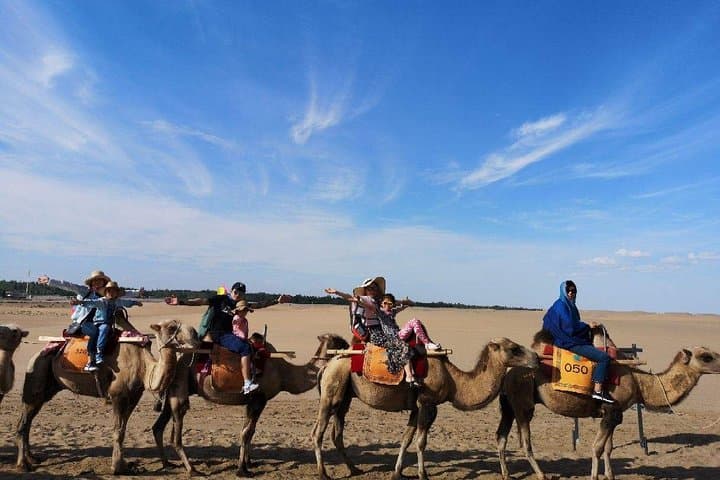
Camel riding is offered at Crescent Lake (usually about one hour); expect an additional activity fee included in many tour formats but confirm with the operator.
The tour may not be available or could require additional hotel surcharges during National Day (Oct 1–7) and Chinese New Year; confirm at booking.
Dunhuang formed a strategic Silk Road hub; the Mogao Grottoes were developed between the 4th and 14th centuries and preserve Buddhist art and manuscripts that chart cultural exchange across Eurasia.
Mogao’s murals are fragile, so visits are tightly controlled with limited group sizes and no-touch rules; stick to paths and avoid flash photography to protect pigments.
happychinatours operates guided outdoor trips and adventures with an emphasis on safety, stewardship, and memorable experiences.
Morning light cuts across the sand and the dunes seem to dare you forward as the tour vehicle rolls out from Dunhuang.
On day one the road threads through loess and gravel for roughly 20 km — about 40 minutes — until the crescent-shaped pool of Crescent Lake appears, an improbable eye of water hemmed by towering dunes. Sand sighs underfoot; camels tread a steady rhythm as guides point out the dunes’ singing places where wind and grain conspire to produce a low, droning note.
This region sits on the western edge of China’s Hexi Corridor, a crucial Silk Road spine where merchants and monks moved between east and west. The Mogao Grottoes, visited on day two, are a millennium-spanning archive of Buddhist murals and sculptures carved into sandstone cliffs from the 4th–14th centuries — one of the world’s best-preserved repositories of Silk Road art.
Culturally, Dunhuang still smells of cumin and roasted mutton at the Shazhou Night Market; stalls sell lacquered wood crafts and paper rubbings. Geologically, the area is driven by wind-sculpted dunes and perched springs; scientists still debate the exact mechanics that keep Crescent Lake fed amid the sand.
Practical guidance: book morning slots for Mogao to avoid crowds and heat; the grottoes limit group sizes and require guided entry. Carry 1–2 liters of water per person, sunscreen, and a light jacket for cool desert nights. Comfortable closed-toe shoes and a camera with a polarizer help with bright sand glare. Note: holiday dates (Oct 1–7, Chinese New Year) may incur extra hotel fees and heavier crowds — confirm pickup details and any seasonal surcharges in advance.
Morning light cuts across the sand and the dunes seem to dare you forward as the tour vehicle rolls out from Dunhuang.
On day one the road threads through loess and gravel for roughly 20 km — about 40 minutes — until the crescent-shaped pool of Crescent Lake appears, an improbable eye of water hemmed by towering dunes. Sand sighs underfoot; camels tread a steady rhythm as guides point out the dunes’ singing places where wind and grain conspire to produce a low, droning note.
This region sits on the western edge of China’s Hexi Corridor, a crucial Silk Road spine where merchants and monks moved between east and west. The Mogao Grottoes, visited on day two, are a millennium-spanning archive of Buddhist murals and sculptures carved into sandstone cliffs from the 4th–14th centuries — one of the world’s best-preserved repositories of Silk Road art.
Culturally, Dunhuang still smells of cumin and roasted mutton at the Shazhou Night Market; stalls sell lacquered wood crafts and paper rubbings. Geologically, the area is driven by wind-sculpted dunes and perched springs; scientists still debate the exact mechanics that keep Crescent Lake fed amid the sand.
Practical guidance: book morning slots for Mogao to avoid crowds and heat; the grottoes limit group sizes and require guided entry. Carry 1–2 liters of water per person, sunscreen, and a light jacket for cool desert nights. Comfortable closed-toe shoes and a camera with a polarizer help with bright sand glare. Note: holiday dates (Oct 1–7, Chinese New Year) may incur extra hotel fees and heavier crowds — confirm pickup details and any seasonal surcharges in advance.