THE ADVENTURE COLLECTIVE® · Independent discovery and booking for outdoor travel

Spend a day moving between one of the world’s oldest irrigation systems and the tranquil trails of Qingcheng Mountain. This tour pairs hands-on history with forested Taoist walkways, ideal for travelers who want culture and outdoor rhythm in a single itinerary.
Spend a day moving between one of the world’s oldest irrigation systems and the tranquil trails of Qingcheng Mountain. This tour pairs hands-on history with forested Taoist walkways, ideal for travelers who want culture and outdoor rhythm in a single itinerary.
Morning mist lifts off the Min River as the bus eases into Dujiangyan, and the ancient stonework of a hydraulic project still shaping Sichuan’s plains comes into view.
Verified experiences and guided adventures in the surrounding area.
Operated by Travel Chengdu · Dujiangyan, Sichuan
Morning mist lifts off the Min River as the bus eases into Dujiangyan, and the ancient stonework of a hydraulic project still shaping Sichuan’s plains comes into view.
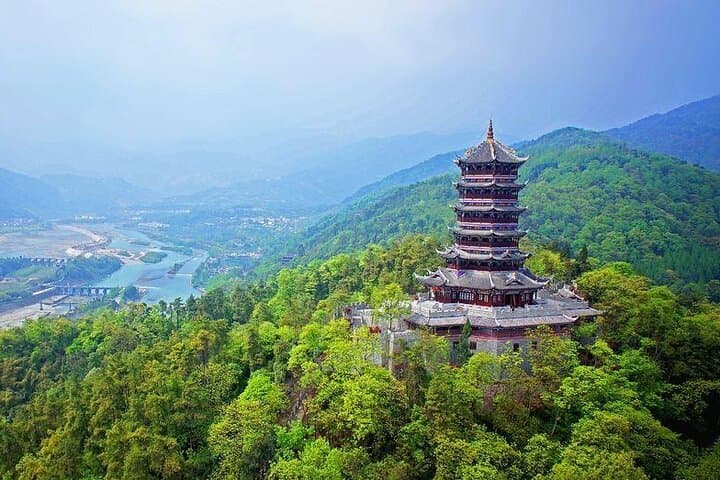
At Dujiangyan you trace the lines of Li Bing’s 3rd-century BCE engineering: the Fish Mouth diversion, Feishayan flood channels and the Baopingkou intake that redirected a river without dams. The concrete of modern repairs sits beside cut rock and carved channels, and a walk across the Anlan Suspension Bridge puts the scale of the system in perspective. From Yulei Pavilion you can read the water’s choreography across farmland.
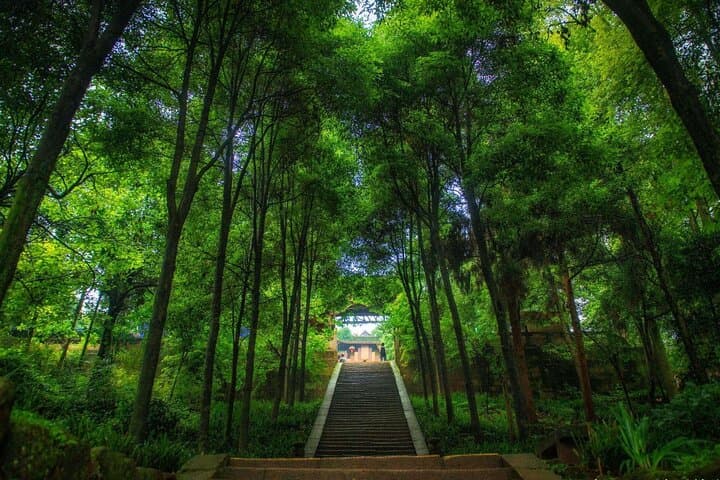
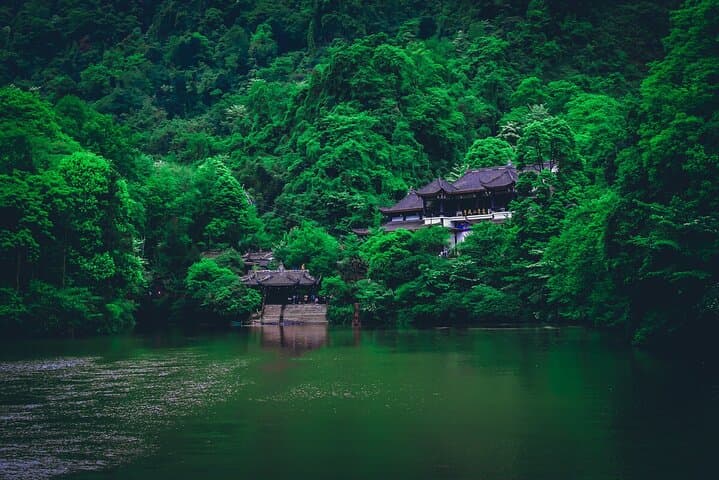
In the afternoon, Qingcheng Mountain changes the tone. Forested slopes, mossy steps and scattered Taoist halls speak to centuries of spiritual practice. Temples like Jianfu and Shangqing follow trails that climb through fir and bamboo, where the air feels cool and deliberate.
Geology here is simple: river-carved terraces meet long-eroded mountain foothills, producing steep streams and lush valley soils that made irrigation essential. Culturally, the area mixes folk Taoism, local pilgrimage, and post-earthquake reconstruction — visible in rebuilt towers and renewed paths.
Practical notes: plan an 8–10 hour day, expect moderate walking over uneven stone and stairways, and buy the on-site Yulei escalator ticket if you want the panoramic view with less climbing. Pack water, a light rain shell, cash for small fees and temple donations, and wear sturdy shoes. Respect temple etiquette, give wildlife space, and allow time to move between sites — the day balances archaeology, hillside forest and quiet temple courtyards.
moderate.
8–10 hours.
Moderate fitness needed: comfortable on uneven terrain and multiple stair sections over several hours
The full day runs about 8–10 hours with moderate walking: paved and stone pathways, staircases, and some uneven sections on Qingcheng Mountain.
This tour description includes site admissions, but add a small on-site fee if you choose the Yulei Pavilion escalator and budget for lunch and personal purchases.
Children can join, but long walks and stairs make it less suitable for people with significant mobility limitations; consider the escalator option for panoramic views with less climbing.
Guides typically speak English and Mandarin on shared tours; pickup or detailed meeting-point info is provided at booking—Chengdu is the nearest major city for accommodation and transport.
Dujiangyan was engineered by Li Bing in the 3rd century BCE to control flooding and irrigate the Chengdu Plain, an innovation that shaped regional agriculture for millennia.
High visitor numbers and trail erosion are ongoing concerns; stick to marked paths, avoid feeding wildlife, and pack out trash to protect temple sites and forest understory.
Travel Chengdu operates guided outdoor trips and adventures with an emphasis on safety, stewardship, and memorable experiences.
Morning mist lifts off the Min River as the bus eases into Dujiangyan, and the ancient stonework of a hydraulic project still shaping Sichuan’s plains comes into view.
Morning mist lifts off the Min River as the bus eases into Dujiangyan, and the ancient stonework of a hydraulic project still shaping Sichuan’s plains comes into view.
At Dujiangyan you trace the lines of Li Bing’s 3rd-century BCE engineering: the Fish Mouth diversion, Feishayan flood channels and the Baopingkou intake that redirected a river without dams. The concrete of modern repairs sits beside cut rock and carved channels, and a walk across the Anlan Suspension Bridge puts the scale of the system in perspective. From Yulei Pavilion you can read the water’s choreography across farmland.
In the afternoon, Qingcheng Mountain changes the tone. Forested slopes, mossy steps and scattered Taoist halls speak to centuries of spiritual practice. Temples like Jianfu and Shangqing follow trails that climb through fir and bamboo, where the air feels cool and deliberate.
Geology here is simple: river-carved terraces meet long-eroded mountain foothills, producing steep streams and lush valley soils that made irrigation essential. Culturally, the area mixes folk Taoism, local pilgrimage, and post-earthquake reconstruction — visible in rebuilt towers and renewed paths.
Practical notes: plan an 8–10 hour day, expect moderate walking over uneven stone and stairways, and buy the on-site Yulei escalator ticket if you want the panoramic view with less climbing. Pack water, a light rain shell, cash for small fees and temple donations, and wear sturdy shoes. Respect temple etiquette, give wildlife space, and allow time to move between sites — the day balances archaeology, hillside forest and quiet temple courtyards.