THE ADVENTURE COLLECTIVE® · Independent discovery and booking for outdoor travel

Enter the Red Fort through Lahori Gate and move from sunlit ramparts into shaded imperial halls. This private guided tour covers the fort’s Mughal palaces, Diwan‑i‑Am, Diwan‑i‑Khas and the Pearl Mosque, with hotel pickup and entrance included.
Enter the Red Fort through Lahori Gate and move from sunlit ramparts into shaded imperial halls. This private guided tour covers the fort’s Mughal palaces, Diwan‑i‑Am, Diwan‑i‑Khas and the Pearl Mosque, with hotel pickup and entrance included.
You step through the Lahori Gate and the city noise compresses into a measured hum; red sandstone walls rise like an ordered rampart against sky. Light pools in high courtyards where once emperors paced, and your guide points out chiseled floral panels that keep stories of court intrigue and craftsmanship alive.
Verified experiences and guided adventures in the surrounding area.
Operated by SITA World Tours · New Delhi, Delhi
You step through the Lahori Gate and the city noise compresses into a measured hum; red sandstone walls rise like an ordered rampart against sky. Light pools in high courtyards where once emperors paced, and your guide points out chiseled floral panels that keep stories of court intrigue and craftsmanship alive.
Built by Emperor Shah Jahan in the mid-17th century, the Red Fort (Lal Qila) is a compact lesson in Mughal power — Diwan‑i‑Am and Diwan‑i‑Khas for public and private audiences, the private Khas Mahal, and the Rang Mahal where the imperial household lived. Geologically the fortress is defined by thick bands of local red sandstone; architecturally it blends Persian and Timurid details and once channeled the Stream of Paradise through its pavilions.
British forces converted the fort into a garrison after 1857; it later became the site of the last emperor’s trial and now hosts the national flag hoisting each August 15th. Cultural threads—courtly life, colonial conflict, and contemporary civic ritual—are readable in the walls and rooms.
Practical guidance: tours run about three hours with moderate walking across uneven stone floors and thresholds. Security screening and bag checks are standard; large luggage and tripods may be restricted. Wear comfortable, closed shoes and modest clothing; temperatures can spike in summer, so carry water. The tour includes entrance and an English‑speaking private guide, plus hotel pick‑up and drop‑off. Early morning visits avoid peak crowds and offer cooler light for photos. Respect display cases and restricted chambers; the site is actively managed under UNESCO protections, and leaving no trace helps preserve fragile stone and inlaid decoration for the next visitor.
moderate.
3 hours.
Should be comfortable walking on uneven ground and climbing short stair sections; moderate fitness required.
This tour includes entrance fees and a private guide; bring your mobile ticket for scanning.
Most areas have uneven thresholds and steps; the tour is not fully wheelchair accessible and involves moderate walking.
Photography for personal use is generally permitted in open areas; however, obey signage and staff instructions—tripods and commercial filming may be restricted.
Early morning offers cooler temperatures and fewer crowds; late afternoon light is good for photography but can be busier.
Constructed by Shah Jahan in 1648, the Fort served as the Mughal imperial residence for two centuries and was later used as a British garrison after 1857; it now hosts India’s Independence Day flag ceremony.
Designated a UNESCO World Heritage site, the Red Fort is under ongoing conservation to stabilize sandstone and inlay work; visitors are asked to follow pathways and avoid touching delicate surfaces.
SITA World Tours operates guided outdoor trips and adventures with an emphasis on safety, stewardship, and memorable experiences.
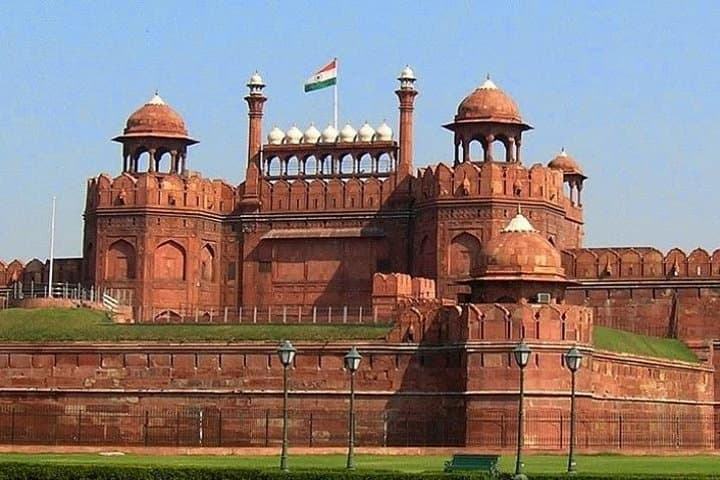
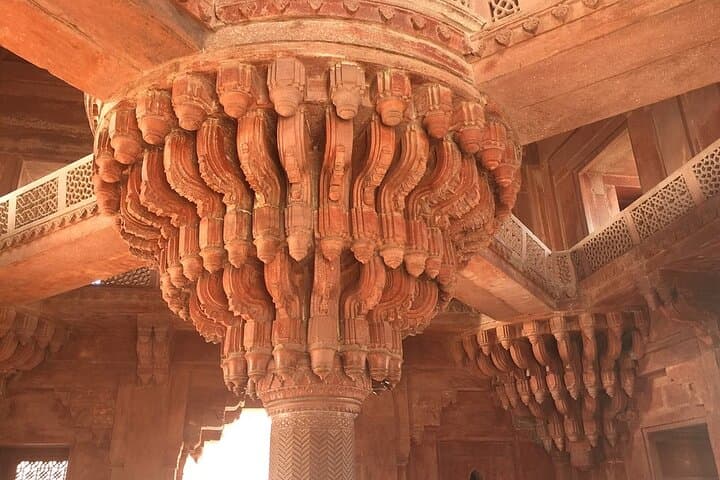
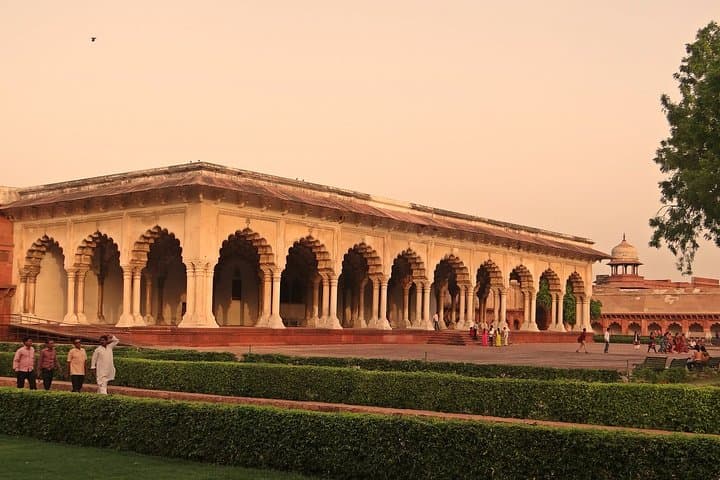
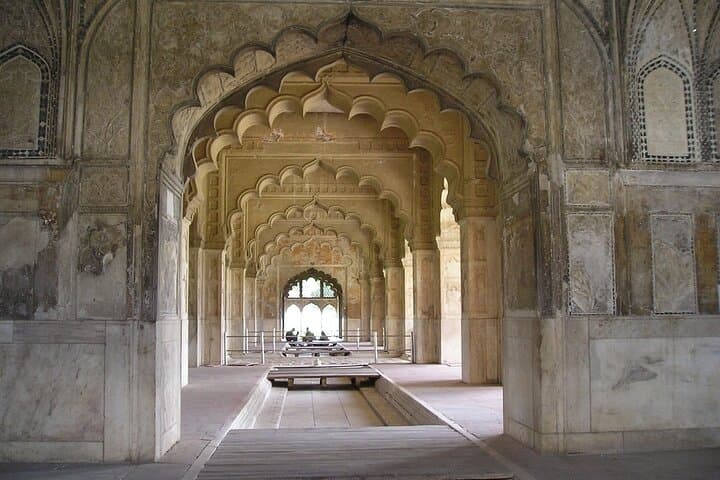
You step through the Lahori Gate and the city noise compresses into a measured hum; red sandstone walls rise like an ordered rampart against sky. Light pools in high courtyards where once emperors paced, and your guide points out chiseled floral panels that keep stories of court intrigue and craftsmanship alive.
You step through the Lahori Gate and the city noise compresses into a measured hum; red sandstone walls rise like an ordered rampart against sky. Light pools in high courtyards where once emperors paced, and your guide points out chiseled floral panels that keep stories of court intrigue and craftsmanship alive.
Built by Emperor Shah Jahan in the mid-17th century, the Red Fort (Lal Qila) is a compact lesson in Mughal power — Diwan‑i‑Am and Diwan‑i‑Khas for public and private audiences, the private Khas Mahal, and the Rang Mahal where the imperial household lived. Geologically the fortress is defined by thick bands of local red sandstone; architecturally it blends Persian and Timurid details and once channeled the Stream of Paradise through its pavilions.
British forces converted the fort into a garrison after 1857; it later became the site of the last emperor’s trial and now hosts the national flag hoisting each August 15th. Cultural threads—courtly life, colonial conflict, and contemporary civic ritual—are readable in the walls and rooms.
Practical guidance: tours run about three hours with moderate walking across uneven stone floors and thresholds. Security screening and bag checks are standard; large luggage and tripods may be restricted. Wear comfortable, closed shoes and modest clothing; temperatures can spike in summer, so carry water. The tour includes entrance and an English‑speaking private guide, plus hotel pick‑up and drop‑off. Early morning visits avoid peak crowds and offer cooler light for photos. Respect display cases and restricted chambers; the site is actively managed under UNESCO protections, and leaving no trace helps preserve fragile stone and inlaid decoration for the next visitor.