THE ADVENTURE COLLECTIVE® · Independent discovery and booking for outdoor travel

Step into one of La Palma’s most accessible lava tubes: a two-hour, guided speleology tour through Cueva de Las Palomas that reveals 1949 eruption features and a unique subterranean ecosystem. Practical, safe, and rich in geological detail — ideal for curious hikers and families with older children.
Step into one of La Palma’s most accessible lava tubes: a two-hour, guided speleology tour through Cueva de Las Palomas that reveals 1949 eruption features and a unique subterranean ecosystem. Practical, safe, and rich in geological detail — ideal for curious hikers and families with older children.
A cool draft meets you at the cave mouth and the light narrows to a ribbon as you step from volcanic scrub into shadow. The Cueva de Las Palomas lava tube opens in stages—pockets of daylight through former fumaroles, narrow crawl sections that force deliberate footsteps, and wider galleries where the roof rises to reveal layered pahoehoe and aa textures. Guides move at a steady, safety-first pace, pointing out flow lines and the tiny life-forms adapted to this underground world.
Verified experiences and guided adventures in the surrounding area.
Operated by VIMOTIONS · Los Llanos de Aridane, Santa Cruz de Tenerife
A cool draft meets you at the cave mouth and the light narrows to a ribbon as you step from volcanic scrub into shadow. The Cueva de Las Palomas lava tube opens in stages—pockets of daylight through former fumaroles, narrow crawl sections that force deliberate footsteps, and wider galleries where the roof rises to reveal layered pahoehoe and aa textures. Guides move at a steady, safety-first pace, pointing out flow lines and the tiny life-forms adapted to this underground world.
The tube was carved during the 1949 eruption of the San Juan volcano; about 560 meters of passage and roughly 3 meters in average width preserve both geological and biological stories. The site is recognized by Canary Islands authorities and listed for natural interest by UNESCO networks, in part because the cave hosts specialized invertebrates and offers a snapshot of recent volcanic processes.
Practically, the tour is two hours and aimed at a broad audience — minimum age 12 — with helmets and basic safety equipment provided. Terrain is uneven, often rocky and damp; closed-toe footwear with good tread is essential. Expect low ceilings in places and natural light at several openings, but bring a headlamp if you prefer extra illumination. Hydrate before you go, dress in layers (the cave stays cool), and plan to park in the visitor-center lot at Carr. El Hoyo Todoque (arrive 15 minutes early).
This trip blends accessible adventure with tangible geology: visitors leave having seen fresh lava architecture up close and learned how La Palma’s recent eruptions continue to shape the island.
moderate.
2 hours.
Suitable for people in regular walking fitness; able to crouch, climb short steps and walk on uneven terrain.
The guided experience is about 120 minutes and covers roughly the active 560-meter tube section with stops to explain geology and biology.
Yes—helmets and basic safety equipment are included in the tour price; wear your own sturdy footwear and bring a headlamp if you prefer extra light.
Minimum age is 12; young teens should be comfortable walking on uneven, sometimes low-ceiling terrain and be accompanied by an adult.
The operator cancels for unsafe conditions; check the 24-hour cancellation window and confirm meeting details if adverse weather is forecast.
The tube formed during the San Juan eruption of 1949; its accessible passages preserve fresh lava flow features and fumarolic openings that record the eruption’s dynamics.
Stay on marked paths, avoid touching delicate speleothems and invertebrate habitats, and follow guide instructions to minimize impact on this protected natural monument.
VIMOTIONS operates guided outdoor trips and adventures with an emphasis on safety, stewardship, and memorable experiences.
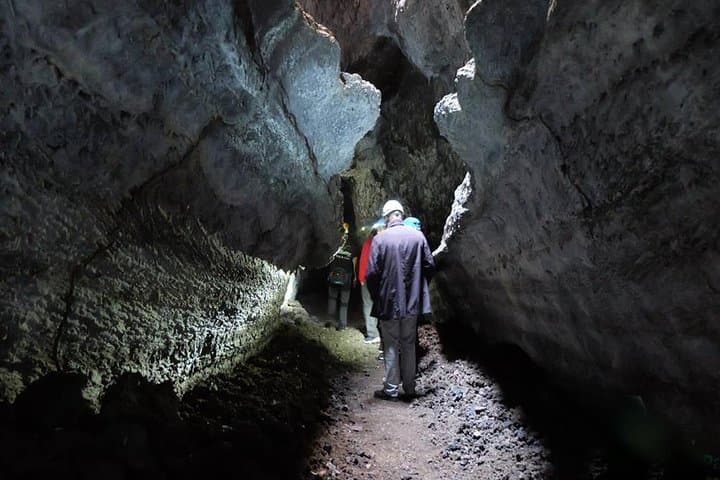


A cool draft meets you at the cave mouth and the light narrows to a ribbon as you step from volcanic scrub into shadow. The Cueva de Las Palomas lava tube opens in stages—pockets of daylight through former fumaroles, narrow crawl sections that force deliberate footsteps, and wider galleries where the roof rises to reveal layered pahoehoe and aa textures. Guides move at a steady, safety-first pace, pointing out flow lines and the tiny life-forms adapted to this underground world.
A cool draft meets you at the cave mouth and the light narrows to a ribbon as you step from volcanic scrub into shadow. The Cueva de Las Palomas lava tube opens in stages—pockets of daylight through former fumaroles, narrow crawl sections that force deliberate footsteps, and wider galleries where the roof rises to reveal layered pahoehoe and aa textures. Guides move at a steady, safety-first pace, pointing out flow lines and the tiny life-forms adapted to this underground world.
The tube was carved during the 1949 eruption of the San Juan volcano; about 560 meters of passage and roughly 3 meters in average width preserve both geological and biological stories. The site is recognized by Canary Islands authorities and listed for natural interest by UNESCO networks, in part because the cave hosts specialized invertebrates and offers a snapshot of recent volcanic processes.
Practically, the tour is two hours and aimed at a broad audience — minimum age 12 — with helmets and basic safety equipment provided. Terrain is uneven, often rocky and damp; closed-toe footwear with good tread is essential. Expect low ceilings in places and natural light at several openings, but bring a headlamp if you prefer extra illumination. Hydrate before you go, dress in layers (the cave stays cool), and plan to park in the visitor-center lot at Carr. El Hoyo Todoque (arrive 15 minutes early).
This trip blends accessible adventure with tangible geology: visitors leave having seen fresh lava architecture up close and learned how La Palma’s recent eruptions continue to shape the island.