THE ADVENTURE COLLECTIVE® · Independent discovery and booking for outdoor travel

Walk the narrow courtyards and raised naves of Coptic Cairo on a private half-day tour that visits the Hanging Church, Abu Serga, St. George and the Coptic Museum. Practical guidance and historical context help you move confidently through one of Cairo’s oldest religious quarters.
Walk the narrow courtyards and raised naves of Coptic Cairo on a private half-day tour that visits the Hanging Church, Abu Serga, St. George and the Coptic Museum. Practical guidance and historical context help you move confidently through one of Cairo’s oldest religious quarters.
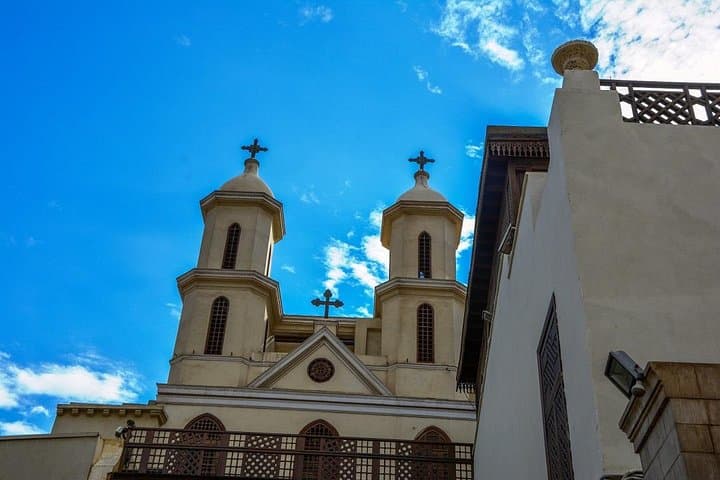
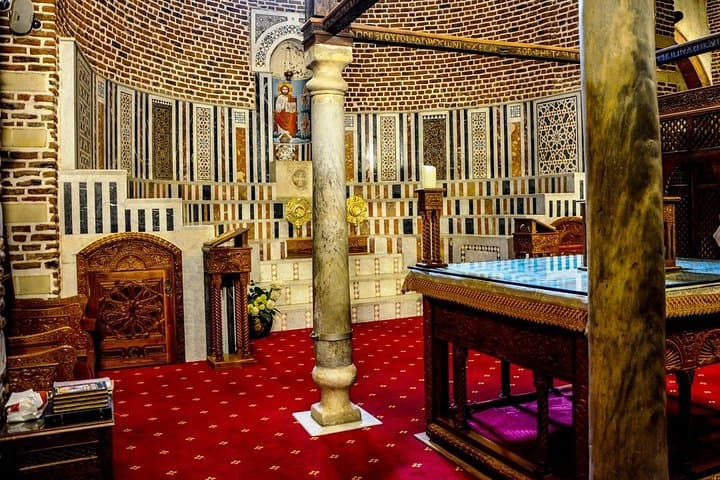
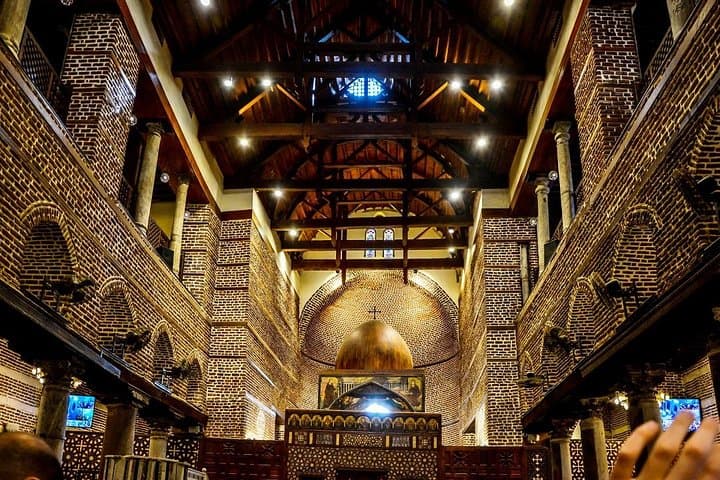
You step down twenty-nine stone steps and the city breathes differently—closer, older. The Hanging Church’s nave hangs over a buried Roman gatehouse while incense and sunlight pick out battered icons. Passing courtyards give way to low wooden roofs, carved pulpits and stone floors that remember centuries of prayer.
Verified experiences and guided adventures in the surrounding area.
Operated by Egypt Tours World · Cairo, Cairo Governorate
You step down twenty-nine stone steps and the city breathes differently—closer, older. The Hanging Church’s nave hangs over a buried Roman gatehouse while incense and sunlight pick out battered icons. Passing courtyards give way to low wooden roofs, carved pulpits and stone floors that remember centuries of prayer.
Coptic Cairo sits within the old Babylon Fortress, a patchwork of late antique walls, medieval churches and a synagogue that tells of three faiths sharing a compact urban quarter. Buildings visible today were rebuilt or restored after the Muslim conquest; still, many sites preserve elements dating to the 4th–10th centuries. The area’s geology—silty Nile alluvium—helped bury Roman levels and raise the street over time, producing the Hanging Church’s dramatic approach.
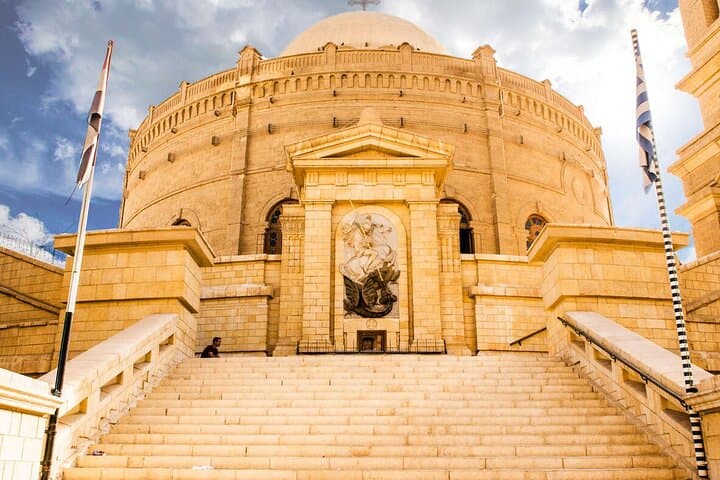
This private half-day tour visits the Coptic Museum, the Hanging Church, the Church of St. George and Saints Sergius and Bacchus (Abu Serga), and includes short historical context and opportunities to view icons and ancient masonry. Expect mostly flat walking on paved lanes, some steps and narrow courtyards. Guides typically handle tickets and interpretive commentary; photography rules vary inside active churches.
Practical tips: wear modest, comfortable layers and sturdy shoes; carry water and small change for donations; plan a morning slot to avoid heat and crowds; allow 4–6 hours if you include time at the Coptic Museum. This route rewards attention to detail—look up at wooden ceilings, trace reused Roman stone, and listen for the clack of sandals on ancient thresholds.
easy.
4–6 hours.
Light walking on paved streets and steps; suitable for most fitness levels
Most private tours include admission to the Coptic Museum and main churches, but confirm with the operator—some sites have separate entrance fees.
Some areas have ramps or street-level access, but steps and narrow thresholds are common; check accessibility details with your tour provider in advance.
Photography rules vary—flash is often prohibited and some areas close to altars may be restricted; always ask the guide or staff before photographing.
Tours typically include hotel pickup and drop-off within Cairo; confirm your specific pickup point and any extra transfer fees when booking.
Coptic Cairo developed around the Roman Babylon Fortress and preserved key Christian sites; tradition holds the Holy Family rested at the site of Saints Sergius and Bacchus during their flight into Egypt.
Many buildings are fragile—avoid touching icons and painted surfaces, follow visitor limits inside small chapels, and support local conservation through official donations.
Egypt Tours World operates guided outdoor trips and adventures with an emphasis on safety, stewardship, and memorable experiences.
You step down twenty-nine stone steps and the city breathes differently—closer, older. The Hanging Church’s nave hangs over a buried Roman gatehouse while incense and sunlight pick out battered icons. Passing courtyards give way to low wooden roofs, carved pulpits and stone floors that remember centuries of prayer.
You step down twenty-nine stone steps and the city breathes differently—closer, older. The Hanging Church’s nave hangs over a buried Roman gatehouse while incense and sunlight pick out battered icons. Passing courtyards give way to low wooden roofs, carved pulpits and stone floors that remember centuries of prayer.
Coptic Cairo sits within the old Babylon Fortress, a patchwork of late antique walls, medieval churches and a synagogue that tells of three faiths sharing a compact urban quarter. Buildings visible today were rebuilt or restored after the Muslim conquest; still, many sites preserve elements dating to the 4th–10th centuries. The area’s geology—silty Nile alluvium—helped bury Roman levels and raise the street over time, producing the Hanging Church’s dramatic approach.
This private half-day tour visits the Coptic Museum, the Hanging Church, the Church of St. George and Saints Sergius and Bacchus (Abu Serga), and includes short historical context and opportunities to view icons and ancient masonry. Expect mostly flat walking on paved lanes, some steps and narrow courtyards. Guides typically handle tickets and interpretive commentary; photography rules vary inside active churches.
Practical tips: wear modest, comfortable layers and sturdy shoes; carry water and small change for donations; plan a morning slot to avoid heat and crowds; allow 4–6 hours if you include time at the Coptic Museum. This route rewards attention to detail—look up at wooden ceilings, trace reused Roman stone, and listen for the clack of sandals on ancient thresholds.