THE ADVENTURE COLLECTIVE® · Independent discovery and booking for outdoor travel

Walk among towering cypress and tupelo on a self-guided audio tour of Congaree National Park. This GPS-triggered guide combines natural history, local stories, and practical tips for a 2–4 hour exploration of the floodplain.
Walk among towering cypress and tupelo on a self-guided audio tour of Congaree National Park. This GPS-triggered guide combines natural history, local stories, and practical tips for a 2–4 hour exploration of the floodplain.
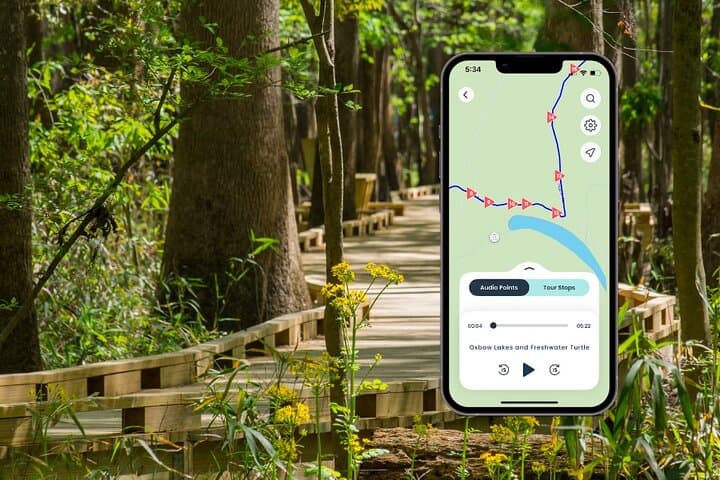
You step off the shaded boardwalk and the forest’s rhythm takes over: the hush of giant cypress, the distant call of a woodpecker, and the river’s slow patience shaping the land. The audio tour leads from the Harry Hampton Visitor Center onto flat, well-maintained boardwalks that thread through trees as old as the landscape’s floods.
Verified experiences and guided adventures in the surrounding area.
Operated by Shaka Guide Apps · Hopkins, South Carolina
You step off the shaded boardwalk and the forest’s rhythm takes over: the hush of giant cypress, the distant call of a woodpecker, and the river’s slow patience shaping the land. The audio tour leads from the Harry Hampton Visitor Center onto flat, well-maintained boardwalks that thread through trees as old as the landscape’s floods.
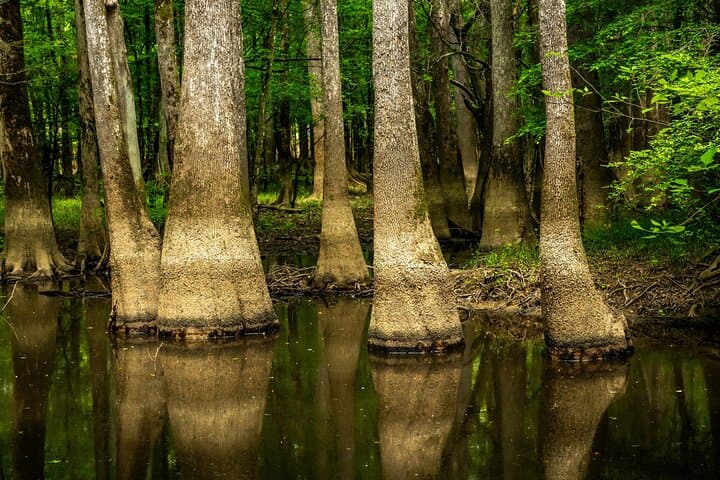
Geology here is active history — the Congaree River’s meanders carved oxbow lakes like Weston Lake and left behind the rich alluvial soils that support towering bald cypress and tupelo gum. Culturally, the park records a human relationship with the floodplain: Native American use, antebellum-era plantations upstream, and 20th-century conservation that saved one of the Southeast’s last old-growth bottomland forests.
The narration mixes natural history with local stories, pointing out flood scars, swamp-adapted plants, and the park’s role in regional biodiversity. Wildlife is outspoken at dawn and dusk; the audio cues tell you where to look for herons at the lake or turtles sunning on fallen logs.
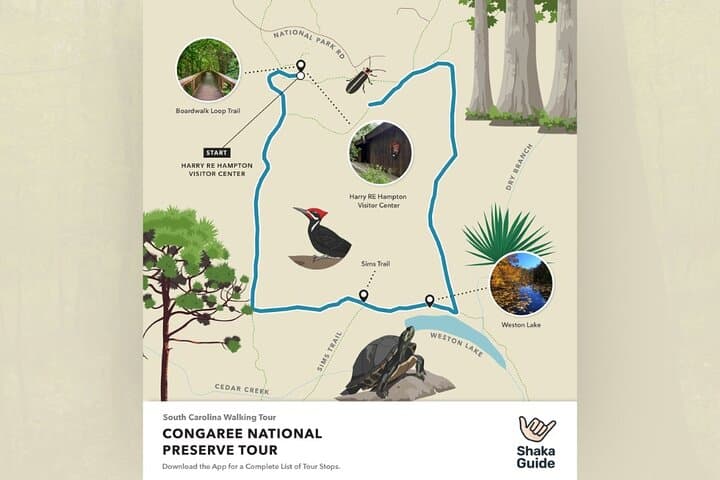
Practical edge: the standard self-guided route is roughly 2–3 miles on boardwalks and easy trails (allow 2–4 hours to move, listen, and pause), with optional spurs to the Sims Trail and Weston Lake. Bring insect repellent, a refillable water bottle, and shoes that can handle wet sections after rain. Download the Shaka Guide audio on strong Wi‑Fi before arrival; GPS triggers work offline but the app needs the files. Aim for morning light for bird activity and lower mosquito pressure. Keep to established paths and pack out any waste—these floodplain systems are fragile and recover slowly.
easy.
2–5 hours.
Suitable for most fitness levels; expect flat, low‑impact walking for 2–4 miles with frequent stops
The main boardwalk loop and recommended spurs total roughly 2–4 miles depending on optional detours; plan 2–5 hours including stops.
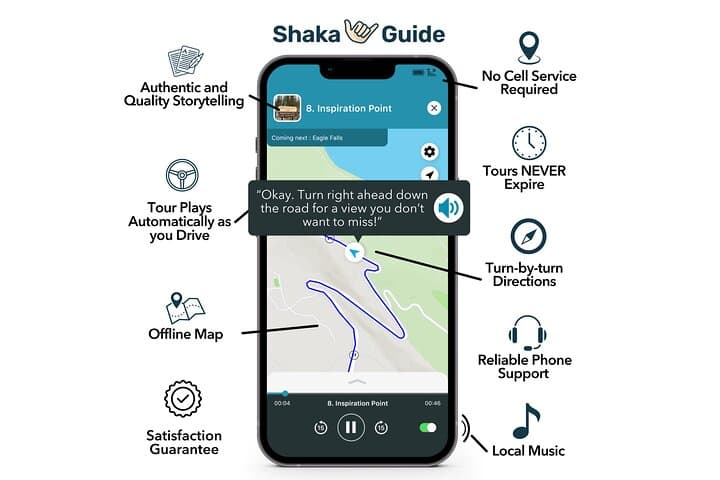
Cell signal is intermittent; download the audio tour and maps before you arrive so GPS triggers and directions work offline.
Service animals are permitted; otherwise pets are not allowed on most national park trails to protect wildlife and visitors.
Congaree National Park has free admission, but check the park website for any temporary access notices or trail closures before visiting.
The park preserves one of the largest tracts of old-growth bottomland hardwood forest in the Southeast; efforts in the 1960s–70s prevented logging of these mature stands.
Congaree’s floodplain ecosystem is sensitive to off-trail trampling and invasive species; stay on established paths and follow Leave No Trace principles to minimize impact.
Shaka Guide Apps operates guided outdoor trips and adventures with an emphasis on safety, stewardship, and memorable experiences.
You step off the shaded boardwalk and the forest’s rhythm takes over: the hush of giant cypress, the distant call of a woodpecker, and the river’s slow patience shaping the land. The audio tour leads from the Harry Hampton Visitor Center onto flat, well-maintained boardwalks that thread through trees as old as the landscape’s floods.
You step off the shaded boardwalk and the forest’s rhythm takes over: the hush of giant cypress, the distant call of a woodpecker, and the river’s slow patience shaping the land. The audio tour leads from the Harry Hampton Visitor Center onto flat, well-maintained boardwalks that thread through trees as old as the landscape’s floods.
Geology here is active history — the Congaree River’s meanders carved oxbow lakes like Weston Lake and left behind the rich alluvial soils that support towering bald cypress and tupelo gum. Culturally, the park records a human relationship with the floodplain: Native American use, antebellum-era plantations upstream, and 20th-century conservation that saved one of the Southeast’s last old-growth bottomland forests.
The narration mixes natural history with local stories, pointing out flood scars, swamp-adapted plants, and the park’s role in regional biodiversity. Wildlife is outspoken at dawn and dusk; the audio cues tell you where to look for herons at the lake or turtles sunning on fallen logs.
Practical edge: the standard self-guided route is roughly 2–3 miles on boardwalks and easy trails (allow 2–4 hours to move, listen, and pause), with optional spurs to the Sims Trail and Weston Lake. Bring insect repellent, a refillable water bottle, and shoes that can handle wet sections after rain. Download the Shaka Guide audio on strong Wi‑Fi before arrival; GPS triggers work offline but the app needs the files. Aim for morning light for bird activity and lower mosquito pressure. Keep to established paths and pack out any waste—these floodplain systems are fragile and recover slowly.