THE ADVENTURE COLLECTIVE® · Independent discovery and booking for outdoor travel

Step into an 18th-century fort where live archaeology, musket demonstrations and sweeping views of the Straits of Mackinac bring frontier life to the present. Learn what to expect on-site and how to plan a practical, memorable visit.
Step into an 18th-century fort where live archaeology, musket demonstrations and sweeping views of the Straits of Mackinac bring frontier life to the present. Learn what to expect on-site and how to plan a practical, memorable visit.
You step through a wooden gate and the wind off the Straits of Mackinac carries the smell of lake water and wood smoke—cannons stand quiet along the palisade while costumed interpreters move through the fort like memories made visible.
Verified experiences and guided adventures in the surrounding area.
Operated by Fort Mackinac · Mackinaw City, Michigan
You step through a wooden gate and the wind off the Straits of Mackinac carries the smell of lake water and wood smoke—cannons stand quiet along the palisade while costumed interpreters move through the fort like memories made visible.
Colonial Michilimackinac reconstructs an 18th-century fur trading village built on decades of archaeology. The site sits where Ojibwe, French, British and American histories intersected: a strategic trading post that shifted the region’s commerce and culture until the community relocated to Mackinac Island in 1781. Beneath the grass, the ongoing dig reveals ceramic shards, trade goods and foundations that map daily life; above, the Straits frame views of Mackinac Bridge and the island beyond, the water seeming to test anyone who stands at the edge.
Interpreters portray voyageurs, soldiers and tradespeople, showing musket drills, food preparation and garden tending that make the past tactile. Geology here is simple—glacially scoured Limestone and thin soils—but it’s exactly the ground that preserved layers of human activity.
Practical guidance: plan 1–3 hours for a thorough visit; summer brings live archaeology on clear days. Wear sturdy shoes for uneven wooden planks and grassy excavation areas, bring weatherproof layers, and allow extra time for demonstrations. Accessibility is good at the visitor center, but some reconstructed areas use historic surfaces—ask staff if you need alternatives. Respect ongoing digs: don’t touch trenches or remove artifacts, and follow interpreter directions to get the best mix of story, sightlines and safety.
easy.
1–6 hours.
Suitable for most fitness levels; expect light walking and some uneven ground
Mobile or paper tickets are accepted; entry is at the admissions counter in the visitor center and tickets are generally valid for the day of your visit.
Archaeologists are typically on-site during the summer months weather permitting; check the site calendar or ask staff for current dig schedules.
The visitor center and many exhibits are wheelchair accessible, but some reconstructed areas have historic surfaces—staff can advise on accessible routes.
Service animals are allowed, but pets beyond service animals are not permitted in historic areas—confirm current policies with the site before arrival.
The fort recreates a late-18th-century trading village and sits atop North America’s longest-running archaeological dig; the active site documents interactions among Indigenous peoples, French and British traders.
Ongoing archaeology and preservation rely on visitors staying on marked paths and not disturbing trenches; the site emphasizes artifact conservation and responsible interpretation.
Fort Mackinac operates guided outdoor trips and adventures with an emphasis on safety, stewardship, and memorable experiences.

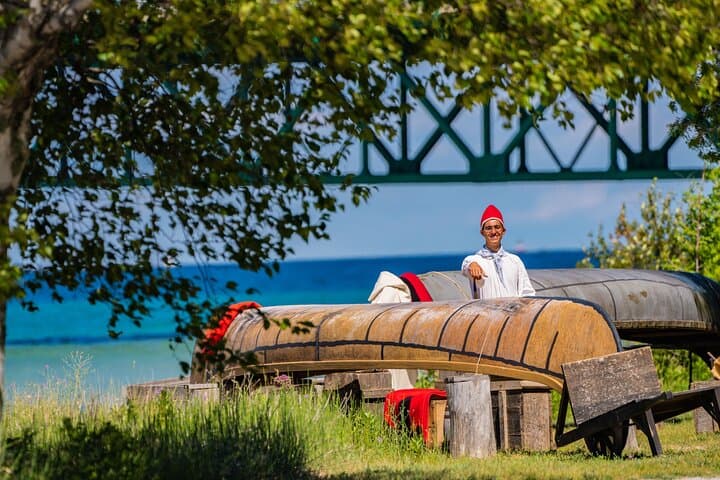


You step through a wooden gate and the wind off the Straits of Mackinac carries the smell of lake water and wood smoke—cannons stand quiet along the palisade while costumed interpreters move through the fort like memories made visible.
You step through a wooden gate and the wind off the Straits of Mackinac carries the smell of lake water and wood smoke—cannons stand quiet along the palisade while costumed interpreters move through the fort like memories made visible.
Colonial Michilimackinac reconstructs an 18th-century fur trading village built on decades of archaeology. The site sits where Ojibwe, French, British and American histories intersected: a strategic trading post that shifted the region’s commerce and culture until the community relocated to Mackinac Island in 1781. Beneath the grass, the ongoing dig reveals ceramic shards, trade goods and foundations that map daily life; above, the Straits frame views of Mackinac Bridge and the island beyond, the water seeming to test anyone who stands at the edge.
Interpreters portray voyageurs, soldiers and tradespeople, showing musket drills, food preparation and garden tending that make the past tactile. Geology here is simple—glacially scoured Limestone and thin soils—but it’s exactly the ground that preserved layers of human activity.
Practical guidance: plan 1–3 hours for a thorough visit; summer brings live archaeology on clear days. Wear sturdy shoes for uneven wooden planks and grassy excavation areas, bring weatherproof layers, and allow extra time for demonstrations. Accessibility is good at the visitor center, but some reconstructed areas use historic surfaces—ask staff if you need alternatives. Respect ongoing digs: don’t touch trenches or remove artifacts, and follow interpreter directions to get the best mix of story, sightlines and safety.