THE ADVENTURE COLLECTIVE® · Independent discovery and booking for outdoor travel

Trace the first European city in sub‑Saharan Africa on a guided walk through Cidade Velha, visiting fortresses, ruins, markets, and a local lunch. This 5–6 hour tour combines history, culture, and practical local insight for confident, easy walking.
Trace the first European city in sub‑Saharan Africa on a guided walk through Cidade Velha, visiting fortresses, ruins, markets, and a local lunch. This 5–6 hour tour combines history, culture, and practical local insight for confident, easy walking.
The cobbles are uneven underfoot and the Atlantic wind pushes stories across the square as you step into Cidade Velha — the island’s first European town — where stone fortresses guard views of the sea and every corner keeps a memory to be read.
Verified experiences and guided adventures in the surrounding area.
Operated by Novatour · Cidade Velha, Santiago
The cobbles are uneven underfoot and the Atlantic wind pushes stories across the square as you step into Cidade Velha — the island’s first European town — where stone fortresses guard views of the sea and every corner keeps a memory to be read.
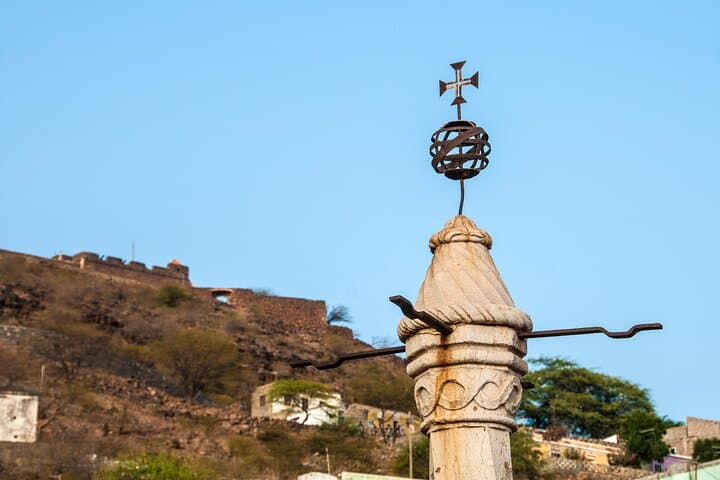
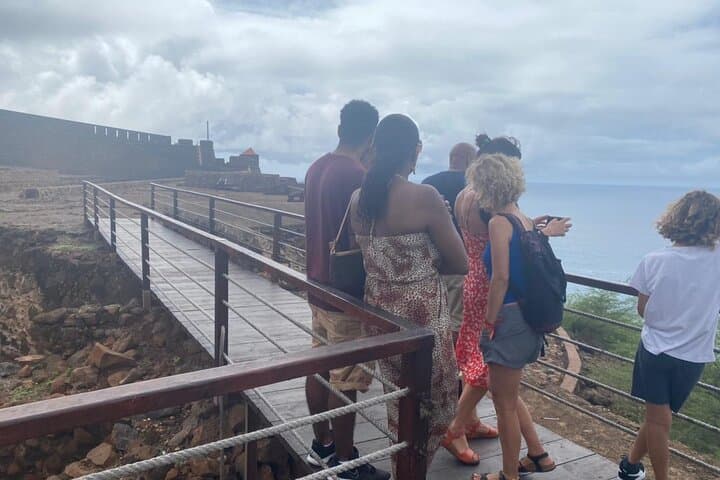
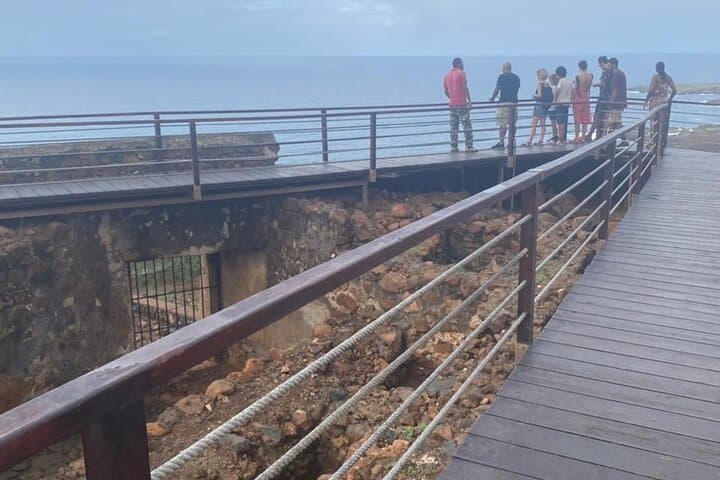
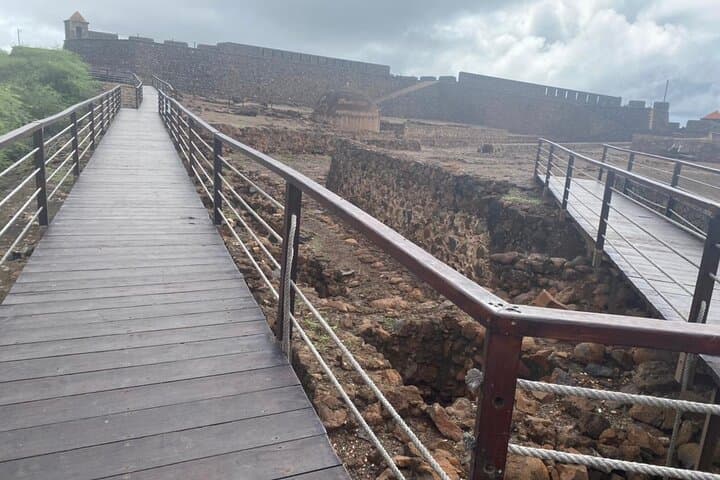
Walk with local guides who animate centuries: from the Amílcar Cabral Foundation’s ethnological collections to the Royal Fortaleza de São Felipe, the ruined cathedral of Ribeira Grande, and the pelourinho where colonial law was once enforced. The geology is simple but telling — volcanic basalt and sandstone cut by tropical weather make compact streets, steps and low walls that channel sea breezes and sunlight.
Culturally, the tour stitches together Cape Verdean life: market stalls selling modest crafts and dried fish, the smell of sugarcane distillate from a small aguardente house, and Portuguese-era churches layered with Creole adaptation. A midday lunch at a nearby restaurant gives a practical pause — local fish, corn-based stews, and strong coffee that match the town’s directness.
Practicalities: expect 5–6 hours of mostly gentle walking across cobblestones and short stair sections, minimal elevation gain but uneven surfaces. Bring sun protection, stable shoes, and a small daypack with water. Mornings are cooler for photos at the fort; afternoons suit relaxed market browsing. Guides handle entrances and logistics, leaving you to focus on the texture of place and the human stories folded into every street.
easy.
5–6 hours.
Suitable for most fitness levels; requires moderate mobility for walking on uneven cobbles and short stairs.
The experience runs about 5–6 hours, including guided visits, photo stops, and lunch.
The tour is family-friendly but cobblestones and some stairs make it awkward for full-length strollers; carriers or compact wheels are recommended.
Yes — entrance to the fort and the Old Town sites plus the arranged local lunch are included in the tour price.
Guides are typically local and commonly speak Portuguese and Cape Verdean Creole; many also offer English — check at booking if you need a specific language.
Cidade Velha (Ribeira Grande) was the first European colonial city in sub‑Saharan Africa and was inscribed as a UNESCO World Heritage Site in 2009 for its role in Atlantic history.
Preservation focuses on stabilizing stone structures and managing visitor access; support local conservation by staying on marked paths and buying crafts from community vendors.
Novatour operates guided outdoor trips and adventures with an emphasis on safety, stewardship, and memorable experiences.
The cobbles are uneven underfoot and the Atlantic wind pushes stories across the square as you step into Cidade Velha — the island’s first European town — where stone fortresses guard views of the sea and every corner keeps a memory to be read.
The cobbles are uneven underfoot and the Atlantic wind pushes stories across the square as you step into Cidade Velha — the island’s first European town — where stone fortresses guard views of the sea and every corner keeps a memory to be read.
Walk with local guides who animate centuries: from the Amílcar Cabral Foundation’s ethnological collections to the Royal Fortaleza de São Felipe, the ruined cathedral of Ribeira Grande, and the pelourinho where colonial law was once enforced. The geology is simple but telling — volcanic basalt and sandstone cut by tropical weather make compact streets, steps and low walls that channel sea breezes and sunlight.
Culturally, the tour stitches together Cape Verdean life: market stalls selling modest crafts and dried fish, the smell of sugarcane distillate from a small aguardente house, and Portuguese-era churches layered with Creole adaptation. A midday lunch at a nearby restaurant gives a practical pause — local fish, corn-based stews, and strong coffee that match the town’s directness.
Practicalities: expect 5–6 hours of mostly gentle walking across cobblestones and short stair sections, minimal elevation gain but uneven surfaces. Bring sun protection, stable shoes, and a small daypack with water. Mornings are cooler for photos at the fort; afternoons suit relaxed market browsing. Guides handle entrances and logistics, leaving you to focus on the texture of place and the human stories folded into every street.