THE ADVENTURE COLLECTIVE® · Independent discovery and booking for outdoor travel

Follow a guided trail into three limestone caves beneath Grand Cayman’s tropical forest, where dripstone formations and bat colonies reveal a slow geological history. This accessible tour combines short hikes, interpretive geology, and easy transport from George Town.
Follow a guided trail into three limestone caves beneath Grand Cayman’s tropical forest, where dripstone formations and bat colonies reveal a slow geological history. This accessible tour combines short hikes, interpretive geology, and easy transport from George Town.
You step off the air-conditioned van into humid, green air and the forest seems to breathe around you—broad leaves drip from last night's rain, and the path drops toward sinkholes that hint at hollow spaces below.
Verified experiences and guided adventures in the surrounding area.
Operated by CAYTOURS · North Side, Grand Cayman
You step off the air-conditioned van into humid, green air and the forest seems to breathe around you—broad leaves drip from last night's rain, and the path drops toward sinkholes that hint at hollow spaces below.
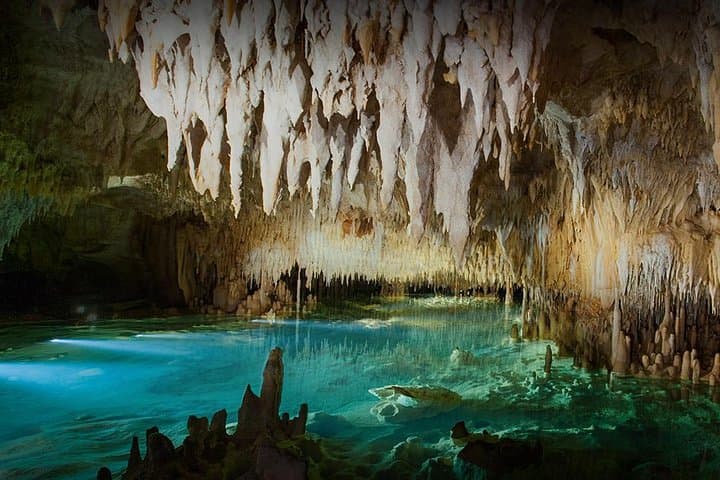
A guided walk leads you beneath a low canopy into three limestone caves where stalactites and stalagmites grow like slow, patient sculptures. Water still shapes the rooms: tiny drops have built columns over millennia and echo the guide's torchlight with cold, mineral silence. Bats flit in the darker recesses; light from the entrance throws sharp relief on crystalline calcite and ancient flowstone.
Geology here is simple and persuasive: the caves formed in Cayman’s Miocene limestone as rainwater dissolved bedrock and collapsed to create subterranean chambers. The Crystal Caves attraction is a recent addition to Grand Cayman’s nature circuit, linking interpretive trails with nearby Botanic Park and traditional North Side culture—fishermen, roadside stands, and small community churches that mark the island’s quieter north coast.
Practical guidance: tours run roughly 1.5–3 hours including transport from George Town and Seven Mile Beach; wear sturdy, closed-toe shoes with good grip and bring modest rain protection—trails can be slick. Respect the no-touch policy inside caves to preserve fragile formations, and stay with the group: passageways are narrow and uneven. Morning tours are cooler and attract more wildlife activity. Photographs are allowed but use no flash on formations or roosting bats when requested. The experience pairs well with a visit to the nearby Botanic Park and a late-afternoon stop at a North Side beach for sunset.
easy.
1.5–3 hours.
Suitable for most fitness levels; requires walking on uneven ground and short steps
The guided cave and forest portion is about 1.5 hours; total trip time including pickup and transfer from George Town or Seven Mile Beach runs up to 3 hours.
No; the caves have uneven paths, steps, and low ceilings and are not suitable for wheelchairs or limited mobility without assistance.
Yes; children must be accompanied by an adult and the tour is family-friendly, though supervision is required in narrow cave sections.
Yes, but avoid using flash on delicate formations or on roosting bats when guides request no flash to protect wildlife and minerals.
The caves developed in Cayman’s limestone bedrock over millions of years; the Crystal Caves site is one of the island’s newer public nature attractions, highlighting karst geology and native plants.
Tours emphasize staying on trails and no-touch policies to protect fragile calcite formations; guides help minimize visitor impact and protect bat roosts.
CAYTOURS operates guided outdoor trips and adventures with an emphasis on safety, stewardship, and memorable experiences.

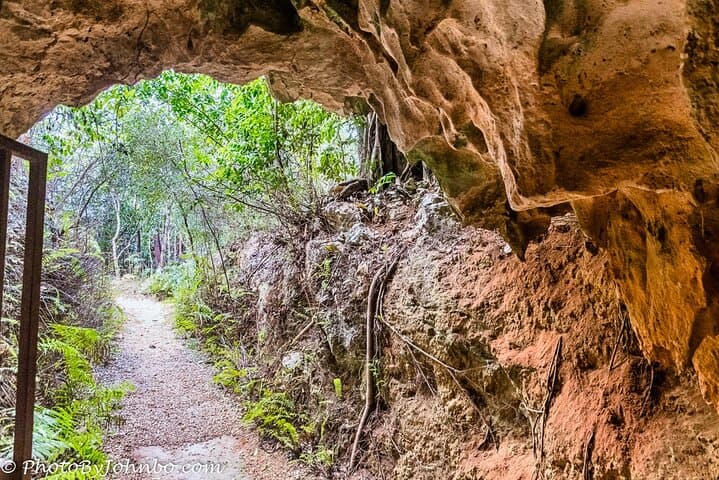

You step off the air-conditioned van into humid, green air and the forest seems to breathe around you—broad leaves drip from last night's rain, and the path drops toward sinkholes that hint at hollow spaces below.
You step off the air-conditioned van into humid, green air and the forest seems to breathe around you—broad leaves drip from last night's rain, and the path drops toward sinkholes that hint at hollow spaces below.
A guided walk leads you beneath a low canopy into three limestone caves where stalactites and stalagmites grow like slow, patient sculptures. Water still shapes the rooms: tiny drops have built columns over millennia and echo the guide's torchlight with cold, mineral silence. Bats flit in the darker recesses; light from the entrance throws sharp relief on crystalline calcite and ancient flowstone.
Geology here is simple and persuasive: the caves formed in Cayman’s Miocene limestone as rainwater dissolved bedrock and collapsed to create subterranean chambers. The Crystal Caves attraction is a recent addition to Grand Cayman’s nature circuit, linking interpretive trails with nearby Botanic Park and traditional North Side culture—fishermen, roadside stands, and small community churches that mark the island’s quieter north coast.
Practical guidance: tours run roughly 1.5–3 hours including transport from George Town and Seven Mile Beach; wear sturdy, closed-toe shoes with good grip and bring modest rain protection—trails can be slick. Respect the no-touch policy inside caves to preserve fragile formations, and stay with the group: passageways are narrow and uneven. Morning tours are cooler and attract more wildlife activity. Photographs are allowed but use no flash on formations or roosting bats when requested. The experience pairs well with a visit to the nearby Botanic Park and a late-afternoon stop at a North Side beach for sunset.