THE ADVENTURE COLLECTIVE® · Independent discovery and booking for outdoor travel

Walk Cardiff at your own pace with a mapped, self-guided route that covers markets, Cardiff Castle, the Museum of Cardiff and the transformed Cardiff Bay. Ideal for a focused 3–5 hour exploration of the city's history and modern culture.
Walk Cardiff at your own pace with a mapped, self-guided route that covers markets, Cardiff Castle, the Museum of Cardiff and the transformed Cardiff Bay. Ideal for a focused 3–5 hour exploration of the city's history and modern culture.
You step out onto a wide Victorian street and the city's layers open around you—market stalls calling with Welsh cheeses, the crenellated silhouette of Cardiff Castle watching over traffic and tramlines, and the Severn Estuary drawing a salt-sweet edge to the air down at the Bay.
Verified experiences and guided adventures in the surrounding area.
Operated by Thematic Travel · Cardiff, Wales
You step out onto a wide Victorian street and the city's layers open around you—market stalls calling with Welsh cheeses, the crenellated silhouette of Cardiff Castle watching over traffic and tramlines, and the Severn Estuary drawing a salt-sweet edge to the air down at the Bay.
This self-guided itinerary stitches central Cardiff and Cardiff Bay into a compact, walkable day. The route highlights include the lively Cardiff Market (an 18th-century trading hub), the Roman-to-Victorian sequence of Cardiff Castle, the Museum of Cardiff’s civic story, and a stroll along the regenerated Cardiff Bay waterfront where docks once moved the nation’s coal. Geology and industry meet here: coal seams powered the city’s boom, and the bay’s tidal flats still shape the shoreline and local ecology.
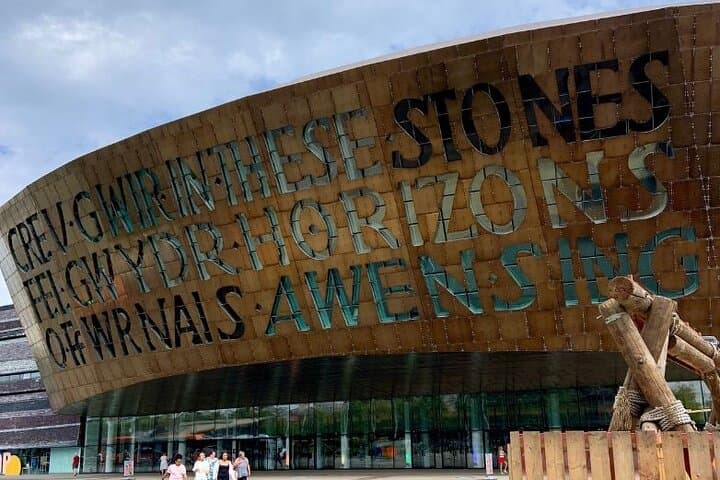
Culturally, Cardiff balances Welsh language and contemporary creativity—independent cafes, bookshops, and the Wales Millennium Centre at the Bay reflect a civic reinvention that’s easy to feel as you walk. Expect paved streets and cobblestones, gentle terrain with under 100 m of cumulative elevation, and roughly 5–8 km of walking depending on detours.
Practical guidance: plan 3–5 hours, start early to beat crowds at the castle and market, and follow the included map and directions to keep navigation simple. Wear supportive shoes for mixed surfaces, carry a waterproof layer for changeable weather, and bring a payment card—many spots in the city are card-first. Public transport links (buses and trains) make short returns to your accommodation straightforward if you prefer a partial loop.
easy.
3–5 hours.
Suitable for people comfortable with several hours of easy walking on mostly flat ground
The recommended self-guided route covers roughly 5–8 km depending on detours and time spent at stops, typically taking 3–5 hours.
Many central streets and the Bay boardwalk are accessible, but some older cobbled areas and castle grounds can be uneven—check specific points on the provided map.
Most stops are external or free to view; for inside visits (like Cardiff Castle), pre-booking is recommended during peak season or weekends.
Yes—Cardiff Market, the Castle precinct and Bay area have cafes and restroom facilities; bring small change or a card as needed.
Cardiff grew rapidly in the 19th century as coal exports transformed it from a market town into a global port; the Bay’s regeneration in the late 20th century repurposed docklands into cultural spaces.
Tidal flats at Cardiff Bay are ecologically sensitive—stick to marked paths, avoid disturbing birds, and use refill stations to cut single-use plastic.
Thematic Travel operates guided outdoor trips and adventures with an emphasis on safety, stewardship, and memorable experiences.



You step out onto a wide Victorian street and the city's layers open around you—market stalls calling with Welsh cheeses, the crenellated silhouette of Cardiff Castle watching over traffic and tramlines, and the Severn Estuary drawing a salt-sweet edge to the air down at the Bay.
You step out onto a wide Victorian street and the city's layers open around you—market stalls calling with Welsh cheeses, the crenellated silhouette of Cardiff Castle watching over traffic and tramlines, and the Severn Estuary drawing a salt-sweet edge to the air down at the Bay.
This self-guided itinerary stitches central Cardiff and Cardiff Bay into a compact, walkable day. The route highlights include the lively Cardiff Market (an 18th-century trading hub), the Roman-to-Victorian sequence of Cardiff Castle, the Museum of Cardiff’s civic story, and a stroll along the regenerated Cardiff Bay waterfront where docks once moved the nation’s coal. Geology and industry meet here: coal seams powered the city’s boom, and the bay’s tidal flats still shape the shoreline and local ecology.
Culturally, Cardiff balances Welsh language and contemporary creativity—independent cafes, bookshops, and the Wales Millennium Centre at the Bay reflect a civic reinvention that’s easy to feel as you walk. Expect paved streets and cobblestones, gentle terrain with under 100 m of cumulative elevation, and roughly 5–8 km of walking depending on detours.
Practical guidance: plan 3–5 hours, start early to beat crowds at the castle and market, and follow the included map and directions to keep navigation simple. Wear supportive shoes for mixed surfaces, carry a waterproof layer for changeable weather, and bring a payment card—many spots in the city are card-first. Public transport links (buses and trains) make short returns to your accommodation straightforward if you prefer a partial loop.