THE ADVENTURE COLLECTIVE® · Independent discovery and booking for outdoor travel

Spend a day on Cappadocia’s Red Tour walking among fairy chimneys, cave towns and volcanic landforms. This guided circuit from Göreme pairs readable geology with cultural stops—Uchisar Castle, Paşabağı, Zelve and Avanos pottery—for a compact, illuminating introduction to the region.
Spend a day on Cappadocia’s Red Tour walking among fairy chimneys, cave towns and volcanic landforms. This guided circuit from Göreme pairs readable geology with cultural stops—Uchisar Castle, Paşabağı, Zelve and Avanos pottery—for a compact, illuminating introduction to the region.
The bus hums to a stop at Göreme’s small square and the first breath of Cappadocia hits: dry, mineral-rich air that smells faintly of stone and sage. You step out into a landscape that looks as if a sculptor went to work with wind and fire—towers of tuff rising like improvised architecture, spires capped in darker basalt. This is the Red Tour, a six- to seven-hour circuit that stitches together the region’s most readable geology with its human stories: citadels carved from rock, cave towns, and the hand-made pottery of Avanos.
Verified experiences and guided adventures in the surrounding area.
Operated by Rose Tour · Göreme, Nevşehir
The bus hums to a stop at Göreme’s small square and the first breath of Cappadocia hits: dry, mineral-rich air that smells faintly of stone and sage. You step out into a landscape that looks as if a sculptor went to work with wind and fire—towers of tuff rising like improvised architecture, spires capped in darker basalt. This is the Red Tour, a six- to seven-hour circuit that stitches together the region’s most readable geology with its human stories: citadels carved from rock, cave towns, and the hand-made pottery of Avanos.
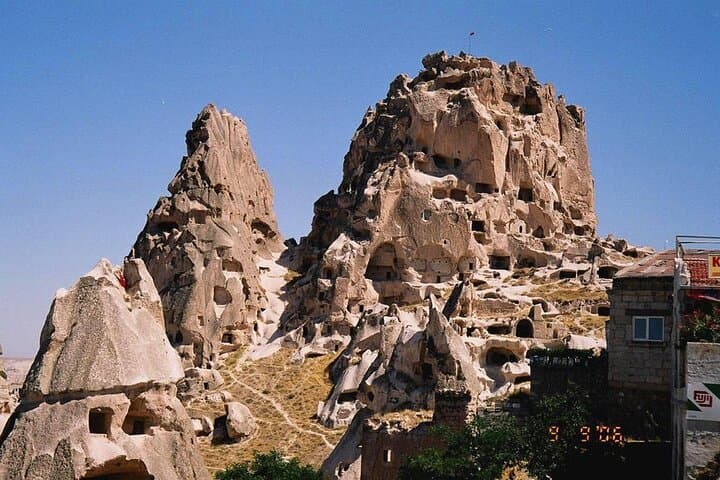
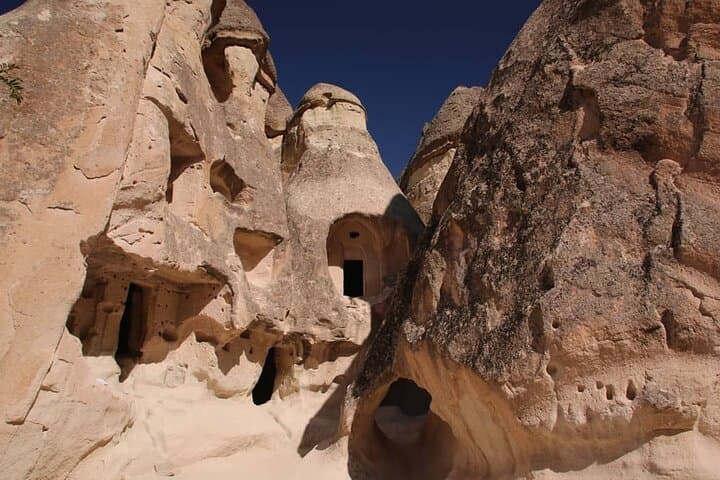
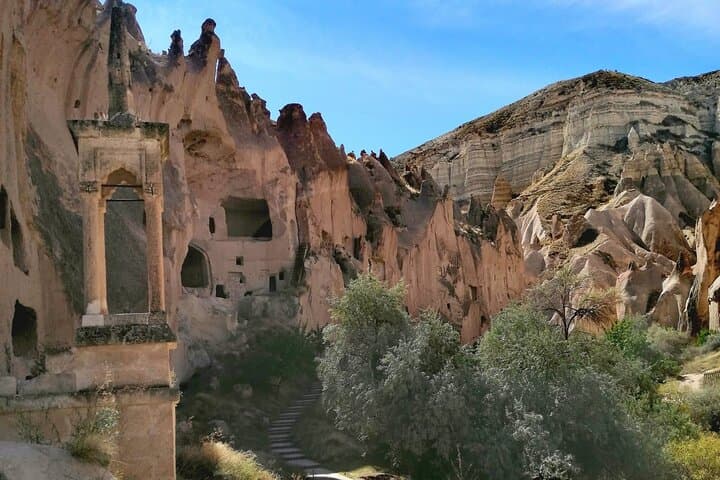
Geology here is legible. Millions of years ago, volcanic ash settled into soft tuff; erosion — wind, rain, temperature — later carved it into the fairy chimneys you’ll walk among. Paşabağı (Monks Valley) is a live atlas of that process: mushroom-shaped chimneys showing stages of cap and stem formation, the harder basalt caps protecting softer tuff below. Zelve Open-Air Museum reads like a cave town in a slow, graceful collapse — dwellings, chapels, and pigeon houses stacked into labyrinths. Uchisar Castle, the highest point in the area, was repurposed across empires from Roman to Ottoman as a lookout and refuge, its hollows once shelters for traders and monks.
Culture sits quietly between the rocks. In Avanos you’ll see potters shaping clay from the Kızılırmak (Red River), continuing a craft that dates back millennia. The tour pauses at a studio where a family demonstrates techniques passed down across generations — tactile, exacting, and very present.
Practicalities matter here: trails are uneven, often dusty, and sections through Zelve and Paşabağı require steady footing. The guided format includes a museum ticket at some stops and a midday lunch; pick-up and drop-off from Göreme make logistics easy for those staying locally.
Go early in high season to avoid buses and catch the light that sculpts the chimneys—late afternoon softens colors but draws crowds to viewpoints. Wear broken-in walking shoes, sun protection, and bring at least 1–1.5 liters of water; a small daypack will hold layers and camera gear. Cameras will reward patience: shoot wide to show scale, and step close for the textures of carved dwellings and pottery.
This is a tour designed to translate the landscape into story: volcanic violence, centuries of human adaptation, and an ongoing rural craft economy. Move with respect—these tuff formations erode under pressure, and the survival of cave sites depends on visitors who follow trails, heed guides, and leave no trace.
moderate.
6–7 hours.
Suitable for those who can walk on uneven ground for multiple short stretches; not technically strenuous but requires balance and stamina for several hours.
The Red Tour runs about 6–7 hours (360–420 minutes); pickup from Göreme is typically in the morning and includes a midday lunch break.
Yes—this tour is rated suitable for all fitness levels, but those with mobility issues should note that trails can be uneven and include steps carved into rock.
Museum entrance fees are included for the sites specified in the itinerary; your booking details list which admissions are covered.
Balloon flights launch at sunrise and the Red Tour is a daytime itinerary; you may see balloons overhead in the early morning, but balloon rides must be booked separately.
Yes—the tour offers hotel pick-up and drop-off from Göreme and nearby towns; specific pickup points are arranged after booking.
Bring small bills if you plan to buy ceramics; wear clothing you don’t mind getting a bit of clay on if you try the wheel.
Cappadocia’s cave settlements and Uchisar Castle reflect continuous occupation from Roman through Ottoman eras; many cave homes were inhabited until the mid-20th century.
The soft tuff is fragile—stay on marked trails, avoid climbing on formations, and support local guides and small businesses to fund preservation.
Rose Tour operates guided outdoor trips and adventures with an emphasis on safety, stewardship, and memorable experiences.

The bus hums to a stop at Göreme’s small square and the first breath of Cappadocia hits: dry, mineral-rich air that smells faintly of stone and sage. You step out into a landscape that looks as if a sculptor went to work with wind and fire—towers of tuff rising like improvised architecture, spires capped in darker basalt. This is the Red Tour, a six- to seven-hour circuit that stitches together the region’s most readable geology with its human stories: citadels carved from rock, cave towns, and the hand-made pottery of Avanos.
The bus hums to a stop at Göreme’s small square and the first breath of Cappadocia hits: dry, mineral-rich air that smells faintly of stone and sage. You step out into a landscape that looks as if a sculptor went to work with wind and fire—towers of tuff rising like improvised architecture, spires capped in darker basalt. This is the Red Tour, a six- to seven-hour circuit that stitches together the region’s most readable geology with its human stories: citadels carved from rock, cave towns, and the hand-made pottery of Avanos.
Geology here is legible. Millions of years ago, volcanic ash settled into soft tuff; erosion — wind, rain, temperature — later carved it into the fairy chimneys you’ll walk among. Paşabağı (Monks Valley) is a live atlas of that process: mushroom-shaped chimneys showing stages of cap and stem formation, the harder basalt caps protecting softer tuff below. Zelve Open-Air Museum reads like a cave town in a slow, graceful collapse — dwellings, chapels, and pigeon houses stacked into labyrinths. Uchisar Castle, the highest point in the area, was repurposed across empires from Roman to Ottoman as a lookout and refuge, its hollows once shelters for traders and monks.
Culture sits quietly between the rocks. In Avanos you’ll see potters shaping clay from the Kızılırmak (Red River), continuing a craft that dates back millennia. The tour pauses at a studio where a family demonstrates techniques passed down across generations — tactile, exacting, and very present.
Practicalities matter here: trails are uneven, often dusty, and sections through Zelve and Paşabağı require steady footing. The guided format includes a museum ticket at some stops and a midday lunch; pick-up and drop-off from Göreme make logistics easy for those staying locally.
Go early in high season to avoid buses and catch the light that sculpts the chimneys—late afternoon softens colors but draws crowds to viewpoints. Wear broken-in walking shoes, sun protection, and bring at least 1–1.5 liters of water; a small daypack will hold layers and camera gear. Cameras will reward patience: shoot wide to show scale, and step close for the textures of carved dwellings and pottery.
This is a tour designed to translate the landscape into story: volcanic violence, centuries of human adaptation, and an ongoing rural craft economy. Move with respect—these tuff formations erode under pressure, and the survival of cave sites depends on visitors who follow trails, heed guides, and leave no trace.