THE ADVENTURE COLLECTIVE® · Independent discovery and booking for outdoor travel

Spend a day moving through the lunar-like valleys of Cappadocia on a small-group circuit that visits Devrent, Pasabag, Göreme Open Air Museum and Uçhisar. Expect dramatic rock formations, ancient cave churches with frescoes, and practical guidance for getting the most of a 6–8 hour outing.
Spend a day moving through the lunar-like valleys of Cappadocia on a small-group circuit that visits Devrent, Pasabag, Göreme Open Air Museum and Uçhisar. Expect dramatic rock formations, ancient cave churches with frescoes, and practical guidance for getting the most of a 6–8 hour outing.
Step from your hotel into a van that slips through a landscape that seems to have been carved by patience and mischief. The road into Cappadocia opens into a field of stone pillars—fairy chimneys that rise like abstract sculptures—and the guide points at shapes that look like hats, mushrooms and ancient watchmen. Light and shadow play across soft tuff; the land seems to rearrange itself with every turn of the van's wheels.
Verified experiences and guided adventures in the surrounding area.
Operated by Pupa Travel · Göreme, Nevşehir
Step from your hotel into a van that slips through a landscape that seems to have been carved by patience and mischief. The road into Cappadocia opens into a field of stone pillars—fairy chimneys that rise like abstract sculptures—and the guide points at shapes that look like hats, mushrooms and ancient watchmen. Light and shadow play across soft tuff; the land seems to rearrange itself with every turn of the van's wheels.
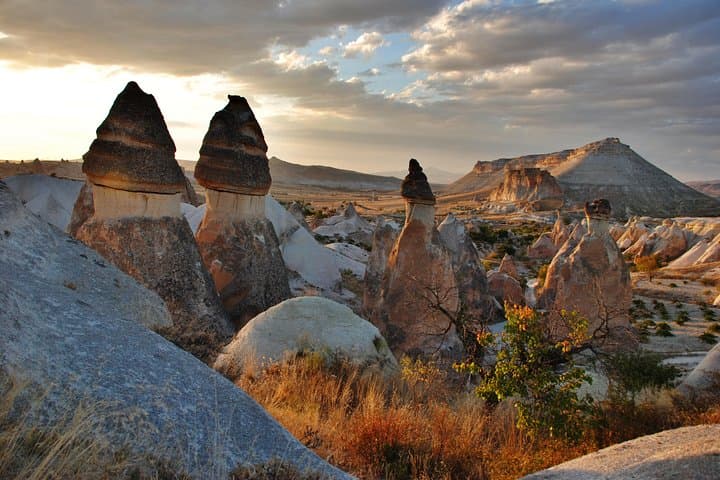
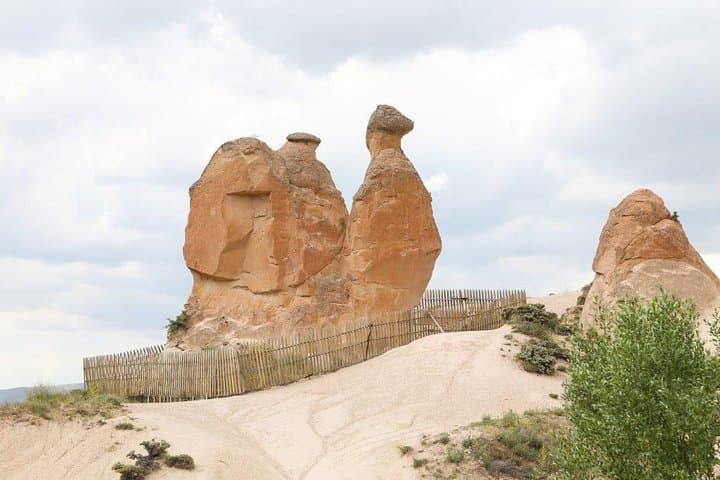
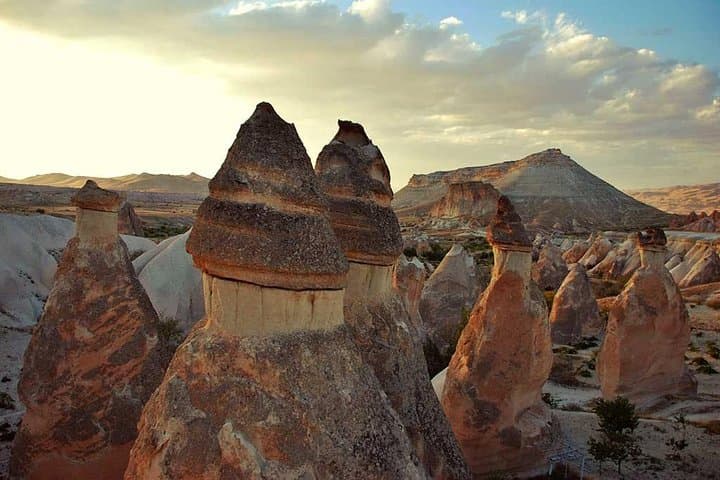
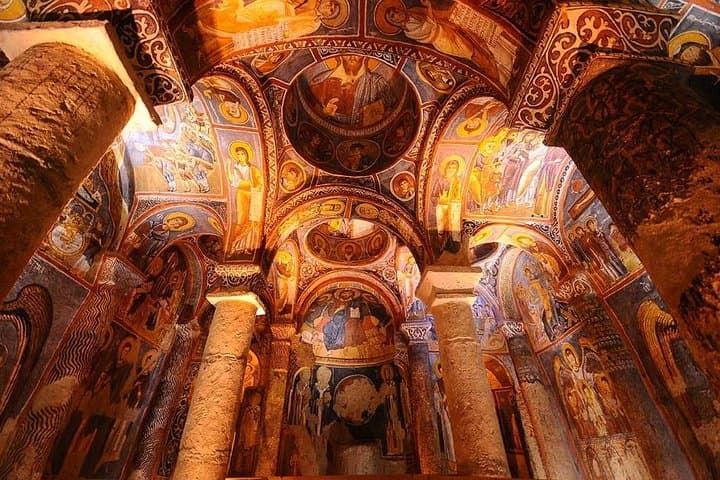
The day's route stitches together geology and human history. Devrent (Imagination) Valley reveals wind-eroded columns born from volcanic ash and millions of years of weather; Pasabag shows multi-stemmed chimneys crowned by hard basalt caps. At Göreme Open Air Museum, the tour stops long enough to walk among rock-cut churches whose frescoes survive in saturated blues and ochres. These painted surfaces—some more than a millennium old—are reminders that this was a crucible of Byzantine monastic life, where hermits and communities turned soft rock into living space and sacred sites.
Uçhisar Castle crowns the plateau and offers the clearest reading of Cappadocia's topography: a string of valleys, pigeon houses pocked into cliffs, and terraced orchards grazed by scrub and shepherds. The culture here blends Anatolian village life with Ottoman and Byzantine traces—pottery workshops and local rug shops are part craft, part invitation to slow the pace and learn how the region still makes a living from the land.
For practical travelers, this is a full-day loop: expect 6–8 hours of guided stops, short walks on uneven dirt and stone, and several photo breaks. Museum entry is included, and lunch is served, but wear grippy shoes—the trails around rock formations are short but can be slippery where dust and sand collect. Mornings cool quickly and afternoons warm; layers matter.
Photography thrives at low sun: dawn and late afternoon turn the valleys molten. If you have mobility limitations, notify the operator before booking—some cave churches require low passages and steps. Bring water, a sun hat, and a compact camera; keep to marked paths to protect fragile strata and frescoes. The day tour is designed for a broad range of travelers: it moves deliberately, offering enough stops to drink in views without feeling rushed.
Cappadocia is theatrical but fragile—every footprint counts. Stay on designated trails, support local artisans rather than pushing for souvenirs of unknown origin, and let the region's quiet histories and raw landscapes shape your day rather than dominate it. This is a tour that explains why people stayed here for centuries: the land pushes you to pay attention.
easy.
6–8 hours.
Suitable for most fitness levels; requires short walks and standing during visits
The tour runs approximately 6–8 hours, depending on traffic and pickup locations.
Yes—museum tickets for Göreme Open Air Museum are included in the tour price.
Yes—pickup is available from most hotels in Cappadocia; exact pickup time is confirmed one day prior.
The tour includes uneven paths and some stair access in cave churches; contact the operator in advance to discuss specific needs.
No—hot air balloon rides are separate experiences and must be booked independently.
The tour includes English-speaking guiding; check at booking if you need another language option.
Cappadocia's rock-cut churches and frescoes date back over a thousand years to Byzantine monastic communities that adapted soft volcanic rock for worship and shelter.
High visitor numbers stress fragile formations and frescoes; stay on marked paths and support conservation through museum fees and local sustainable businesses.
Pupa Travel operates guided outdoor trips and adventures with an emphasis on safety, stewardship, and memorable experiences.
Step from your hotel into a van that slips through a landscape that seems to have been carved by patience and mischief. The road into Cappadocia opens into a field of stone pillars—fairy chimneys that rise like abstract sculptures—and the guide points at shapes that look like hats, mushrooms and ancient watchmen. Light and shadow play across soft tuff; the land seems to rearrange itself with every turn of the van's wheels.
Step from your hotel into a van that slips through a landscape that seems to have been carved by patience and mischief. The road into Cappadocia opens into a field of stone pillars—fairy chimneys that rise like abstract sculptures—and the guide points at shapes that look like hats, mushrooms and ancient watchmen. Light and shadow play across soft tuff; the land seems to rearrange itself with every turn of the van's wheels.
The day's route stitches together geology and human history. Devrent (Imagination) Valley reveals wind-eroded columns born from volcanic ash and millions of years of weather; Pasabag shows multi-stemmed chimneys crowned by hard basalt caps. At Göreme Open Air Museum, the tour stops long enough to walk among rock-cut churches whose frescoes survive in saturated blues and ochres. These painted surfaces—some more than a millennium old—are reminders that this was a crucible of Byzantine monastic life, where hermits and communities turned soft rock into living space and sacred sites.
Uçhisar Castle crowns the plateau and offers the clearest reading of Cappadocia's topography: a string of valleys, pigeon houses pocked into cliffs, and terraced orchards grazed by scrub and shepherds. The culture here blends Anatolian village life with Ottoman and Byzantine traces—pottery workshops and local rug shops are part craft, part invitation to slow the pace and learn how the region still makes a living from the land.
For practical travelers, this is a full-day loop: expect 6–8 hours of guided stops, short walks on uneven dirt and stone, and several photo breaks. Museum entry is included, and lunch is served, but wear grippy shoes—the trails around rock formations are short but can be slippery where dust and sand collect. Mornings cool quickly and afternoons warm; layers matter.
Photography thrives at low sun: dawn and late afternoon turn the valleys molten. If you have mobility limitations, notify the operator before booking—some cave churches require low passages and steps. Bring water, a sun hat, and a compact camera; keep to marked paths to protect fragile strata and frescoes. The day tour is designed for a broad range of travelers: it moves deliberately, offering enough stops to drink in views without feeling rushed.
Cappadocia is theatrical but fragile—every footprint counts. Stay on designated trails, support local artisans rather than pushing for souvenirs of unknown origin, and let the region's quiet histories and raw landscapes shape your day rather than dominate it. This is a tour that explains why people stayed here for centuries: the land pushes you to pay attention.