THE ADVENTURE COLLECTIVE® · Independent discovery and booking for outdoor travel

Walk the Castello quarter with a private guide to uncover Cagliari’s royal palace, cathedral and medieval towers, plus the city's markets and seaside options. This half-day tour pairs close-up history with practical advice for navigating openings, uneven streets and optional stops like Poetto Beach.
Walk the Castello quarter with a private guide to uncover Cagliari’s royal palace, cathedral and medieval towers, plus the city's markets and seaside options. This half-day tour pairs close-up history with practical advice for navigating openings, uneven streets and optional stops like Poetto Beach.
A wind off the Golfo degli Angeli trims the edges of Cagliari’s Castello quarter as the group steps through Porta Cristina and onto centuries of stone. The lanes climb from sun-washed piazzas to crenellated towers; in a few hours a private guide threads together the Royal Palace, the Cathedral, the Elephant Tower and the Bastione di Saint Remy, each place a chapter in the city’s layered past.
Verified experiences and guided adventures in the surrounding area.
Operated by Bitan Daily Tours · Cagliari, Sardinia
A wind off the Golfo degli Angeli trims the edges of Cagliari’s Castello quarter as the group steps through Porta Cristina and onto centuries of stone. The lanes climb from sun-washed piazzas to crenellated towers; in a few hours a private guide threads together the Royal Palace, the Cathedral, the Elephant Tower and the Bastione di Saint Remy, each place a chapter in the city’s layered past.
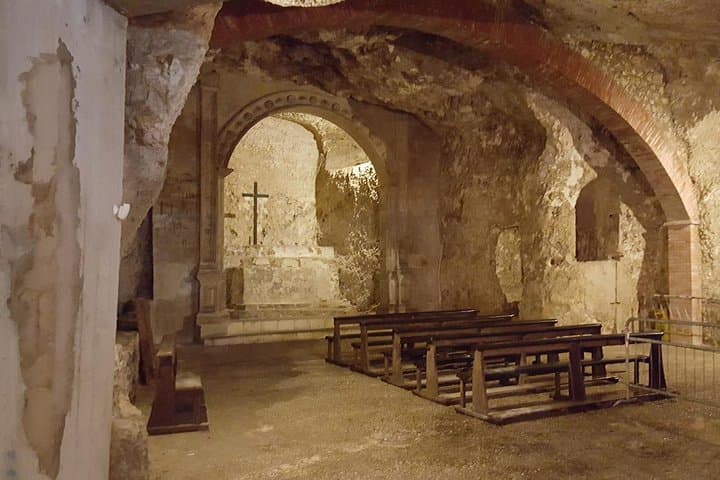
Cagliari has been a Mediterranean crossroads — Phoenician and Roman foundations underlie medieval Pisan walls, while Aragonese and Piedmontese architects later reshaped public squares and ramparts. The geology is visible: limestone blocks hold the towers, and below the streets ancient cisterns and caverns hint at the city’s subterranean story. Local life is immediate here — market stalls at San Benedetto offer salty fish and pecorino, while Poetto Beach’s long sand fringe is a short drive away for a late-afternoon dip.
Practical guidance is straightforward. The walking route covers uneven stone, short flights of steps and narrow alleys; expect about two hours on foot within a four-hour private window and bring steady footwear. Monument openings vary — guides will curate visits around closures and can shorten the walking portion to include the market or a seaside stop if requested. Carry water, a light layer and a small daypack; markets accept cards and cash but small vendors may prefer cash. For travelers with limited mobility, a vehicle-based version is offered though interior monument access may be restricted. With a local guide, this half-day balances history, urban geology and market flavors into a compact, practical introduction to Sardinia’s capital.
easy.
4 hours.
Suitable for most fitness levels; involves 1–2 hours of walking over cobbled streets and steps.
Some admissions are included when listed; opening times vary and certain monuments may be closed without notice — guides will adapt the route accordingly.
The tour is not recommended for those with mobility issues due to stairs and uneven surfaces, but a shorter vehicle-based option is available without interior monument access.
Yes — Poetto or the market can be added on request; if included the city-center walking portion will be shortened to fit the schedule.
Bottled water is commonly provided; market tastings and meals are typically at your expense unless otherwise specified.
Cagliari’s center reflects layers of occupation — from Phoenician and Roman foundations through Pisan towers to Aragonese and Piedmontese renovations that shaped the Castello district.
Historic stonework and underground cisterns are vulnerable to wear; stick to marked paths, avoid touching frescoes and support local vendors to sustain the neighborhood economy.
Bitan Daily Tours operates guided outdoor trips and adventures with an emphasis on safety, stewardship, and memorable experiences.
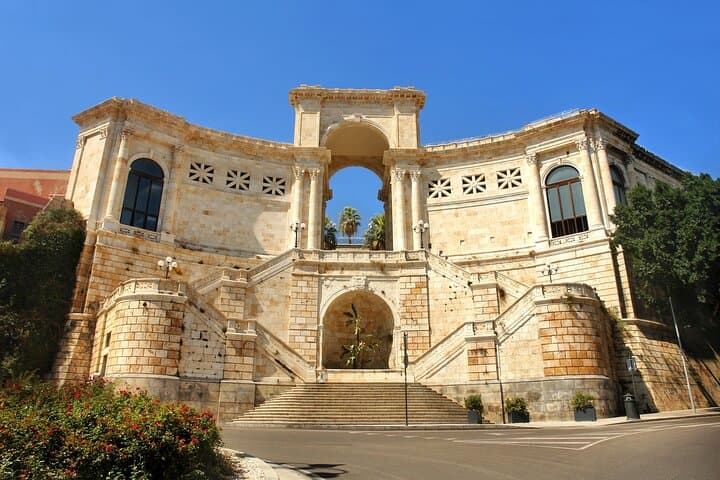
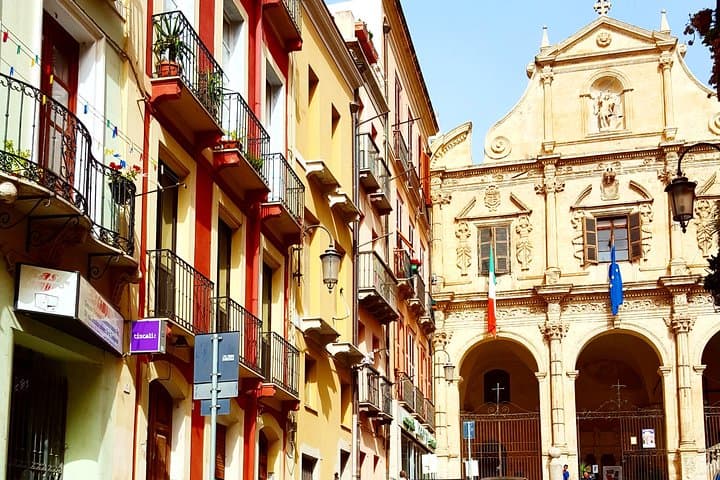
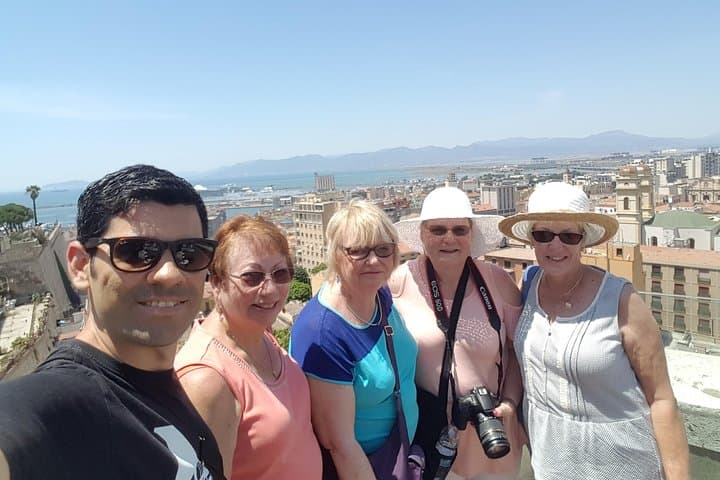
A wind off the Golfo degli Angeli trims the edges of Cagliari’s Castello quarter as the group steps through Porta Cristina and onto centuries of stone. The lanes climb from sun-washed piazzas to crenellated towers; in a few hours a private guide threads together the Royal Palace, the Cathedral, the Elephant Tower and the Bastione di Saint Remy, each place a chapter in the city’s layered past.
A wind off the Golfo degli Angeli trims the edges of Cagliari’s Castello quarter as the group steps through Porta Cristina and onto centuries of stone. The lanes climb from sun-washed piazzas to crenellated towers; in a few hours a private guide threads together the Royal Palace, the Cathedral, the Elephant Tower and the Bastione di Saint Remy, each place a chapter in the city’s layered past.
Cagliari has been a Mediterranean crossroads — Phoenician and Roman foundations underlie medieval Pisan walls, while Aragonese and Piedmontese architects later reshaped public squares and ramparts. The geology is visible: limestone blocks hold the towers, and below the streets ancient cisterns and caverns hint at the city’s subterranean story. Local life is immediate here — market stalls at San Benedetto offer salty fish and pecorino, while Poetto Beach’s long sand fringe is a short drive away for a late-afternoon dip.
Practical guidance is straightforward. The walking route covers uneven stone, short flights of steps and narrow alleys; expect about two hours on foot within a four-hour private window and bring steady footwear. Monument openings vary — guides will curate visits around closures and can shorten the walking portion to include the market or a seaside stop if requested. Carry water, a light layer and a small daypack; markets accept cards and cash but small vendors may prefer cash. For travelers with limited mobility, a vehicle-based version is offered though interior monument access may be restricted. With a local guide, this half-day balances history, urban geology and market flavors into a compact, practical introduction to Sardinia’s capital.