THE ADVENTURE COLLECTIVE® · Independent discovery and booking for outdoor travel

A compact day tour from Saranda that pairs UNESCO-listed Butrint, the hilltop Fortress of Lekuresi, and the karst spring known as the Blue Eye. Expect archaeological ruins, sweeping coastal views, and a dramatic natural spring — all within a five-hour itinerary.
A compact day tour from Saranda that pairs UNESCO-listed Butrint, the hilltop Fortress of Lekuresi, and the karst spring known as the Blue Eye. Expect archaeological ruins, sweeping coastal views, and a dramatic natural spring — all within a five-hour itinerary.
You step off the coastal road and the spray of the Ionian cools the morning; gulls carry the first light toward a hilltop castle while inland a spring pushes out water so clear it seems to have its own will. This full-day loop from Saranda stitches together three distinct landscapes: a tectonic plain of ruins, a strategic limestone ridge, and a karst-fed pool framed by laurel and plane trees.
Verified experiences and guided adventures in the surrounding area.
Operated by Tea Tours · Saranda, Vlorë County
You step off the coastal road and the spray of the Ionian cools the morning; gulls carry the first light toward a hilltop castle while inland a spring pushes out water so clear it seems to have its own will. This full-day loop from Saranda stitches together three distinct landscapes: a tectonic plain of ruins, a strategic limestone ridge, and a karst-fed pool framed by laurel and plane trees.
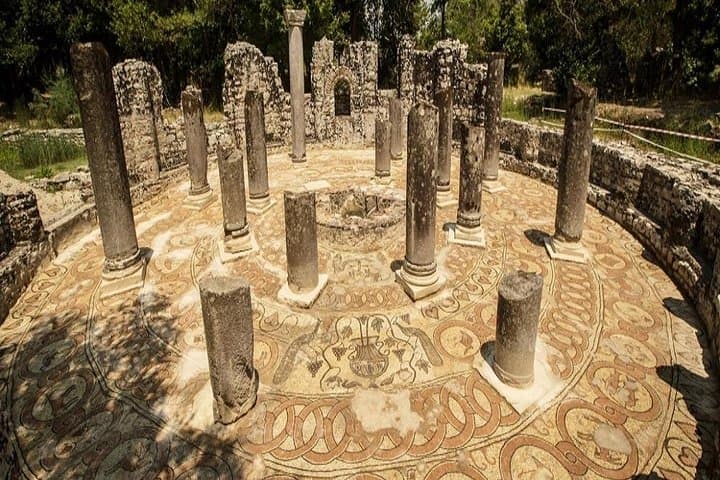
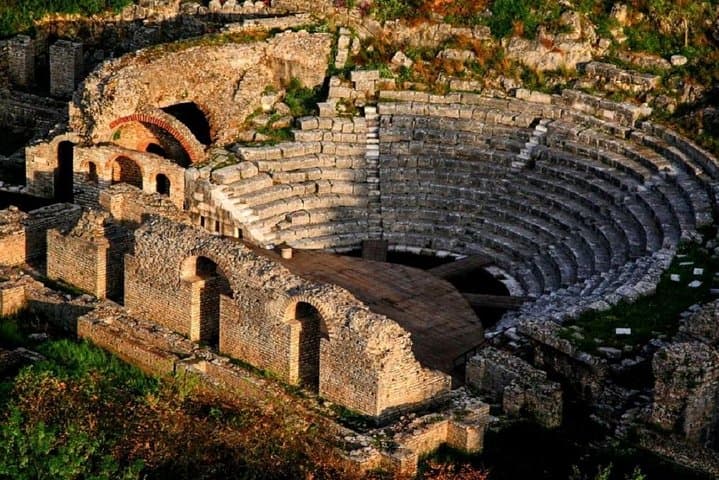
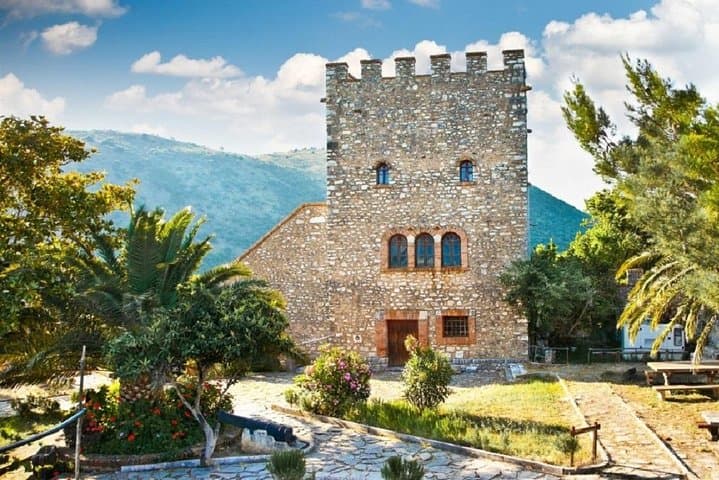
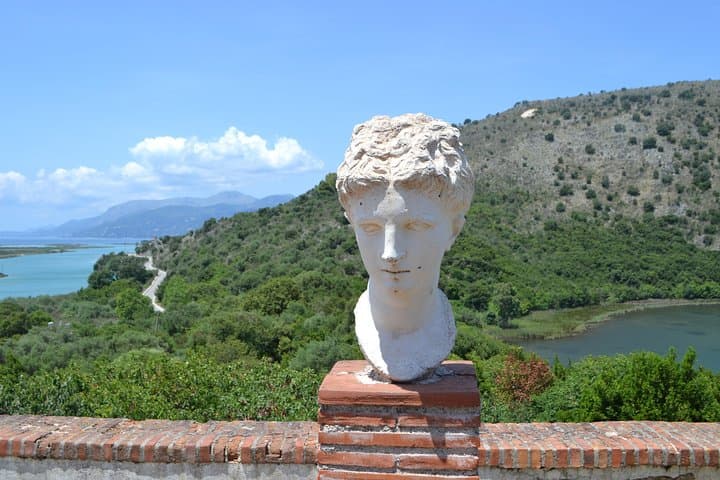
Butrint opens like a page of layered history. Greeks, Romans, Byzantines and Venetians left streets, a theater, and mosaic fragments that map civil life over millennia. The Fortress of Lekuresi, raised in the 16th century, commands a sweep of the bay and the road to Ksamil — an easy vantage to read military geography. The Blue Eye (Syri i Kaltër) is geological storytelling: a deep karst spring where groundwater surges through Mali i Gjërë and emerges in a blue oval with depths reported to dozens of meters.
Culturally, the area reflects Ionian trade routes and Ottoman strategic concerns; small villages retain traditional foodways—olive oil, goat cheese and simple seafood. Expect mostly flat walking at Butrint with cobbles and short climbs at Lekuresi; Blue Eye requires uneven forest trails and damp rock near the spring.
Practical notes: wear sturdy walking shoes, bring layered sun protection and a refillable water bottle, and budget five hours including transfers. Mornings are cooler and crowds thin; afternoons make the light on the ruins particularly sharp. Respect marked paths, carry out waste, and allow time for short stops — viewpoints and the museum inside Butrint reward slow pacing.
moderate.
5 hours.
Light to moderate fitness for short hikes, standing and uneven ground; suitable for most people comfortable with 1–2 miles of walking.
The itinerary runs about 5 hours total, including transportation between Saranda, Butrint, Lekuresi and the Blue Eye.
Swimming is generally discouraged at the protected spring due to depth, cold temperature and conservation rules; check local signage and guide instructions.
This tour’s itinerary lists admission as included for the main sites; confirm when booking to avoid surprise fees.
The tour is family-friendly but terrain at the Blue Eye and some ruin sections is uneven; strollers may be usable at parts of Butrint but not on narrow or rocky paths.
Butrint was a fortified city under Greek, Roman and Byzantine influence and was declared a museum town in 1961 before gaining UNESCO status for its unusually complete archaeological layers.
Butrint and the Blue Eye are protected sites; visitors should stick to paths, avoid disturbing vegetation, and refrain from bathing or littering to protect fragile karst and archaeological features.
Tea Tours operates guided outdoor trips and adventures with an emphasis on safety, stewardship, and memorable experiences.
You step off the coastal road and the spray of the Ionian cools the morning; gulls carry the first light toward a hilltop castle while inland a spring pushes out water so clear it seems to have its own will. This full-day loop from Saranda stitches together three distinct landscapes: a tectonic plain of ruins, a strategic limestone ridge, and a karst-fed pool framed by laurel and plane trees.
You step off the coastal road and the spray of the Ionian cools the morning; gulls carry the first light toward a hilltop castle while inland a spring pushes out water so clear it seems to have its own will. This full-day loop from Saranda stitches together three distinct landscapes: a tectonic plain of ruins, a strategic limestone ridge, and a karst-fed pool framed by laurel and plane trees.
Butrint opens like a page of layered history. Greeks, Romans, Byzantines and Venetians left streets, a theater, and mosaic fragments that map civil life over millennia. The Fortress of Lekuresi, raised in the 16th century, commands a sweep of the bay and the road to Ksamil — an easy vantage to read military geography. The Blue Eye (Syri i Kaltër) is geological storytelling: a deep karst spring where groundwater surges through Mali i Gjërë and emerges in a blue oval with depths reported to dozens of meters.
Culturally, the area reflects Ionian trade routes and Ottoman strategic concerns; small villages retain traditional foodways—olive oil, goat cheese and simple seafood. Expect mostly flat walking at Butrint with cobbles and short climbs at Lekuresi; Blue Eye requires uneven forest trails and damp rock near the spring.
Practical notes: wear sturdy walking shoes, bring layered sun protection and a refillable water bottle, and budget five hours including transfers. Mornings are cooler and crowds thin; afternoons make the light on the ruins particularly sharp. Respect marked paths, carry out waste, and allow time for short stops — viewpoints and the museum inside Butrint reward slow pacing.